Raleigh, North Carolina
Tree Removal in Raleigh, NC for the South and Southeast Side
Raleigh is the City of Oaks, and on the south and southeast side of the city, the side that borders Garner, that name is literal: streets of mature willow oaks planted 50 to 80 years ago, water oaks aging past their safe years, and tall loblolly pines standing over rooflines from Tryon Road to Battle Bridge. We are based just across the line in Garner, which makes south Raleigh our closest work, and every job starts with a free written quote on your property.
Mon-Sat 7:00 AM - 7:00 PM • Serving Raleigh & the surrounding east Raleigh belt, storm season included
Free Raleigh Tree Quote
Tell us about the tree or stump and we'll get right back to you with an up-front written price. Prefer to talk? Call (919) 322-8083.
Locally Focused
100% dedicated to Garner & the east Raleigh belt
Free Written Quotes
Walk the property, get a number, no pressure
Up-Front Pricing
A written number before any saw starts
Cleanup Included
Wood, brush, and debris handled, yard raked
Mature Oaks Are South Raleigh's Constant Removal
Much of Raleigh's signature willow oak canopy was planted 50 to 80 years ago, and trees age on a schedule no neighborhood escapes. Water oaks are the first to go: they shed large limbs and develop trunk rot at 60 to 80 years old, often while the crown still looks full. Willow oaks last longer but eventually carry huge, heavy limbs over roofs, driveways, and service drops. On the south and southeast side, from the Tryon Road area to the Rock Quarry Road corridor, mature oak removals are not an occasional event, they are constant.
Taking a 70-year-old oak out of a small city lot is technical work. There is rarely room to drop anything: the tree comes apart from the top down, rigged in sections over the house, the neighbor's fence, and the lines. That is the core of our large tree removal service, and it is a different job, with different pricing, than felling the same tree in an open field. Smaller trees, and the sweetgums, red maples, and split-prone Bradford pears that fill in between the oaks, go through standard tree removal.
One Raleigh-specific note on rules, stated carefully: on private single-family residential property in Raleigh you generally do not need a permit to remove a tree. But the oaks planted in the strip between sidewalk and street are usually in the street right-of-way, and those are city-managed: removing or even pruning them means going through the city's urban forestry staff, not hiring it done privately. Development-related tree conservation areas are a separate case with their own rules. When in doubt, call the city first; we can help you figure out which side of the line a tree is on.
Storms, Saturated Clay, and Hazard Trees
The physics of tree failure here start underground. South and southeast Raleigh sit on the same Cecil series red clay as the rest of Wake County, and in heavy rain that clay saturates until it holds roots like wet sponge. That is how a healthy-looking oak or pine goes over whole in a storm: the tree did not break, the ground let go. It is why the biggest tree losses come when soaking rain and wind arrive together.
Which is exactly what the storm calendar delivers. Summer thunderstorms and hurricane remnants run June through September: Fran in 1996 flattened trees across Raleigh and remains the region's benchmark storm, and Matthew in 2016 and Florence in 2018 both left trees on houses from the Swift Creek area to Battle Bridge. Winter ice storms load limbs past their limit, and loblolly pines, 80 to 100 feet tall and vulnerable to wind snap and pine bark beetle kill, fail in both seasons. When a tree is on a structure or blocking access, our emergency tree removal crew takes storm calls first, and being based in Garner puts us minutes from the south side.
The cheaper path is dealing with hazard trees before the storm. A water oak with fungus at the base, a pine with browning needles, a limb resting on the roofline: these announce themselves if someone looks. We will walk the property free of charge and tell you honestly which trees need removal, which just need trimming and pruning to shed weight and wind sail, and which are fine.
What a South Raleigh Quote Covers
Every quote is free, on site, and in writing. We look at the tree, the targets under it, and the access, which on older south Raleigh lots often means narrow drives, backyard trees with no equipment path, and utility lines in the work zone. The written price covers the takedown, chipping, and haul-off, or bucking and stacking the wood if you want to keep it. What we quote is what you pay.
Stump grinding is the standard add-on: grinding the stump below grade lets you seed grass or replant instead of mowing around a rotting stump for the next decade. It is priced per stump and cheapest to do while the crew is already on your property.
For real numbers up front, our tree removal cost guide lays out the pricing we use across the whole service area, Raleigh included. And since our crews work the entire belt south and east of the city, the same team covers tree removal in Fuquay-Varina and every town in between.
Tree Services in Raleigh
The same walk-the-property quotes and up-front written pricing we bring to every Raleigh job. Each service has its own dedicated page explaining exactly what we do.
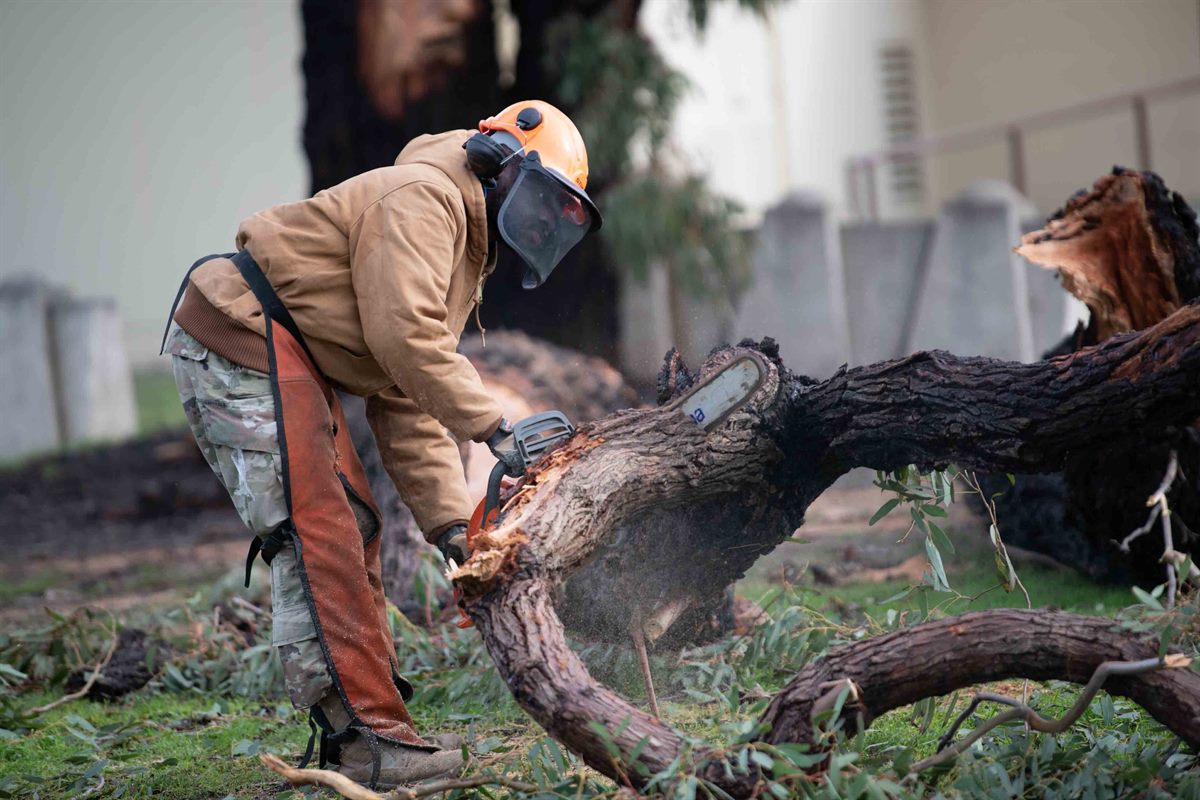
Tree Removal
Safe removal of dead, dying, storm-damaged, or unwanted trees, from single backyard trees to tight-access takedowns.
Learn more →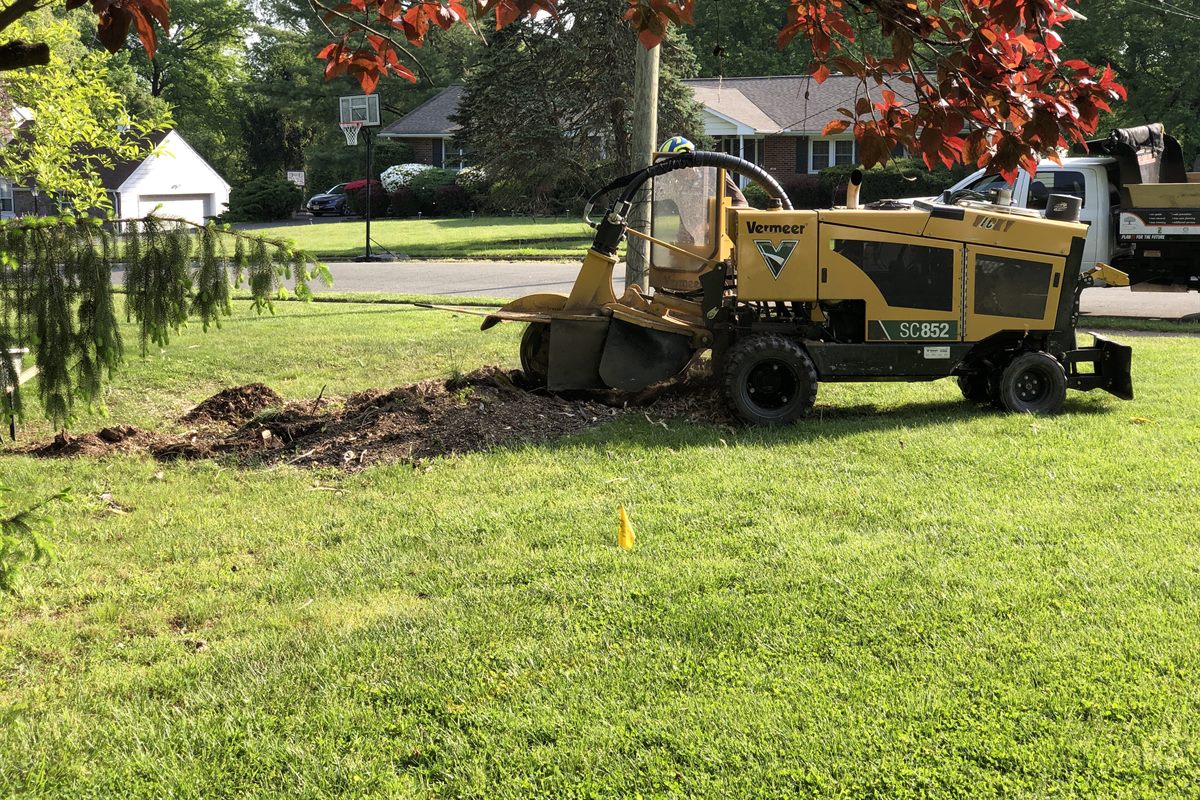
Stump Grinding & Removal
Grinding stumps below grade so you can mow, replant, or build over the spot, priced per stump with volume discounts.
Learn more →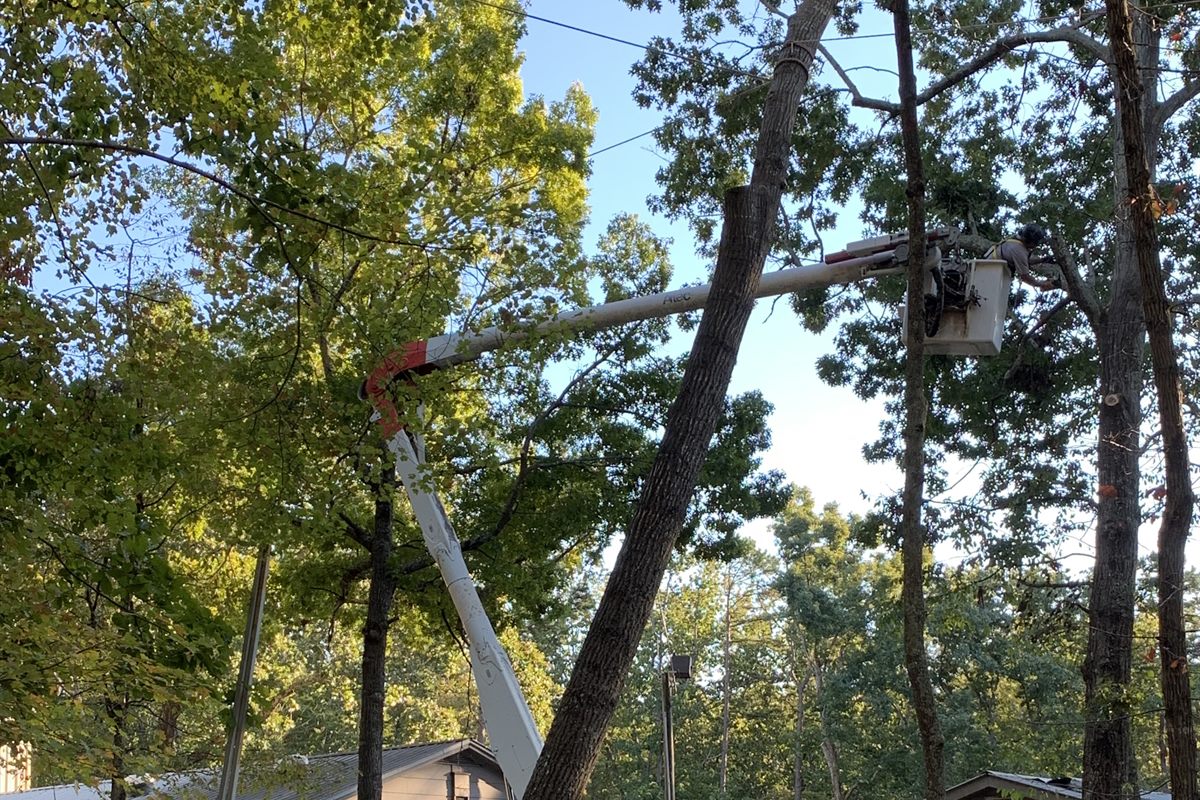
Tree Trimming & Pruning
Crown thinning, deadwooding, and clearance pruning that keeps mature oaks and pines healthy and off your roof.
Learn more →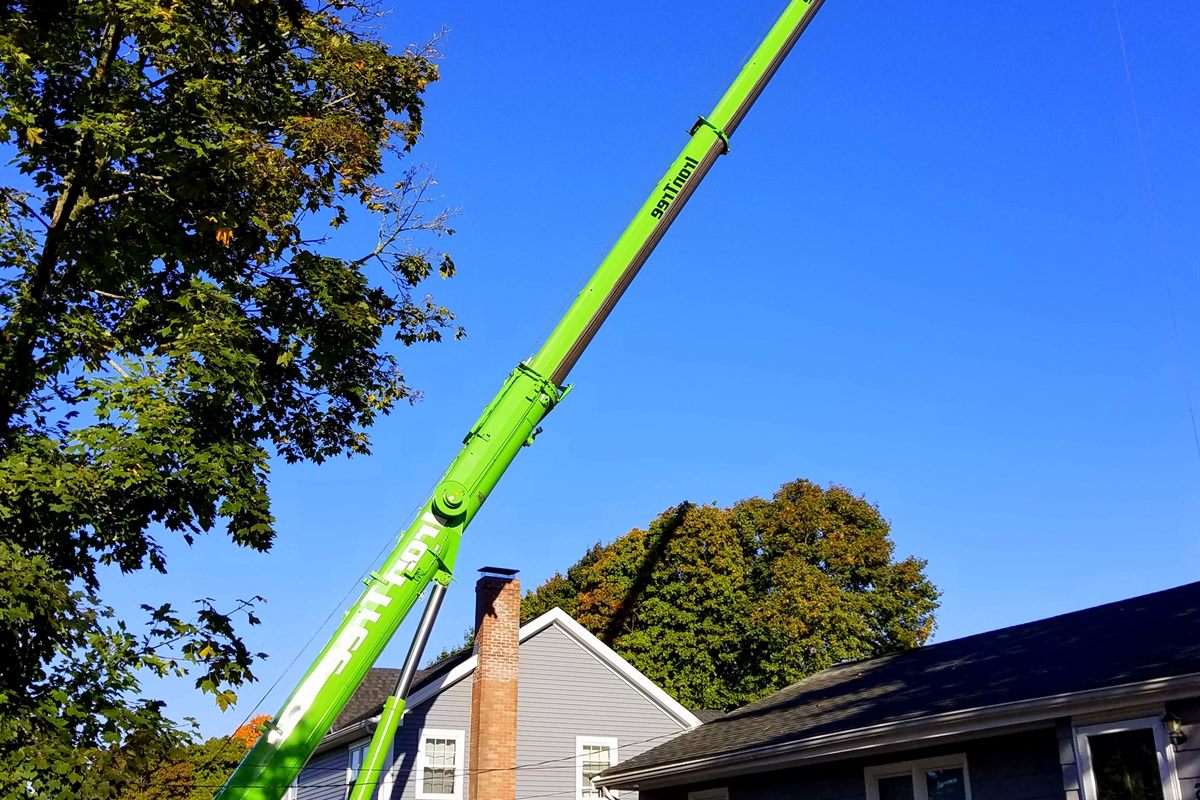
Large & Technical Removals
Crane-assisted and rigging-based removals for big oaks and pines over houses, fences, and power drops.
Learn more →How Tree Removal Works in Raleigh
Free On-Site Quote
We walk the property, look at the tree, the targets under it, and the access, and give you a written price before anything is scheduled. No pressure, no vague ranges.
Plan & Schedule
You get a clear scope: what comes down, how, what happens to the wood and debris, and whether the stump is ground, all before anything starts.
Safe Takedown
Crews drop or rig the tree down in sections, protecting your roof, fence, septic lines, and landscaping. Tight access is a plan, not an excuse.
Cleanup & Haul-Off
Brush chipped, wood hauled or bucked and stacked if you want to keep it, yard raked. The only thing left behind is the daylight.
Want numbers first? See the full tree removal pricing guide, the same pricing applies in Raleigh.
Serving Every Raleigh Neighborhood
We focus on south and southeast Raleigh: mature willow oak and water oak removals in the established neighborhoods, tall loblolly pines over rooflines toward Swift Creek and Lake Wheeler, and storm work everywhere the summer season leaves it.
Neighborhoods and areas we cover around Raleigh include Renaissance Park, the Swift Creek area, the Lake Wheeler Road corridor, the Rock Quarry Road corridor, Battle Bridge, the Garner Road corridor, Auburn, the Tryon Road area, Biltmore Hills, Southgate, the neighborhoods along the Garner line, and the surrounding communities. Wherever you are in Raleigh, you get the same free on-site quote, the same up-front written price, and the same local crew.
Raleigh Tree Removal Questions, Answered
How much does tree removal cost in Raleigh?
For planning: a typical single tree removal runs $500 to $2,000. Large or technical removals, which covers most mature willow oaks and 80 to 100 foot pines on tight south Raleigh lots, run $2,000 to $6,000 and up. Stump grinding adds $100 to $400 per stump. Size, condition, what sits under the tree, and equipment access set the exact number, which you get in writing after a free on-site quote.
Do I need a permit to remove a tree in Raleigh?
On private single-family residential property in Raleigh you generally do not need a permit to remove a tree. The big exception is trees in the street right-of-way, typically the strip between sidewalk and street: those are city-managed, and any removal or pruning goes through the city's urban forestry staff. Development-related tree conservation areas are a separate case with their own rules. When in doubt, call the city first.
Why is Raleigh called the City of Oaks, and why does it matter for my yard?
Raleigh's streets were planted heavily with oaks, especially willow oaks, and much of that canopy went in 50 to 80 years ago. Water oaks from that era shed limbs and develop trunk rot at 60 to 80 years old, so the south and southeast side of the city is full of trees aging into hazard territory at the same time. If your street's oaks all went in together, it is worth having the ones over your house assessed.
A healthy-looking tree in my neighborhood just uprooted. How?
Saturated soil. Wake County's red clay holds water in heavy rain, and once it is soaked it grips roots poorly, so wind can tip an entire healthy tree over, root plate and all. This is common during hurricane remnants, when days of rain arrive before the wind does. A tree that has developed a new lean after a wet stretch should be looked at promptly.
Do you actually cover south Raleigh, or is it a long trip fee?
South and southeast Raleigh are our closest service area. We are based in Garner, directly on the city's southern line, so the Tryon Road area, Rock Quarry Road corridor, Renaissance Park, and the neighborhoods along the Garner line are minutes away. Call (919) 322-8083 or send the quote form and we will schedule a free on-site visit.
Nearby Areas We Serve
We cover Garner and the surrounding east Wake towns.
Get your free Raleigh tree quote today
Call now or send the quick form. We look at the tree, explain your options, and give you an up-front written price. Proudly serving Raleigh, NC.