Stump Grinding & Removal in Garner, NC
That stump is not going anywhere on its own: an oak stump takes decades to rot, sprouts suckers while it does, and dulls a mower blade the one time you forget it is there. Grinding erases it in an afternoon, priced per stump, in writing.
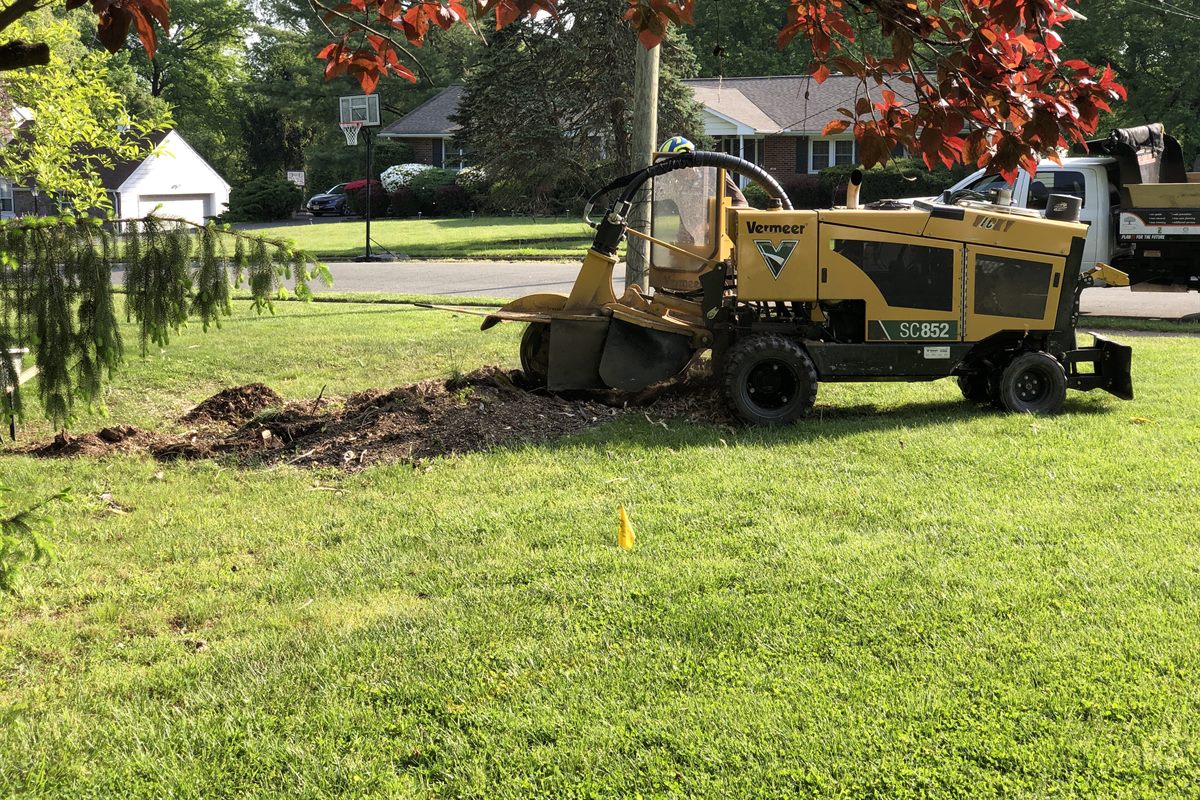
Why stumps hang around for decades here
The hardwoods that make up most of Garner's tree stock, willow oak, water oak, hickory, pecan, are dense, rot-resistant wood. Left alone, a big oak stump can sit in your yard for twenty or thirty years, sprouting suckers every spring, hosting carpenter ants, and slowly sinking into a mower-eating hole as the roots decay unevenly underneath it. Pine stumps go a little faster, but "faster" still means years.
Grinding skips the wait. A carbide cutting wheel chews the stump into chips 6 to 12 inches below grade, the hole gets backfilled, and by next season there is grass where the tree was. It is the cheapest, least destructive way to actually finish a tree removal, which is why we quote it with every removal we do.
How the pricing works
Stump grinding is the most transparently priced job in tree work. The number tracks the diameter of the stump measured at the widest point, including the root flare, at roughly $3 to $6 per inch in this market:
- Under 12 inches: near the trip minimum, $100 to $150. Bradford pears and ornamentals live here.
- 12 to 24 inches: $150 to $250. Typical pines and mid-sized maples.
- 24 to 36 inches: $250 to $400. Mature oaks and sweetgums.
- Over 36 inches: $400 and up. Old willow oak flares, multi-stem clumps, anything with buttress roots.
Two things move the number in your favor: doing multiple stumps in one visit (the trip cost spreads across all of them) and grinding at the same time as the removal. The full local pricing breakdown, including what surface roots and haul-off add, is in our Raleigh-area stump grinding cost guide.
Grinding versus digging it out
Full stump removal, excavating the entire root ball, exists for one situation: something is being built in that exact footprint and the engineer wants the roots gone. It costs several times more than grinding and leaves a crater. For a lawn, a bed, or a fence line, grinding below grade is the right answer, and anyone pushing excavation for an ordinary yard stump is selling you equipment hours you do not need.
| Stump diameter at the widest point | Typical 2026 price | What that usually is |
|---|---|---|
| Under 12 inches | $100 to $150 | Ornamental, small pear, dogwood. Usually at the trip minimum |
| 12 to 20 inches | $100 to $200 | Mid-size pine, young oak |
| 20 to 30 inches | $150 to $250 | Mature loblolly, mid-size hardwood |
| 30 to 40 inches | $200 to $350 | Mature water or willow oak |
| Over 40 inches, or heavy root flare | $300 to $400 | The old street oaks in established neighborhoods |
| Each additional stump, same visit | Per inch, no new minimum | Where bundling pays |
Measure across the widest point including the root flare, not the neat part at the top: the flare is what the machine has to chew through and it is where estimates and invoices part company. Planning ranges for this market, not quotes, and the same figures appear on the Garner cost page and in the Garner stump grinding cost guide.
What the visit looks like
We confirm the stump count and sizes, check access (compact grinders fit a 36-inch gate, so fenced backyards in Knightdale and Clayton subdivisions are rarely a problem), and call 811 utility locates when grinding near marked easements. Then the machine works the stump down below grade, we rake the site level, and either backfill with grindings or load them out, whichever the quote says.
Sprinkler lines, invisible-fence wire, and landscape lighting are the things to flag before we start; they are cheap to route around and annoying to splice. If you know it is there, tell us and it survives.
Tree type matters: Oak stumps cost more than pine
A water oak stump is the most expensive stump on a Garner lot because the tree grows a large root flare. What looks like a 30-inch trunk measures 36 to 42 inches across the root flare, and that is what we charge by. The Garner stump grinding cost guide breaks down prices for willow oak, water oak, pine, and hardwoods so you know what your specific stump will cost before we walk the property.
Typical stump situations in Garner
Water oak with big flare from old Garner neighborhood
These are the expensive stumps. A 35-inch flare at $5.50 per inch lands at $190, and Vandora Springs and Heather Hills have three or four of them on one block. Bundle them and the price per stump drops. Smart neighborhood approach: get neighbors together, we grind them all on one visit, everyone's cost improves.
Loblolly pine, fresh stump, behind the fence
Pine stumps are cheaper than oak (usually 20 to 24 inches, not 36 inches). Fenced backyard access might add a bit to the quote, but compact grinders fit a 36-inch gate. Fresh stumps (day of removal) grind faster and cheaper than old ones sitting for years.
Old Bradford pear stump, five years sitting
Ornamental stump, under 12 inches, but trip minimum applies. Old wood is harder to grind than fresh, which can push it to the upper end of the minimum. Typical cost: $150.
One visit, every stump in the belt
Because trip cost is a real part of stump pricing, the smart move in a neighborhood is batching: your stump plus the neighbor's two makes everyone's price better. We grind across the whole east belt, South Raleigh, Garner, Wendell, Zebulon, and Fuquay-Varina, so mention anything else on the street when you request the quote.
After we leave: the hole, the grindings, the roots
Three things people are surprised by afterwards, so they are worth saying in advance.
The pile is bigger than the stump. Grinding a stump produces a mound two to three times the visible volume of what was there, because the wood comes out as chips with air between them. You choose in advance whether that leaves with us or stays.
Do not backfill the hole with grindings if you want grass there. Grindings are almost all carbon, and as they break down they pull nitrogen out of the surrounding soil. Rake them out, pull the larger root pieces, backfill with topsoil mounded a couple of inches above grade because it will settle, water it to settle deliberately, then seed. Skip the topsoil and the spot sinks over the following year and the grass struggles. Full detail is in what to do with stump grindings.
The roots stay. Grinding takes the stump, not the root system, and that is normal rather than a job half done. Those roots decay over years, they are holding soil while they do it, and on a slope or near water that is genuinely useful. Full extraction is a different and much more expensive job that tears up everything around it, worth it for a building footprint and almost never for a lawn.
Species changes the timeline. Willow oak, water oak and hickory do not break down quickly, which is why a pile from a mature oak is still recognisable two summers later, while fine grindings spread thin in a damp bed can be gone inside a year.
Grinding depth and what happens to the grindings
Standard grinding goes 6 to 12 inches below grade, which is enough to plant grass, lay sod, or run a mower over the spot. If you are planning a fence post, patio, or new tree in the same footprint, tell us and we grind deeper in that area at no extra charge. The grindings themselves are yours: backfill the hole and rake level (standard), haul them away ($75 to $200 depending on volume), or spread them as mulch in beds away from the house foundation. Important: do not pile grindings against your siding or foundation; decaying wood attracts termites if they are already in the area. Backfilled into the hole or spread away from structures, they are fine and even useful as mulch.
Frequently Asked Questions
How much does stump grinding cost in Garner?
Most single stumps run $100 to $400 to grind, or roughly $3 to $6 per inch of diameter measured across the widest point including the root flare. Small stumps under 12 inches sit near the trip minimum of $100 to $150, big oak flares over 36 inches can pass $400. Multiple stumps on one visit get a per-stump discount, which is why we always ask what else is in the yard.
How deep do you grind?
Standard is 6 to 12 inches below grade, which is enough to plant grass, lay sod, or run a mower over the spot like the tree was never there. If you are planning a fence post, patio, or new tree in the same footprint, tell us up front and we grind deeper in that area.
What is the difference between stump grinding and stump removal?
Grinding chews the stump into chips below grade and leaves the roots to decay naturally, which is what almost every homeowner wants. Full removal digs the entire root ball out with an excavator; it costs several times more, tears up the yard, and is really only needed for construction footprints. If someone quotes you removal pricing for a lawn stump, get a second number.
What happens to the grindings?
Grinding produces a surprising mound, two to three times the visible stump volume. Standard practice is to backfill the hole with grindings and rake the surplus level, or you can have us haul them for a small add-on. They also work as mulch for beds and paths. Our blog has a full guide on what to do with stump grindings.
Can you get the machine into a fenced backyard?
Usually yes. Compact grinders fit through a standard 36-inch gate, and most residential stumps in Garner, Knightdale, and Clayton are reachable without taking a fence panel down. Genuinely tight access or slopes just mean we bring the right size machine; it is a planning question we settle at the quote, not a surcharge invented on job day.
Will grinding attract termites?
The stump does not summon termites by itself, but decaying wood is decaying wood: do not pile grindings against your foundation or siding. Backfilled into the hole or spread as mulch away from the house, they are fine. If a stump already shows termite activity, we point it out so you can loop in your pest company.
Got a tree that needs to come down?
Start with a free on-site quote and an up-front written price. Serving Garner and the east Raleigh belt.