Large & Technical Tree Removal in Garner, NC
An eighty-foot willow oak over a house is not a bigger version of a small job; it is a different discipline. Rigging plans, crane picks, load math, and a crew that does this exact work: that is what comes with the truck.
What makes a removal "technical"
Size is only part of it. A tree earns the technical label when there is no margin for error in any direction: the canopy spreads over the house and the neighbor's fence, the drop zone is a patio, the trunk weighs more than the equipment that has to move it, or the tree is dead enough that nobody should be climbing it. Around Garner that describes a lot of trees, because the willow oaks and water oaks planted two generations ago in Vandora Springs, Heather Hills, and along the older streets are now seventy and eighty feet tall with sixty-foot crowns.
These jobs are won on planning. Before a saw starts, the crew knows the rigging points, the landing zones, the weight of every major section, and the order the tree comes apart in. The difference between a technical removal and a disaster is that plan.
Rigging, lifts, and cranes: how the big ones come down
- Climbing and rigging is the default: a climber dismantles the tree top-down, roping limbs and trunk sections through friction devices so each piece lands where it is supposed to. Slow, controlled, and yard-friendly.
- Aerial lifts take over when the tree cannot be trusted with a climber's weight, common with beetle-killed loblolly pines that stand like dry columns.
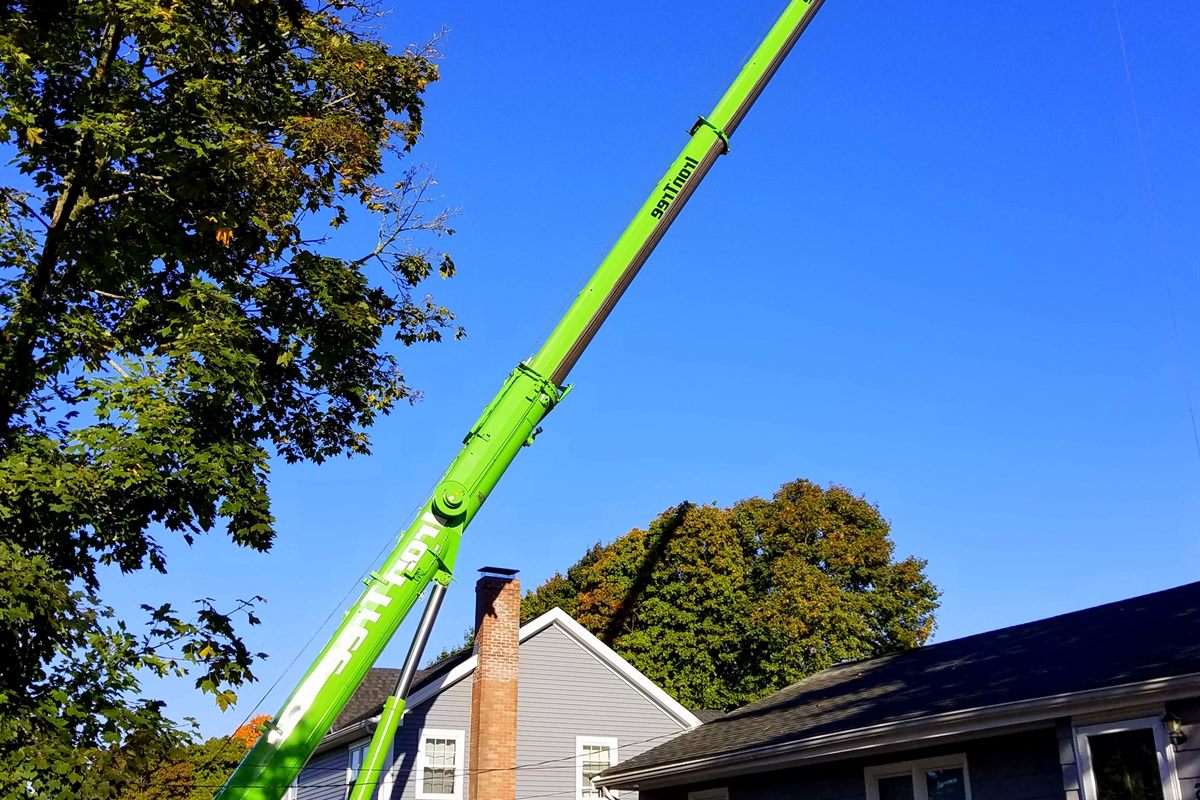
- Crane assistance flips the whole problem: instead of lowering pieces through the canopy, sections are cut and lifted up and over the house to a landing zone at the street. On big dead trees, storm-damaged leaners, and no-access backyards, the crane is routinely the safest and, counted honestly, the cheapest way through the job.
Which method your tree needs is a site-walk decision, and it is exactly what the written quote spells out, method, crew, equipment, and one price. The pricing logic behind it lives in the cost guide and the oak-specific guide, since mature oaks are most of this category here.
Why oaks dominate the technical list
Oak is dense, heavy wood, roughly half again heavier than pine by volume, and mature oaks carry enormous spreading crowns. A trunk section a climber could swing on a pine becomes a crane pick on a red oak. Add the water oak habit of rotting from the inside just as it reaches maximum size, and you get the classic Garner technical job: a huge, half-hollow tree that has to come down carefully and soon. Our standard removal page covers the decision signs; once the trunk passes about three feet across or anything sits underneath it, you are on this page.
When is a crane actually needed?
Almost never for height alone, and often for condition and access. Four methods cover nearly every large removal, and the one that applies is decided at the base of the tree rather than from a photograph.
| Method | When it applies | Typical 2026 range |
|---|---|---|
| Fell in one piece | Open ground in the fall path, sound trunk, room to work | $1,500 to $3,000 |
| Climb and rig down in sections | Structures or fences nearby, sound enough wood to climb | $2,500 to $4,500 |
| Aerial lift and rig | Same as above, with truck access to the tree | $2,500 to $4,500 |
| Crane-assisted pick | Dead or decayed wood that cannot be climbed safely, or sections that must travel over a roof rather than around it | $3,000 to $6,000+ |
Planning ranges for this market, not quotes. The full breakdown by tree size sits on the Garner cost page, and the statewide view is in the NC tree removal cost guide.
The distinction people get wrong is drama versus method. A tree resting on a roof that comes off with ground rigging in daylight is a large removal, not a technical one, and it prices in the large band. A perfectly upright dead pine that nobody can safely climb is a crane job at twice the price. What sets the number is how the wood has to move, not how alarming the situation looks.
What actually moves the price
- Access, first and always. A 36-inch gate rules out every machine larger than a walk-behind. If the wood has to be carried out by hand, the labour line doubles on the same tree.
- What is underneath. A septic field, a paver patio, an irrigation system or a pool cannot take a chipper truck or a dropped section. Protecting them costs time, and time is the whole bill on technical work.
- Condition of the wood. Dead and decayed trees cost more than live ones of the same size, because a climber cannot trust the anchor points. This is the most common reason a job that looked routine comes back as a crane quote.
- Where the sections have to travel. Over a roof is expensive. Around the side of the house is not.
- Disposal. A mature oak is several tons of wood. Hauling it off, bucking and stacking it on site, or leaving rounds for you to split are three different prices, and it is worth asking for all three.
- The stump. Almost never included unless the scope says so. Grinding on the same visit avoids paying a second mobilisation.
What happens to your yard
The honest version: a crane or a lift on a residential lot leaves marks, and anyone promising otherwise has not done many. What a competent crew does is decide in advance where the weight goes and protect it, with plywood or mats under the tracks and outriggers, and by planning the drop zone before the first cut rather than during it.
Worth agreeing before work starts: where equipment will sit, which route the wood takes out, whether the lawn there is something you care about, and what "cleanup" includes. Raked and blown clean is a different standard from brush removed, and both are legitimate as long as the quote says which one you are buying.
The dead tree over the house
This is the specific case that turns into the expensive version, and the reason is straightforward. Dead wood fails unpredictably, so a climber cannot safely tie into it, which pushes an otherwise ordinary removal into crane territory. The cost curve is steep and it runs one direction.
Which is the argument for not waiting. A tree you already know is dead, standing over a structure, gets more expensive every season it stays up, and eventually the decision gets made for you in a storm at storm-week rates. The four checks that tell you whether a tree is actually dead take about ten minutes with a pocket knife. There is also a legal dimension if a neighbour has put their concern in writing: North Carolina applies the ordinary negligence standard to falling trees, and it turns on whether the owner had notice of the dangerous condition. That is general information rather than legal advice, and your insurer and an attorney decide the specifics.
Ask for the certificate. From anyone.
Technical removal is precisely the work where insurance is not a formality, so ask every bidder for a certificate of liability and workers' comp before anyone leaves the ground. Crews rigging half-ton wood over your roof should hand you a certificate of insurance with the quote, unprompted, and ours does. It is worth being blunt: if a price seems impossibly low for a giant tree, the discount is usually coming out of the insurance line, and you are the one absorbing that risk.
The whole belt, the same standard
Big-tree work takes us across the east and south belt: heritage oaks in South Raleigh, tall pines against new construction in Knightdale and Wendell, river-bottom giants near the Neuse in Clayton, and farm-line hardwoods out toward Zebulon. After the takedown, grinding the flare finishes the footprint. It starts the same way every job here starts: a free site walk and a written price. Set it up here.
Frequently Asked Questions
How much does it cost to remove a very large tree?
Technical and over-structure removals in this area run $2,500 to $6,000 and up, against $1,500 to $3,000 for a large tree that can simply be felled. The gap is method rather than height: the moment sections have to come down on ropes or a crane instead of dropping, the job is slower, needs more people, and needs more equipment. Crane day rates and disposal are the two lines that move a quote most, and every figure is written before work starts.
When is a crane actually necessary?
When the math says so: a big dead tree that cannot be climbed safely, a lean over a structure with no rigging anchor points, or a backyard giant where lifting sections over the house is faster and safer than roping hundreds of small pieces down. A crane is expensive per hour but often cheaper per job, because it can turn two days of rigging into four hours of picks.
Can you remove a big tree from a backyard with no gate access?
Yes. That is what cranes over the house, compact tracked equipment, and old-fashioned piece-by-piece rigging are for. Access changes the method and the price, not the answer. Tell us about the access when you call and the quote will reflect the real plan.
Will the sections damage my roof or yard on the way down?
The entire craft of technical removal is controlling the load: every section is roped, rigged, or crane-lifted, lowered on friction devices, and landed in a planned zone. Lawns get plywood mats under equipment, and landing zones get padded. Some cosmetic lawn wear on a heavy job is normal; holes in roofs are not.
The tree is dead. Does that change things?
Significantly. Dead wood fails unpredictably, so a climber cannot trust it with their weight or their rigging. Dead giants usually mean a lift or crane and a slower sequence, which is why the same tree costs more dead than alive. If you have a big tree that is declining, removing it before it fully dies is the single best way to keep the price down.
Got a tree that needs to come down?
Start with a free on-site quote and an up-front written price. Serving Garner and the east Raleigh belt.