How to Tell If a Tree Is Dead or Dying
Garner Tree Removal • September 15, 2026 • 9 min read
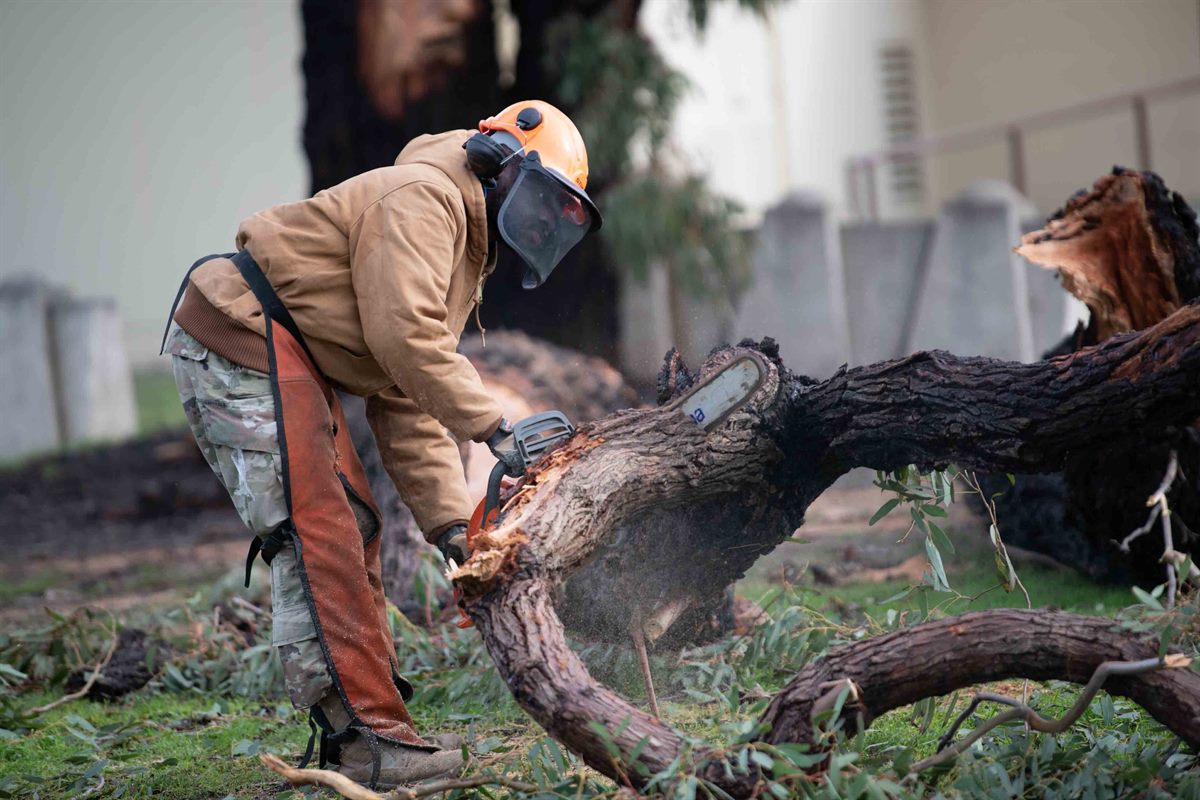
The oak at the back of the yard did not leaf out this spring, or leafed out on one side only, and now you are standing under it wondering whether it is finished or just slow. It is a fair question, because a dormant tree and a dead tree look nearly identical from the patio, and the difference decides whether you are spending money this month or watching it for another season.
Around Garner and the east Raleigh belt the answer usually turns on species. A water oak at the back of a 1990s subdivision and a willow oak on the street out front are at completely different points in their lives, and that changes what “thinning canopy” means. This guide covers the four checks that actually settle it, what each species tells you, and the liability reason not to leave a known dead tree standing.
How Can You Tell If a Tree Is Dead?
A tree is dead when the cambium under the bark is brown and dry rather than green and moist, the smaller branches snap instead of bending, the buds are missing or shrivelled, and nothing leafs out when the rest of the street already has. One of those on its own is not conclusive. Three together are.
Here is how the three states separate:
| Sign | Dormant | Declining | Dead |
|---|---|---|---|
| Cambium under the bark | Green, moist | Green in places, brown in others | Brown or tan, dry, at every spot you check |
| Small branches | Bend, then spring back | Mixed, brittle at the tips | Snap cleanly, dry inside |
| Buds | Plump and slightly moist | Sparse, small | Missing, or shrivelled and dry |
| Spring leaf-out | On schedule with neighbours | Late, thin, or one-sided | None at all |
| Bark | Tight | Cracking, some loss | Falling off in sheets, bare wood beneath |
The word doing the work in that table is “declining”. Most trees people ask about are not dead yet, and a declining tree is where the decision actually lives: prune it and buy time, or remove it before it decides for you.
Not sure which one you are looking at? Request a free written quote and we walk the property, then price whichever the tree actually needs.
The Scratch Test, and Where to Do It
The scratch test is the standard check and it takes a pocket knife. Scrape a patch of outer bark an inch or two across, just deep enough to expose the layer underneath. Green or white and slightly damp means that part of the tree is alive. Brown or tan and dry means that part is not.
The part that people get wrong is doing it once. A tree can be dead on one side and alive on the other, which is exactly what a one-sided canopy is telling you. Check in at least three places on the main trunk at different heights and on different sides before you conclude anything, and check a couple of the larger limbs too.
Pro tip: do this in late spring, not winter. In February a dormant hardwood and a dead one both have bare branches and neither has buds worth reading. By mid-May everything healthy on your street has leafed out, and a tree that has not is answering the question for you. That is also why “how to tell if a tree is dead” gets searched hardest in March around here: people are looking at trees that did not wake up.
What the Species Tells You
Two trees with the same thinning canopy can mean completely different things, and in this market the species is the fastest read available.
Water oak. NC State Extension puts the species at 30 to 50 years, describes it as weaker-wooded than most oaks, and notes it can start breaking apart at maturity from rot, which is why it is often not recommended for urban planting. The water oaks that went in when the neighborhoods off Aversboro Road and around Vandora Springs were built are at or past that age. A water oak with a thinning crown and a cavity at the base is usually doing what water oaks do, not suffering something treatable.
Willow oak. Different story. Willow oaks live well over a century in forest conditions and around 80 to 90 years in urban settings with poor soil, limited root space and added stress. A struggling willow oak in a yard is more likely dealing with something specific: compaction, root damage from a driveway, or grade change. Those can sometimes be addressed.
Loblolly pine. Pines do not decline gracefully, they get colonised. Loblolly and shortleaf are the species most susceptible to southern pine beetle. The beetle usually attacks trees at least 15 years old and goes primarily for trees already stressed by drought, disease, competition or age, though it will attack healthy trees too and can kill several hundred acres in a single outbreak. The tells are a browning crown and S-shaped galleries under the bark. A pine showing both is not a candidate for pruning; it is a removal on a clock, because the neighbours are next.
Why a Known Dead Tree Is a Legal Problem, Not Just an Ugly One
This is the part most homeowners do not know, and it changes the arithmetic.
North Carolina does not apply strict liability to falling trees. It applies the ordinary negligence standard, which means a healthy tree that comes down in a storm is treated as an act of nature and the damaged party’s own policy is the primary coverage. But where the tree was decayed, diseased, dead or otherwise in a dangerous condition beforehand, the owner may be liable in negligence for failing to remove or secure it.
The hinge is notice. Liability requires actual or constructive notice of the dangerous condition, and with no actual or constructive knowledge of the defect, the owner is not responsible. Which means the moment a neighbour tells you in writing that your dead pine worries them, the situation has changed: where a neighbour has complained that a tree could fall, the owner is likely obliged to inspect within a reasonable period to determine the risk.
So the practical reading runs both ways. If your neighbour has a dead tree leaning at your roof, put the concern in writing and keep a copy. If you are the one who has been told, an inspection is no longer optional in any sense that matters.
This is general information, not legal or insurance advice. Your policy and your insurer decide what is covered in your specific situation, and an attorney decides the rest.
What Removal Costs Once You Know
| Work | Typical 2026 range |
|---|---|
| Small tree removal, under 30 ft | $300 to $800 |
| Medium tree removal, 30 to 60 ft | $500 to $1,500 |
| Large tree removal, 60 to 80 ft | $1,500 to $3,000 |
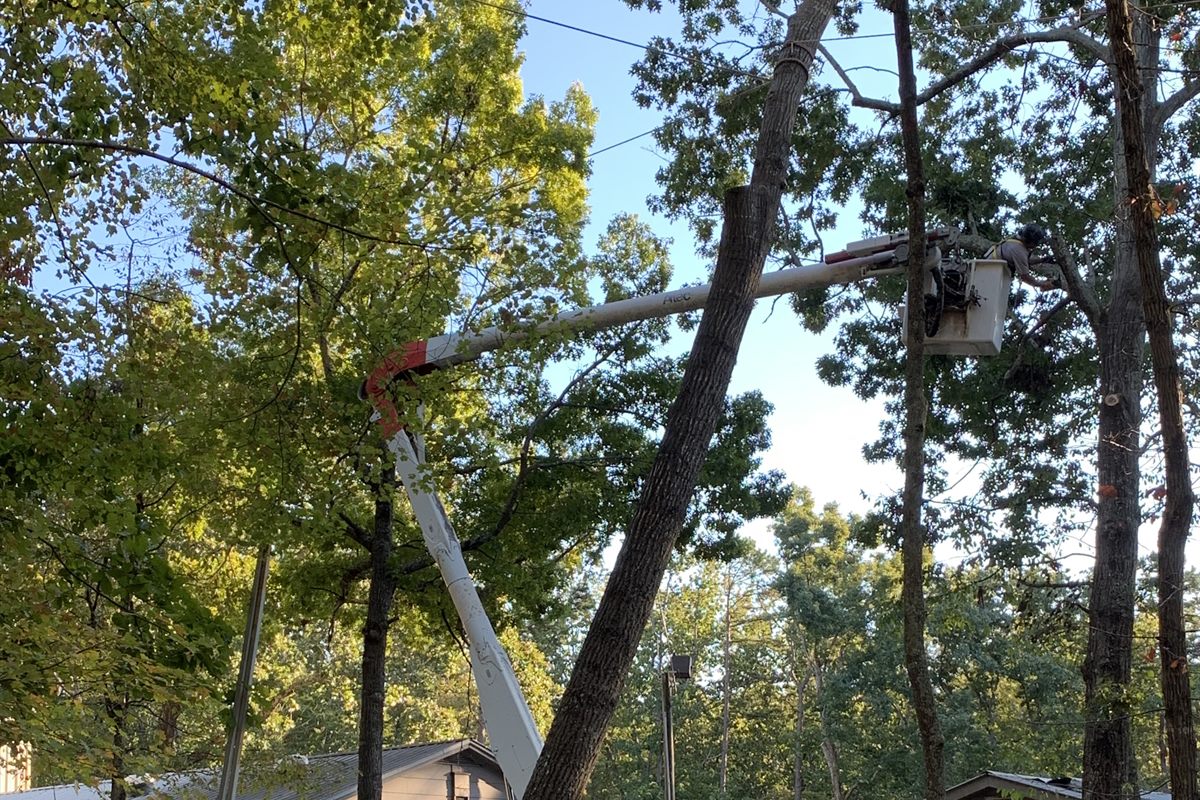
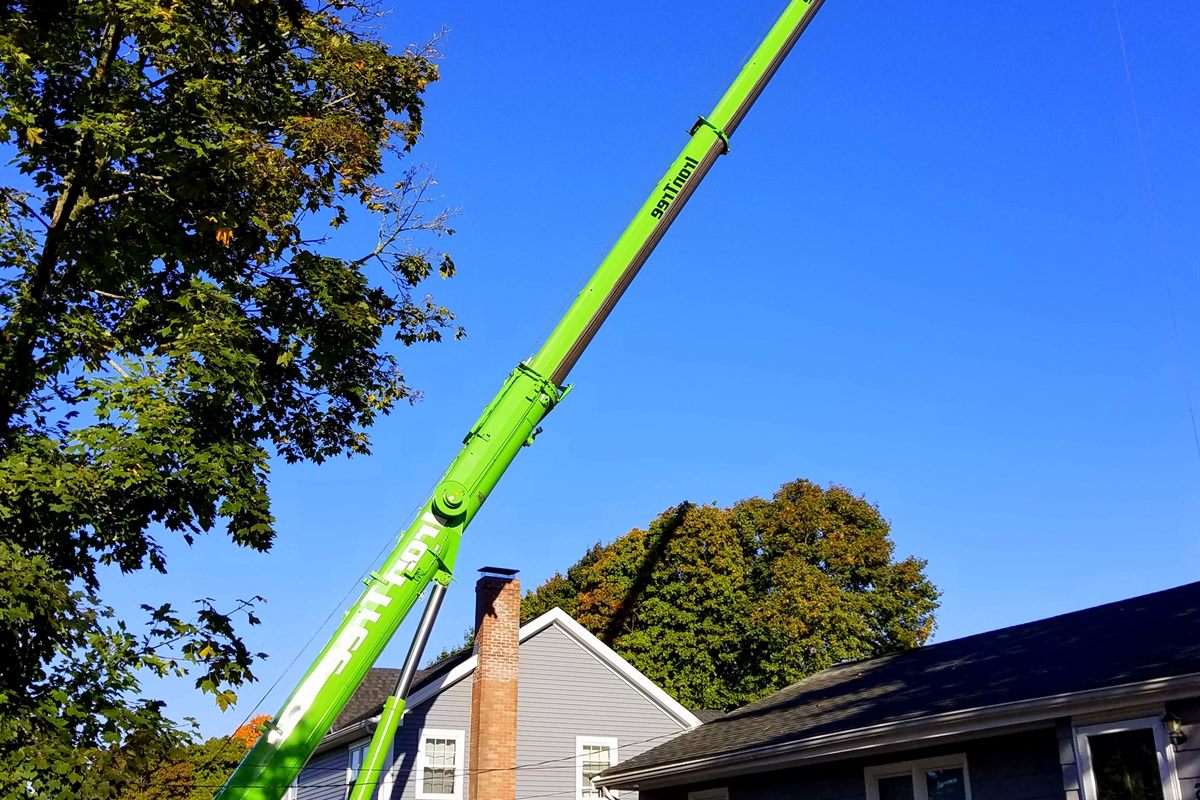
| Technical or rigging work over a structure | $2,500 to $6,000+ |
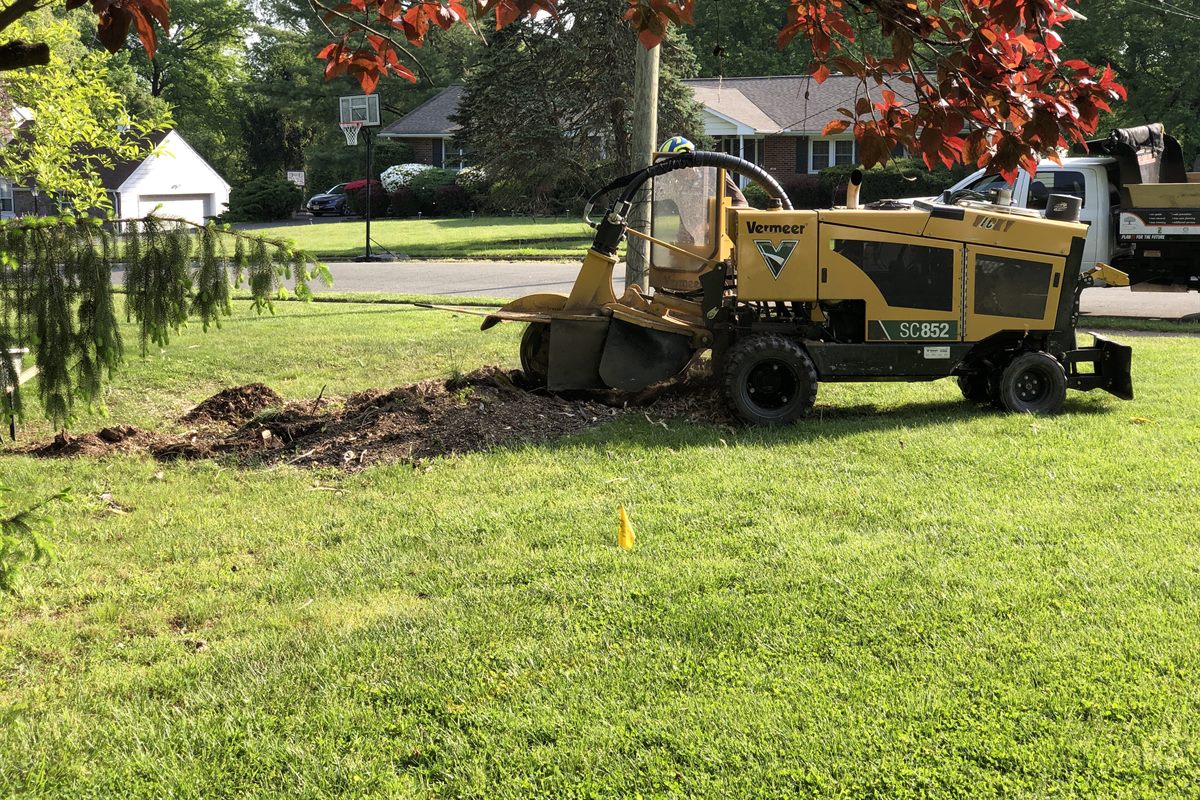
| Stump grinding | $100 to $400 per stump |
Dead trees often cost more than their size suggests, for a reason worth knowing: dead wood is unpredictable to climb and rig, so a dead 60-footer can price like a live 70-footer. Full breakdowns by size and access are in the Garner cost guide and the statewide tree removal cost guide. Every figure here is a planning range, not a quote.
Want the exact number for your tree? Get it in writing before you commit to anything, and compare it against whatever else you have been quoted.
Frequently Asked Questions
How long can a dead tree stand before it falls?
There is no reliable number, and anyone who gives you one is guessing. It depends on species, what killed it, and how much of the root plate has rotted. A beetle-killed loblolly holds its shape for a while and then comes apart quickly; a water oak with basal rot can stand for years and then go over in one gust. If it is within reach of a structure, the timeline is not the useful question.
Is a tree with dead branches a dead tree?
No, and this is the most common false alarm. Mature hardwoods shed lower and interior branches routinely as the canopy closes above them. What matters is where the dead wood is: dead branches scattered low and inside are normal, a dead top or a cluster of dead branches in the upper canopy is not.
Can a dead tree be saved?
No. A dead tree is dead, and anyone offering to treat one is selling you something. A declining tree is sometimes worth intervening on, which is where pruning to reduce wind load and remove dead limbs genuinely buys time. Deciding which one you have is what the scratch test is for.
My tree is dead and near the power line. Who handles that?
Depends on the wire. The line running from the pole to your meter is your responsibility to keep clear, and Duke Energy will de-energize it at no cost on request before tree work. Anything further up the street is Duke’s. A dead tree touching a line right now is a call to Duke’s 24-hour emergency line, not to a tree company. The Duke Energy trimming guide covers the whole boundary.
Does a dead tree in a stream buffer still need a permit?
Buffers are more permissive here than people expect. Under the Neuse riparian buffer rule, removal of individual trees that are dead, diseased or damaged is deemed allowable, as is removal of individual trees in danger of causing damage to dwellings. Healthy vegetation in the inner 30 feet is what the rule protects. Requirements still vary by parcel, so the Division of Water Resources makes the call on yours.
Do you remove dead trees in Knightdale and Clayton?
Yes. Dead and declining removals are ordinary planned work, quoted in writing across Knightdale, Clayton, Wendell and Fuquay-Varina, as well as Garner itself.
Dead Tree in Garner or East Wake?
If the checks above point one way, the next step is a price rather than another opinion. Dead and declining removals are ordinary planned work for us across Garner and east Wake. We quote removal, pruning where the tree is worth keeping, and stump grinding afterwards, across Garner, Knightdale, Clayton and Wendell.
Request a free written quote or call (919) 322-8083 during business hours, and you get an up-front written price before anything starts. If the tree turns out to be dormant rather than dead, we will say so, and the cheapest job is the one you did not need.
Sources: NC Extension Gardener Plant Toolbox: Quercus nigra · NC Forest Service: Southern Pine Beetle Prevention Program · NC Pro Bono Resource Center: Disaster Assistance Manual, Falling Trees · 15A NCAC 02B .0714, Neuse riparian buffer rule