Smithfield, North Carolina
Tree Removal in Smithfield, NC from Historic Blocks to the Neuse Floodplain
Smithfield is the seat of Johnston County and began as a trading post on the banks of the Neuse River at Smith's Ferry, according to NCpedia, on the fall line where the river leaves the Piedmont for the Coastal Plain. The river still sets the terms on the low ground: when Hurricane Matthew came through in October 2016, Johnston County's emergency management director said Smithfield "was not passable." Johnston County's own history page adds that Smithfield was the county's first town, chartered in 1777. Whichever part of town the tree is in, the site quotes tree removal, stump grinding and trimming with a free written price before anything is scheduled, and no guessing over the phone.
Mon-Sat 7:00 AM - 7:00 PM • Serving Smithfield & the surrounding east Raleigh belt, storm season included
Free Smithfield Tree Quote
Tell us about the tree or stump and we'll get right back to you with an up-front written price. Prefer to talk? Call (919) 322-8083.
Locally Focused
100% dedicated to Garner & the east Raleigh belt
Free Written Quotes
Walk the property, get a number, no pressure
Up-Front Pricing
A written number before any saw starts
Cleanup Included
Wood, brush, and debris handled, yard raked
On the Fall Line Where the Neuse Leaves the Piedmont
NCpedia's entry on Johnston County places Smithfield, with Kinston and Goldsboro, among the Neuse River towns developed on the fall line, the seam where the Piedmont gives way to the Coastal Plain. Garner sits upstream on Piedmont clay. Johnston County's own history page says Smithfield was the county's first town and second county seat, chartered in 1777, and the Johnston County Courthouse stands at 212 E. Market Street.
The ground changes along that seam. The NC Wildlife Resources Commission describes Coastal Plain soils as predominantly sandy, low in pH and seasonally saturated, and names loblolly pine, bald cypress, water tupelo and swamp chestnut oak among the trees they favor, with southern red, blackjack and water oak, flowering dogwood, blackgum and sweetgum alongside. Loblolly pine and water oak grow in Garner too, so a Smithfield yard can hold the same species on different soil.
Water oak is worth knowing by name. NC State Extension gives it a lifespan of about 30 to 50 years, calls it weaker-wooded than most oaks, and notes that it can start to break apart at maturity from rot, which is why it is often not recommended for urban planting. Whether a particular tree is sound is a question for an arborist; what this site quotes is the tree removal or trimming and pruning that follows, in writing, before anything is scheduled.
North Smithfield and Brooklyn: Shade Trees on the Record
Two of Smithfield's residential neighborhoods are on the National Register of Historic Places, and both nominations mention their trees. The North Smithfield Historic District, about 50 acres with 120 contributing buildings along streets that include Second, Third, Fifth, Seventh and Hancock, is described in its nomination this way: "The close-knit neighborhood boasts mature shade trees and shrubs and sidewalks aligning the streets." The Brooklyn Historic District, two blocks south of the town center, spans about 30 acres bounded by Spring Branch Creek, South Fifth Street, Lee Street and South Third Street, and its nomination describes 92 principal buildings built mainly between 1870 and 1950, "set in a pleasant grid of streets with mature shade trees and sidewalks." Both nominations refer to the downtown district as the Smithfield Historic District, listed in 1993.
A mature shade tree over an older house is a trim-or-remove decision, not an automatic removal. Where the wood is sound, thinning and deadwooding with tree trimming and pruning can take weight off long limbs and keep the shade. Where a tree has to come down next to a house, a sidewalk and the neighbors, it is taken apart in rigged sections rather than dropped whole, which is what large and technical removal covers. The written quote names the method.
A tree between the sidewalk and the curb may not be yours to remove. Smithfield's Unified Development Ordinance, Section 10.12, says: "Removal of any tree on town-owned/maintained public right-of-way or property has to be approved by the Appearance Commission before removal." On streets with sidewalks like these, check which side of the line the tree stands on before anyone prices it.
The Neuse Floodplain and Wet Ground Around Smithfield
Parts of Smithfield lie in the Neuse River floodplain. NOAA's Climate.gov case study on the region quotes Durwood Stephenson of Johnston County Emergency Management on Hurricane Matthew in October 2016: "Smithfield was not passable; I couldn't get to my office, and I don't live but five or six miles away." The Buffalo Creek Greenway, a 2.94-mile paved trail, follows the Spring Branch to the Neuse River Walk at Smithfield Town Commons, which puts part of the town's trail system along that low ground.
Saturated soil holds roots more loosely than dry ground, so a large tree on wet ground can fail at the roots rather than break higher up. If a tree near the water is leaning, or the soil at its base is lifting, that is a reason to have it looked at before the next storm rather than after. When the concern is a specific tree over a house or a driveway, the free written quote prices the removal or the pruning, whether the property backs up to Buffalo Creek or sits nowhere near the water.
This site quotes planned work only. If a tree is already down on a house or on a line, the first call is a 24-hour tree service or Smithfield's own Public Utilities Department. Once the hazard is stable, getting the tree off the property and grinding the stump is ordinary work, quoted in writing from the same bands as any other job.
Smithfield's Own Power, Its Limb Rule, and What the Quote Covers
Inside the town limits, the power line past the yard belongs to the town, not Duke Energy. Smithfield's Public Utilities page calls it "a public power community," running electric distribution, water and wastewater itself, and ElectriCities of North Carolina dates the town's electric system to 1912. Smithfield has no trimming policy posted on its site, so for a tree near a line, call the town's Electric Distribution division at 919-934-2230 first. The power line guide for Johnston County covers the other providers in the county.
Smithfield's yard waste rules draw a clear line: "The Town will not collect debris left by a tree service contractor." Limbs a homeowner leaves must be cut to 6 feet or less, no larger than 4 inches in diameter, kept separate from other debris and stacked neatly behind the curb, no more than 4 feet high and 6 feet wide. Debris from hired tree work is therefore the contractor's to take away. The quote this site writes for a Smithfield tree covers that cleanup, from chipping the brush to removing or stacking the wood, and shows stump grinding as a separate figure.
On permits, Smithfield's ordinance speaks to homeowners directly. Section 10.9.1.8.1 of its Unified Development Ordinance reads: "Except for the construction of single-family residences in subdivisions prior to the recording of a final plat for the subdivision, single-family residences are exempt from this Article." The Johnston County permit guide explains how this plays out, and the right-of-way exception above still applies. For dollar figures ahead of a visit, the tree removal cost guide holds every band, and the same bands apply here.
Tree Services in Smithfield
The same walk-the-property quotes and up-front written pricing we bring to every Smithfield job. Each service has its own dedicated page explaining exactly what we do.
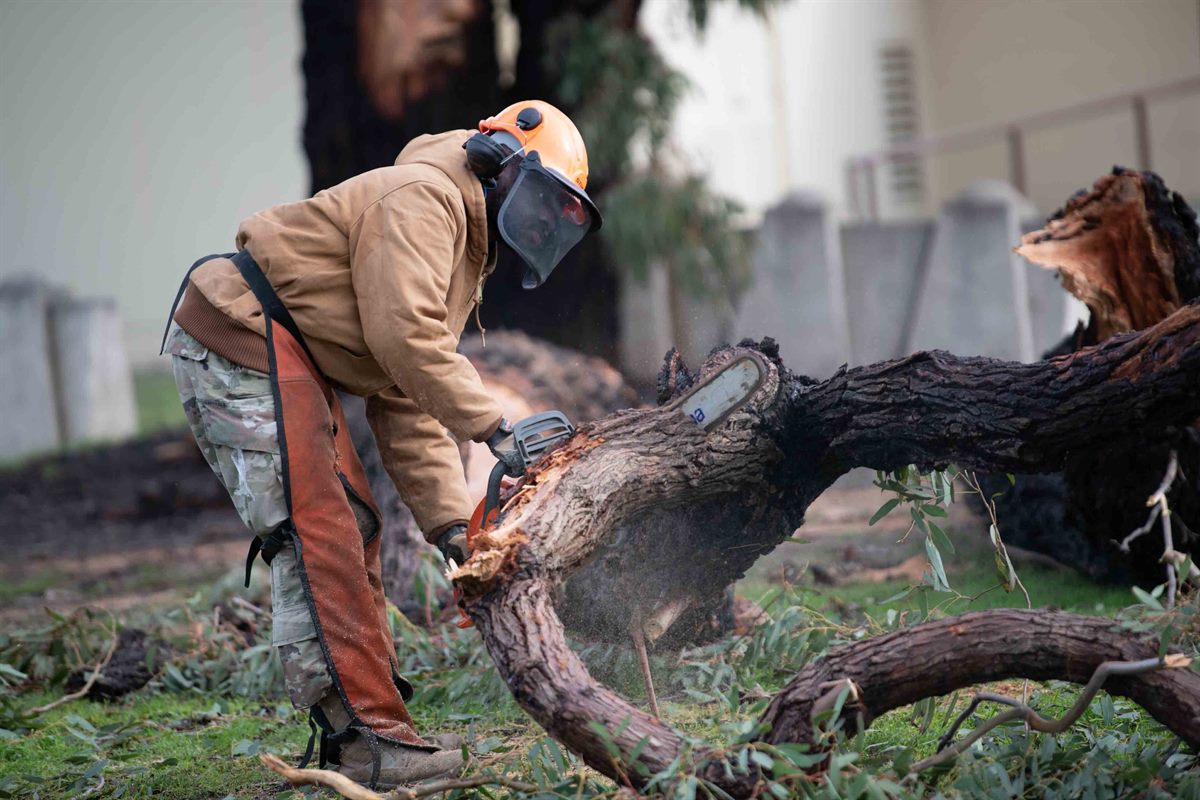
Tree Removal
Safe removal of dead, dying, storm-damaged, or unwanted trees, from single backyard trees to tight-access takedowns.
Learn more →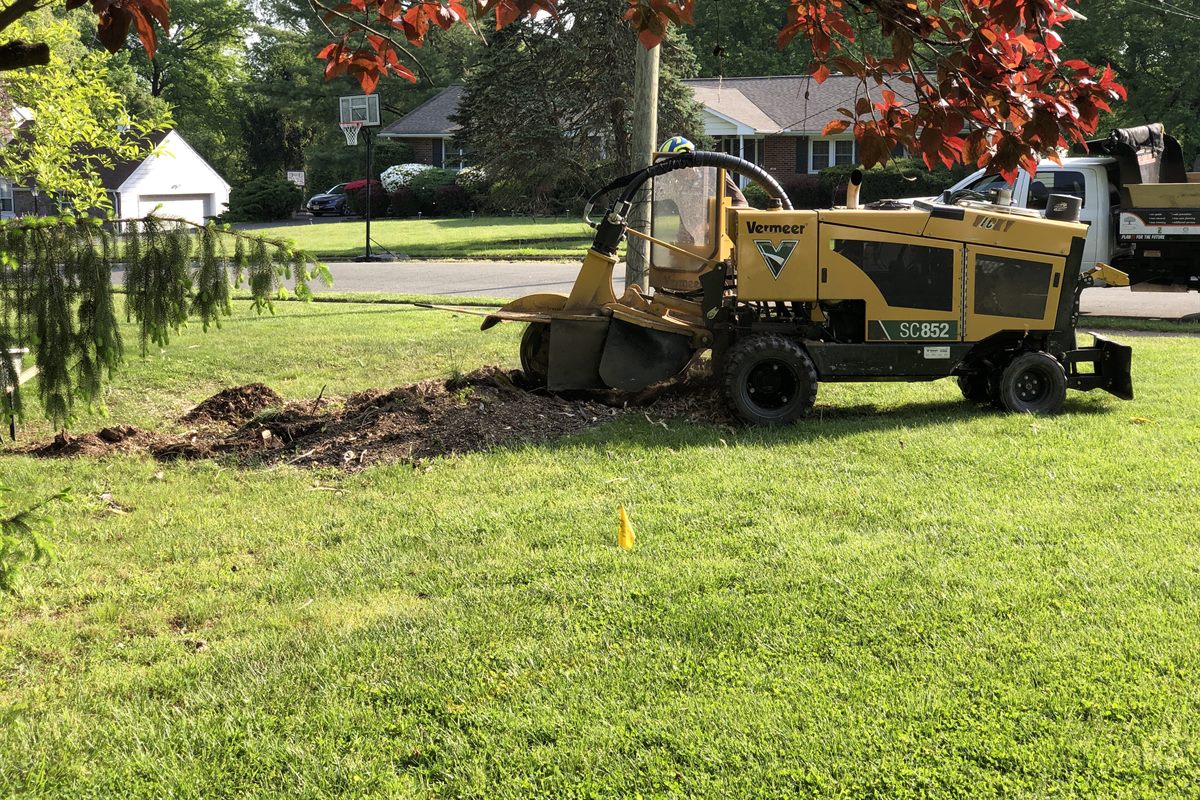
Stump Grinding & Removal
Grinding stumps below grade so you can mow, replant, or build over the spot, priced per stump with volume discounts.
Learn more →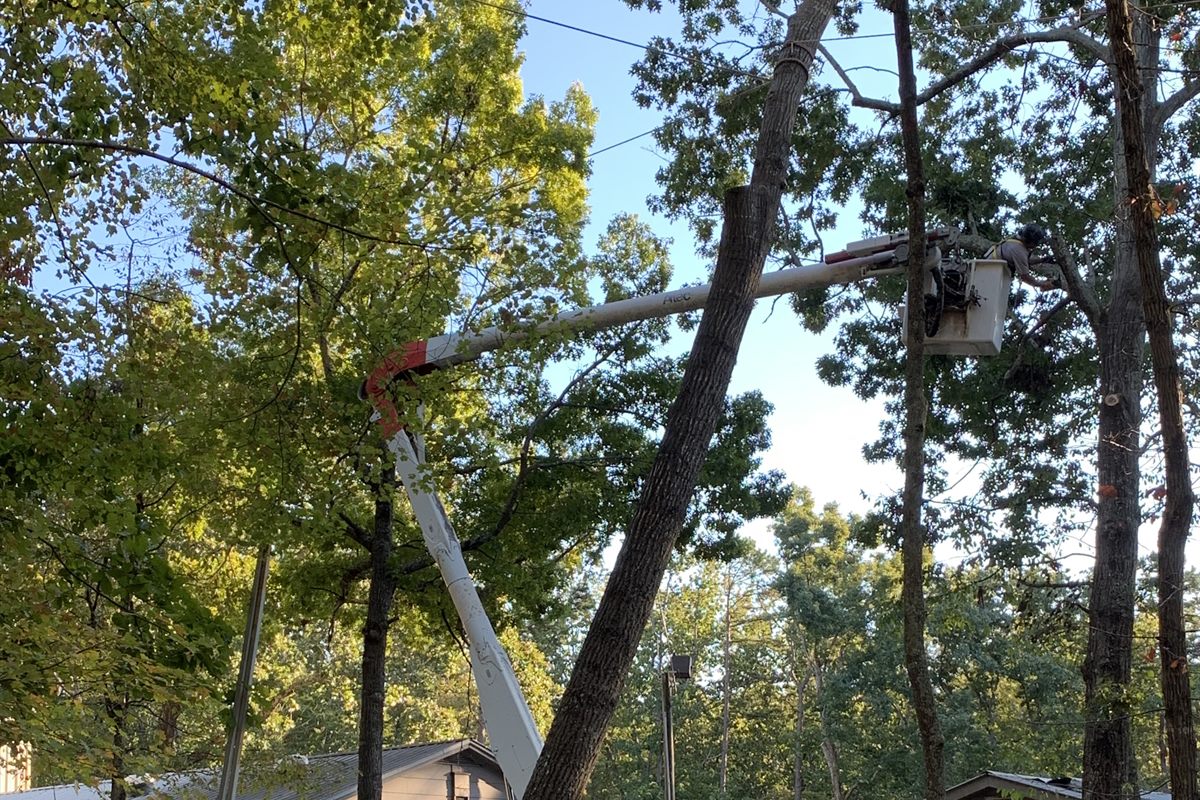
Tree Trimming & Pruning
Crown thinning, deadwooding, and clearance pruning that keeps mature oaks and pines healthy and off your roof.
Learn more →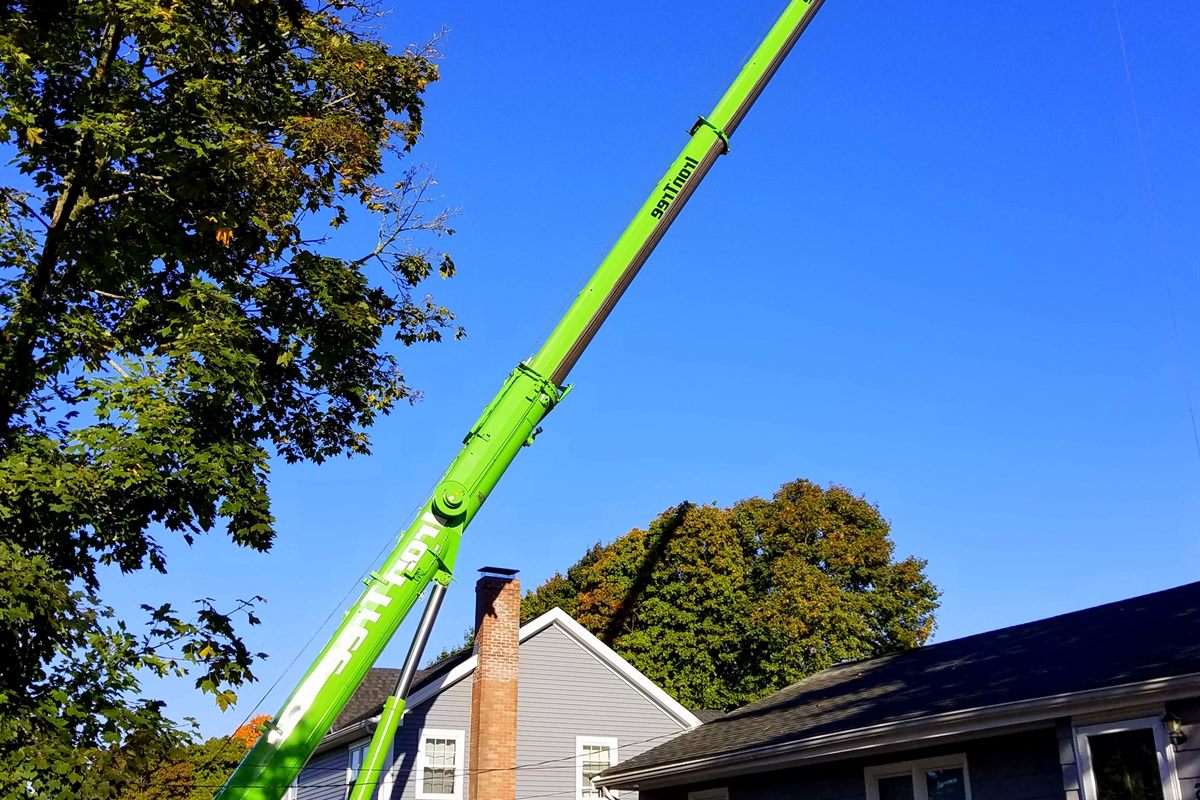
Large & Technical Removals
Crane-assisted and rigging-based removals for big oaks and pines over houses, fences, and power drops.
Learn more →How Tree Removal Works in Smithfield
Free On-Site Quote
We walk the property, look at the tree, the targets under it, and the access, and give you a written price before anything is scheduled. No pressure, no vague ranges.
Plan & Schedule
You get a clear scope: what comes down, how, what happens to the wood and debris, and whether the stump is ground, all before anything starts.
Safe Takedown
Crews drop or rig the tree down in sections, protecting your roof, fence, septic lines, and landscaping. Tight access is a plan, not an excuse.
Cleanup & Haul-Off
Brush chipped, wood hauled or bucked and stacked if you want to keep it, yard raked. The only thing left behind is the daylight.
Want numbers first? See the full tree removal pricing guide, the same pricing applies in Smithfield.
Serving Every Smithfield Neighborhood
Smithfield's older residential streets sit in the North Smithfield and Brooklyn historic districts, whose nominations both describe mature shade trees and sidewalks, with the downtown blocks and the courthouse on Market Street between them. The low ground follows the Spring Branch and the Buffalo Creek Greenway down to the Neuse River Walk at Town Commons.
Neighborhoods and areas we cover around Smithfield include downtown Smithfield, the North Smithfield Historic District, the Brooklyn Historic District, Hancock Street, North Second Street, South Fifth Street, Lee Street, the Buffalo Creek Greenway and Spring Branch, the Neuse River Walk at Smithfield Town Commons, Smithfield Community Park, the Ava Gardner Museum area downtown, the Johnston County Courthouse block on Market Street, the Neuse River at the old Smith's Ferry crossing, and the surrounding communities. Wherever you are in Smithfield, you get the same free on-site quote, the same up-front written price, and the same local crew.
Smithfield Tree Removal Questions, Answered
How much does tree removal cost in Smithfield?
As planning ranges: a typical tree runs $500 to $2,000, a large tree (60 to 80 feet) runs $1,500 to $3,000, and a technical or over-structure removal runs $2,500 to $6,000 or more. Stump grinding adds $100 to $400 per stump. Size, condition and what sits under the tree set the price, and every Smithfield job gets a free written quote before it is scheduled.
Do I need a permit to remove a tree in Smithfield?
Not for an existing single-family home, under Smithfield's Unified Development Ordinance. Section 10.9.1.8.1 exempts single-family residences from the article that holds the tree rules, except homes being built in a subdivision before its final plat is recorded. A tree on town-owned or town-maintained right-of-way is different: Section 10.12 requires Appearance Commission approval before it is removed. The Johnston County permit guide has the detail; the town's planning department has the final answer for your address.
Does Smithfield’s own power company change anything about tree work near my house?
It changes who you call. Inside the town limits, Smithfield runs its own electric system, not Duke Energy, so a tree threatening a line or a service drop is a call to the town's Electric Distribution division at 919-934-2230. Nothing near a live wire is work this site takes on; after the town has handled the line, the tree is quoted in writing like any other job.
Why does wet ground near the Neuse matter for a tree?
Saturated soil holds a root plate more loosely than dry ground, so a tree on low, wet ground can go over whole, roots and all. Parts of Smithfield lie in the Neuse floodplain: Johnston County's emergency management director said the town was not passable after Hurricane Matthew in 2016. If a tree near the water is leaning or the soil at its base is lifting, have it looked at before storm season.
Can I just leave the cut limbs at the curb for the town to pick up?
Only limbs you cut yourself, within the town's limits: 6 feet or shorter, no more than 4 inches in diameter, stacked separately behind the curb. Smithfield's rules say the town "will not collect debris left by a tree service contractor," which is why the written quote from this site lists what happens to the brush, the wood and the stump.
Do you work in Smithfield’s historic districts?
Yes, including the North Smithfield and Brooklyn National Register districts and the older lots downtown. A sound shade tree over an older house may be trimmed and thinned instead of removed; one that has to come down next to a house is taken apart in sections instead of dropped whole, priced with the same free written quote as anywhere else in town.
Nearby Areas We Serve
We cover Garner and the surrounding east Wake towns.
Get your free Smithfield tree quote today
Call now or send the quick form. We look at the tree, explain your options, and give you an up-front written price. Proudly serving Smithfield, NC.