Tree Removal Cost in NC (2026)
Garner Tree Removal • August 17, 2026 • 11 min read
Maybe a summer thunderstorm cracked a limb over your driveway, or the loblolly pine leaning toward your roof finally has you nervous. Either way, you have probably searched for tree removal prices and found everything from $200 to $10,000 with no explanation of the gap. This guide breaks down what homeowners in Garner, south Raleigh, and the east Wake towns actually pay in 2026, so you can budget with real numbers before the first estimator pulls into your driveway.
One honest note before the numbers: every figure here is a planning range for the Triangle market, not a quote. Two trees with the same height can price hundreds of dollars apart based on access, condition, and what the tree is hanging over.
How Much Does Tree Removal Cost in NC?
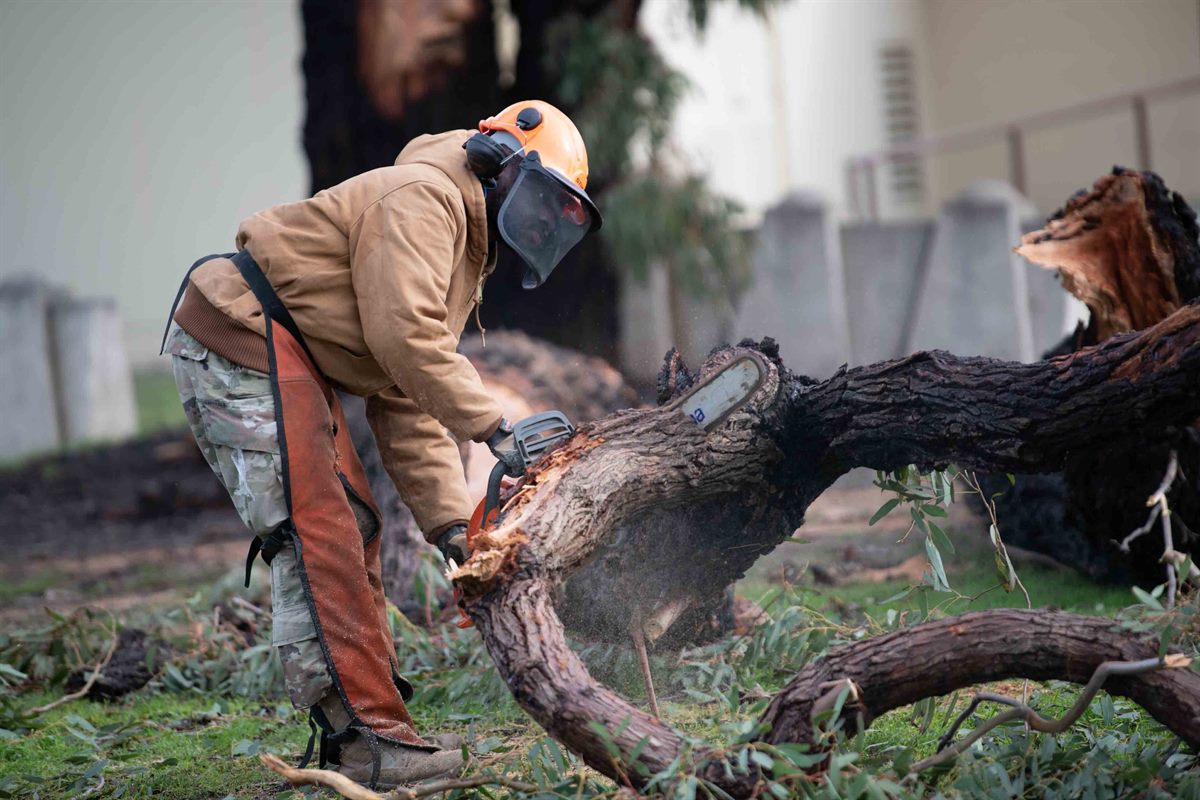
Most single-tree removals in the Triangle run $500 to $2,000 in 2026, with small trees from around $300 and large or technical removals $2,000 to $6,000 and up. The single biggest driver is size, so start your budget with the table below and then adjust for the factors that follow.
| Tree size | Typical cost (2026) | Common example around here |
|---|---|---|
| Small (under 30 ft) | $300 to $800 | A Bradford pear in a Garner front yard, or a dogwood along a fence line in Wendell |
| Medium (30 to 60 ft) | $500 to $1,500 | A leaning loblolly pine in a Clayton backyard |
| Large (60 to 80 ft) | $1,500 to $3,000 | A mature willow oak shading a south Raleigh lot |
| Extra large or technical (over 80 ft, or over a structure) | $2,500 to $6,000+ | A big water oak leaning over a house or power drop in Knightdale |
A few takeaways. First, the sub-$300 prices you see online usually describe shrub-sized trees in wide-open yards, which is not most of the Triangle. Our older neighborhoods are full of 60-plus-foot willow oaks and water oaks planted decades ago, and those live in the upper rows of that table. Second, pines and oaks price differently at the same height: a straight loblolly pine is often faster to bring down than a spreading oak with heavy lateral limbs, which is why big oaks get their own numbers in our oak tree removal cost guide. If you want town-level pricing, our Garner tree removal cost page covers the local end of these ranges.
What Factors Change the Price of Tree Removal?
Two neighbors can get quotes $1,000 apart for the same species. These are the levers that move the number.
Height and spread
Height sets the baseline, but spread matters almost as much. A tall skinny pine is one climb and a controlled fell or a few big sections. A wide willow oak means a climber working out every major limb, roping pieces down one at a time. More cuts, more rigging, more hours.
Access: fences, slopes, and septic fields
If a bucket truck or crane can park next to the tree, the job goes fast. If the tree is behind a fenced backyard in a Clayton subdivision, on a slope, or sitting over a septic drain field where heavy equipment cannot drive, everything gets carried or winched out by hand. Poor access can add 25 to 50 percent to a removal, and it is the most common reason a “medium” tree gets a large-tree price.
Condition: dead and rotten trees cost more
It feels backwards, but a dead tree usually costs more to remove than a healthy one. Dead wood is unpredictable: limbs snap under a climber’s weight, and rotten trunks cannot be safely climbed at all. Crews slow down, rig more conservatively, or bring in a lift or crane. If you have a dead pine standing from last summer’s drought, do not wait for it to get cheaper, because it will not.
Proximity to your house and power lines
A tree in the middle of the yard can often be felled whole. A tree leaning over your roof, your neighbor’s garage, or the service drop to your meter has to come down in small, roped pieces. That precision work is the difference between the $500 to $1,500 band and the $2,500 to $6,000 band, and it is where you want an experienced large tree removal crew rather than the lowest bidder.
Crane and rigging needs
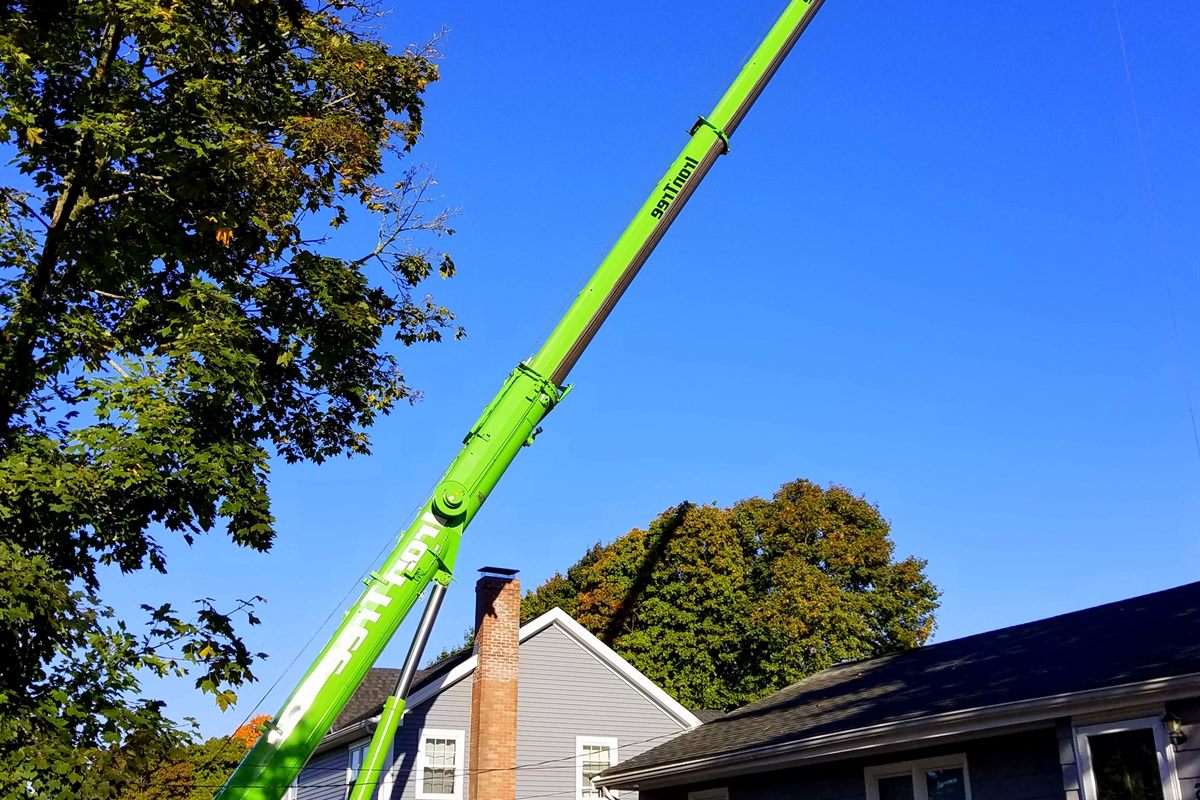
Some removals in tight east Raleigh and Garner lots simply require a crane: no drop zone, structures on three sides, or a trunk too rotten to climb. Crane time typically adds $500 to $1,500 or more to the day, but it can also be the safest and sometimes cheapest way to handle a genuinely dangerous tree.
Debris hauling and log removal
Standard quotes around here usually include cutting the tree down, chipping the brush, and hauling debris. Bucking the trunk into firewood lengths and leaving it stacked can knock a meaningful amount off the price, because hauling heavy oak logs is a big share of the labor. Confirm what happens to the wood before you sign anything.
Stump grinding as an add-on
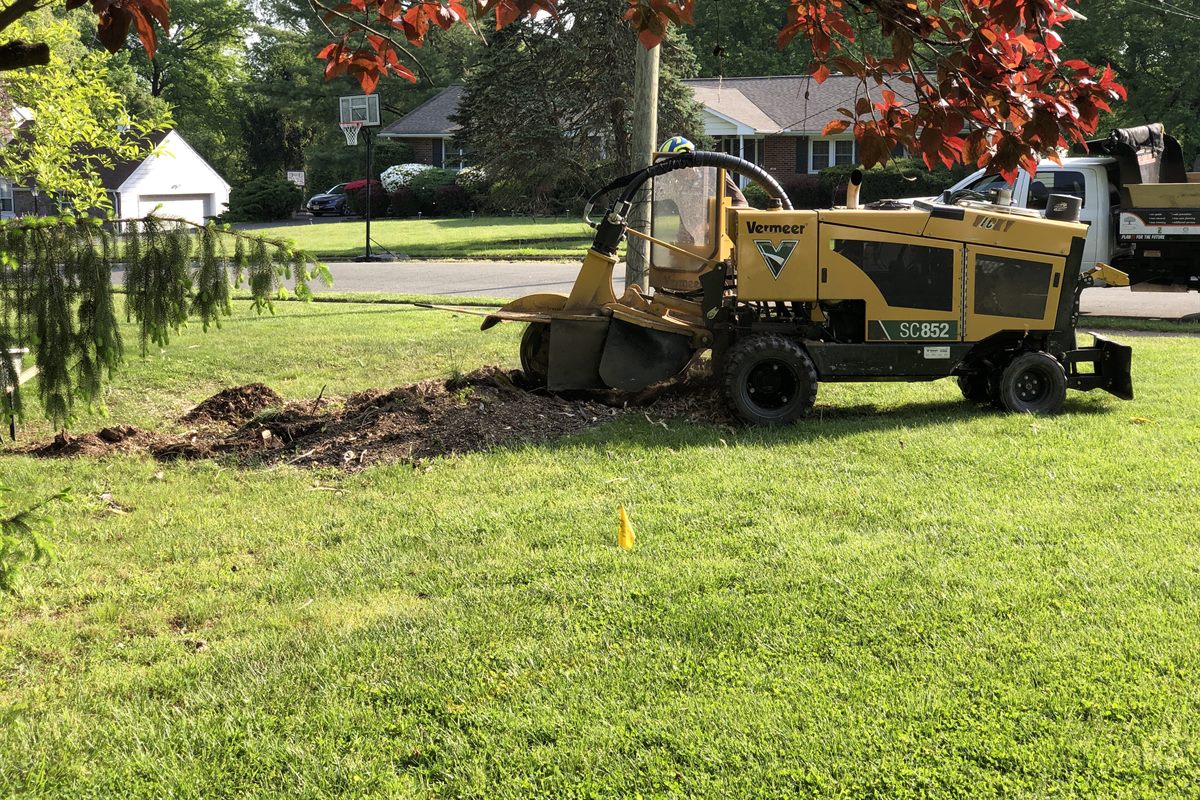
Removal quotes almost never include the stump unless it is listed. Grinding typically adds $100 to $400 per stump depending on diameter. We break the whole thing down in our stump grinding cost guide for NC, including why grinding beats digging the stump out in our Cecil red clay, with Raleigh-specific pricing here.
What about tree removal cost per foot?
Per-foot pricing is a popular search, so here is the honest version: in this market, removals tend to work out to roughly $10 to $25 per foot of height. A 40-foot pine at $15 per foot lands around $600, which squares with the table above. But treat per-foot math as a screening tool, not a quote. It ignores access, condition, spread, and what the tree hangs over, which are exactly the things that move real prices. Use it to sanity-check an estimate: a bid of $4,000 for an easy 40-foot tree, or $400 for an 80-footer over your roof, should both make you pause.
Tree Removal Cost by Scenario
Height tables only take you so far. Access and what sits underneath the tree move real quotes more than species does, so these are the situations that actually show up on Triangle properties.
| Scenario | Typical cost | Why it prices this way |
|---|---|---|
| Mid-size tree, open yard, truck access | $500 to $1,000 | Fell, buck, chip, done |
| Mid-size tree, fenced backyard | $900 to $1,800 | Climber and hand carry, no bucket truck |
| Large oak over the house | $2,500 to $5,000 | Every piece roped and lowered |
| Dead pine, standing, open access | $800 to $1,800 | Cannot be safely climbed, needs a lift |
| Storm-damaged tree on a structure | $1,500 to $5,000+ | Emergency rates, insurance usually involved |
| Multiple trees, one visit | 15 to 30 percent off each after the first | Mobilization is a fixed cost |
If you want to estimate your own tree before calling anyone, our guide on what it costs to cut down a tree walks through the four questions that determine which row you land in.
How Can You Save Money on Tree Removal?
You do not have to gamble on the cheapest bid to keep the price sane.
- Bundle multiple trees. Mobilization (truck, chipper, crew) is a fixed cost. Removing three pines in one visit almost always beats three separate appointments, and most crews will discount trees two and three.
- Keep the wood. Ask for the trunk bucked into rounds and left on site. If you burn firewood or know someone who does, this is the easiest few hundred dollars you will save.
- Schedule off-season. Late fall and winter are slower for Triangle tree crews, and dormant-season work is easier on your yard because the ground is firm and the beds are empty. Storm season pricing, by contrast, is covered in our fallen tree removal cost guide.
- Grind the stump on the same visit. A grinder already on your street costs less than a separate trip with its own minimum.
- Do not wait on a declining tree. A sick tree you can still climb is cheaper than a dead one that needs a crane. This is the one place where waiting for a better price costs you money.
When Is the Cheapest Time to Remove a Tree?
Late autumn and winter are the value window, and the reason is demand rather than difficulty. A dormant hardwood is lighter work: no leaf canopy to handle, frozen or firm ground instead of saturated clay, and better sightlines through a bare crown for rigging. Crews also have more open schedule in the trough, and a crew with an open week quotes differently from a crew booked three weeks deep.
The seasonal shape of this market is predictable enough to plan around:
| When | What happens to demand |
|---|---|
| February | Winter storm damage drives the year’s first surge |
| March to May | Spring surge, as everything that failed to leaf out gets noticed at once |
| June to September | Summer thunderstorms and hurricane remnants, the emergency-heavy stretch |
| October to December | The trough for removals, and the peak for stump work |
So the move on a tree you know is coming down is to book it in the trough rather than waiting for it to become urgent. A tree that fails in a July storm costs more than the same tree taken down deliberately in November, both because storm work carries a premium and because you no longer have the option to shop the quote.
Pro tip: the most expensive tree on your property is the one you were already worried about. Deferring a removal you know is needed converts a planned job at planned-work rates into a storm job at storm rates, and removes your ability to get three quotes. If you have been putting one off, the cheapest month to deal with it is a quiet one.
What Should a Legit Tree Removal Quote Include?
A written quote from a real company should spell out: which trees are coming down (marked or described clearly), whether the price includes limbs, trunk, and debris hauling, whether the stump is included or priced separately, how your lawn and driveway will be protected, and proof of both general liability and workers compensation insurance. Ask for the certificates; a legitimate outfit sends them without friction, and it matters because an uninsured injury on your property can become your problem.
Red flags worth walking away from:
- Door-knockers after storms. Crews that appear in the neighborhood after a hurricane remnant blows through, quoting from the driveway, are the source of most horror stories. Fran in 1996, Matthew in 2016, and Florence in 2018 all brought waves of them to Wake and Johnston counties.
- No insurance proof. “We’re covered” is not a certificate.
- Cash-only pricing. Fine for firewood, not for a $3,000 removal.
- Vague scope. “Take down the big one out back” on a handshake is how disputes start.
- Pressure to decide today. Trees that are not emergencies can wait a week for a second bid.
Frequently Asked Questions
How much does it cost to remove a large tree in NC?
Large trees of 60 to 80 feet typically run $1,500 to $3,000 in the Triangle, and technical removals over structures or power lines run $2,500 to $6,000 and up. Mature willow oaks and water oaks in older Garner and south Raleigh neighborhoods usually land in this range.
How much does it cost to remove a pine tree?
Most loblolly pine removals run $500 to $1,500 for the common 40 to 70 foot backyard pine. Pines are often cheaper than oaks at the same height because they are straighter with less spread, though a dead or beetle-killed pine can cost more because it is unsafe to climb.
What is tree removal cost per foot?
Plan on roughly $10 to $25 per foot of height in the Raleigh and Garner market. Use it as a rough screen only; access, condition, and proximity to structures move real quotes well outside simple per-foot math.
Does tree removal include the stump?
Usually not. Stump grinding is typically a $100 to $400 per stump add-on, priced by diameter. Bundling it with the removal visit is cheaper than a separate trip; see our stump grinding services page for how it works.
Is it cheaper to remove a tree in winter?
Often, yes. Winter and late fall removals can save 10 to 20 percent compared to peak storm season, because crews have open schedules and dormant trees are easier to work. Frozen or firm ground also means less lawn damage in our red clay.
Is there a difference between tree removal cost and tree removal prices?
No, and you will see both phrasings used interchangeably. What actually differs is what a number includes: a “price” quoted over the phone from a photograph is an estimate, while a written quote after someone has walked the property is a commitment. Ask which one you are being given. Stump grinding is the line most often left out of the first number, and pruning the neighbouring trees is the one most often worth adding.
Get a Straight Price on Your Tree
The fastest way to turn these ranges into a real number is a quick look at the actual tree. Garner Tree Removal gives free written quotes on tree removal across Garner, south Raleigh, Clayton, Knightdale, Wendell, Zebulon, and Fuquay-Varina, with insurance certificates provided up front. If the tree may not need to come down at all, our tree trimming cost guide covers the maintenance alternative and what it should run. Call (919) 322-8083 or request your free quote online today.