Cost to Remove a Large Tree in NC (2026)
Garner Tree Removal • September 20, 2026 • 10 min read
The gap between a routine removal and a large one is where most homeowners lose the thread. A neighbour pays $700 to have a pine taken out of an open yard, you get a bid for four times that on an oak that looks about the same height, and nothing on either piece of paper explains why. The cost to remove a large tree is not a bigger version of the small number. It is a different band with its own rules.
Around Garner, south Raleigh and the east Wake towns, that matters more than it does in most markets, because the older streets in Vandora Springs, Heather Hills and Adams Point were planted with willow oaks and water oaks decades ago and those trees are now genuinely large. This guide covers the 2026 band, what puts a tree in it, where it ends and technical pricing begins, and the handful of details that move a quote up or down inside it.
Every figure here is a planning range for this market rather than a quote. The full price list sits on our Garner tree removal cost page, and this guide is the size-band detail behind it.
How Much Does It Cost to Remove a Large Tree in NC?
Most large tree removals run $1,500 to $3,000 in 2026, and a large tree that needs a crane or has to travel over a structure runs $2,500 to $6,000 or more. Where you land inside that spread is set by condition and access, not by an extra ten feet of height.
Here is how the large band sits against the bands either side of it, so you can see which row your tree belongs in before anyone quotes it.
| Band | Typical 2026 range | What it usually looks like |
|---|---|---|
| Small (under 30 feet) | $300 to $800 | A dogwood or ornamental pear in an open front yard |
| Medium (30 to 60 feet) | $500 to $1,500 | A loblolly pine or mid-size maple in a Clayton backyard |
| Large (60 to 80 feet) | $1,500 to $3,000 | A mature willow oak shading a south Raleigh lot |
| Technical or crane-assisted | $2,500 to $6,000+ | A hollow water oak that cannot be climbed, or sections lifted over a roof |
The rows overlap on purpose. A sixty-foot tree can be a medium job or a large one depending on what it is standing over, and the statewide tree removal cost guide covers how the bands relate across every size.
Want the exact number for your tree? Request a free written quote and we walk the property, then price it in writing.
What Counts as a Large Tree Around Here?
In practice, a large tree is one that cannot be felled in one piece and has to come down in sections, which in this area usually starts somewhere around sixty feet. Height is the shorthand, but the real test is whether there is anywhere to drop it.
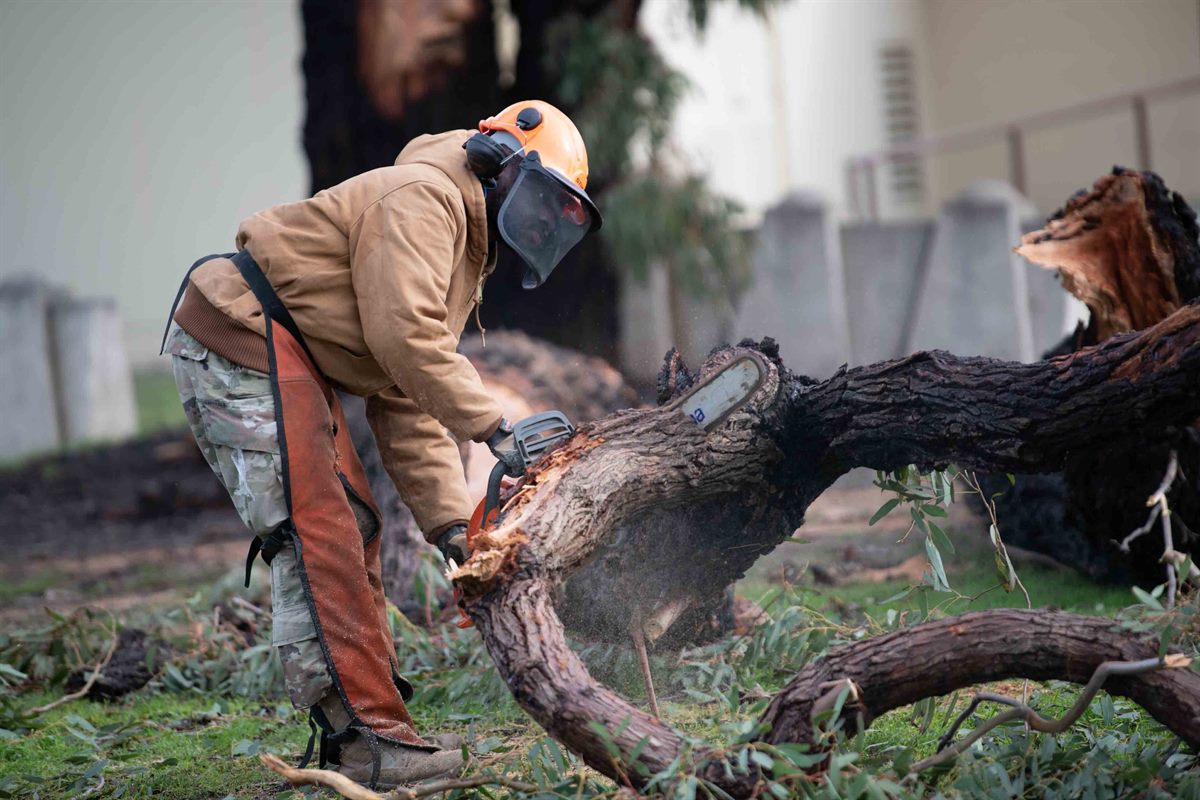
Two trees settle this quickly. A straight loblolly pine at seventy feet in a half-acre yard with nothing under it is a fell and buck: it goes over in one piece, gets cut up, and the whole job is measured in hours. A seventy-foot willow oak on a quarter-acre lot with a house on one side and a fence on the other cannot go anywhere in one piece, so every limb is roped and lowered and the trunk comes down in rounds. Same height, different band.
Canopy spread is the part homeowners underestimate. A mature oak on an older Garner street can spread nearly as wide as it is tall, and each of those lateral limbs is heavy enough to need rigging rather than a drop. That is why oaks sit higher in the band than pines of the same height, a gap our oak tree removal cost guide breaks down in detail.
Where Does the Large Band End and Technical Pricing Begin?
The line is method, not drama. This is the single most useful thing to understand before you read three bids, because it explains most of the spread between them.
A tree on a roof that comes off with ground rigging in daylight is a large removal and prices in the large band, alarming as it looks. A perfectly upright dead pine in an open yard that nobody can safely climb is a technical job at roughly twice the price, boring as it looks. The question is never how bad the situation appears. It is how the wood has to move.
Three things push a job over that line:
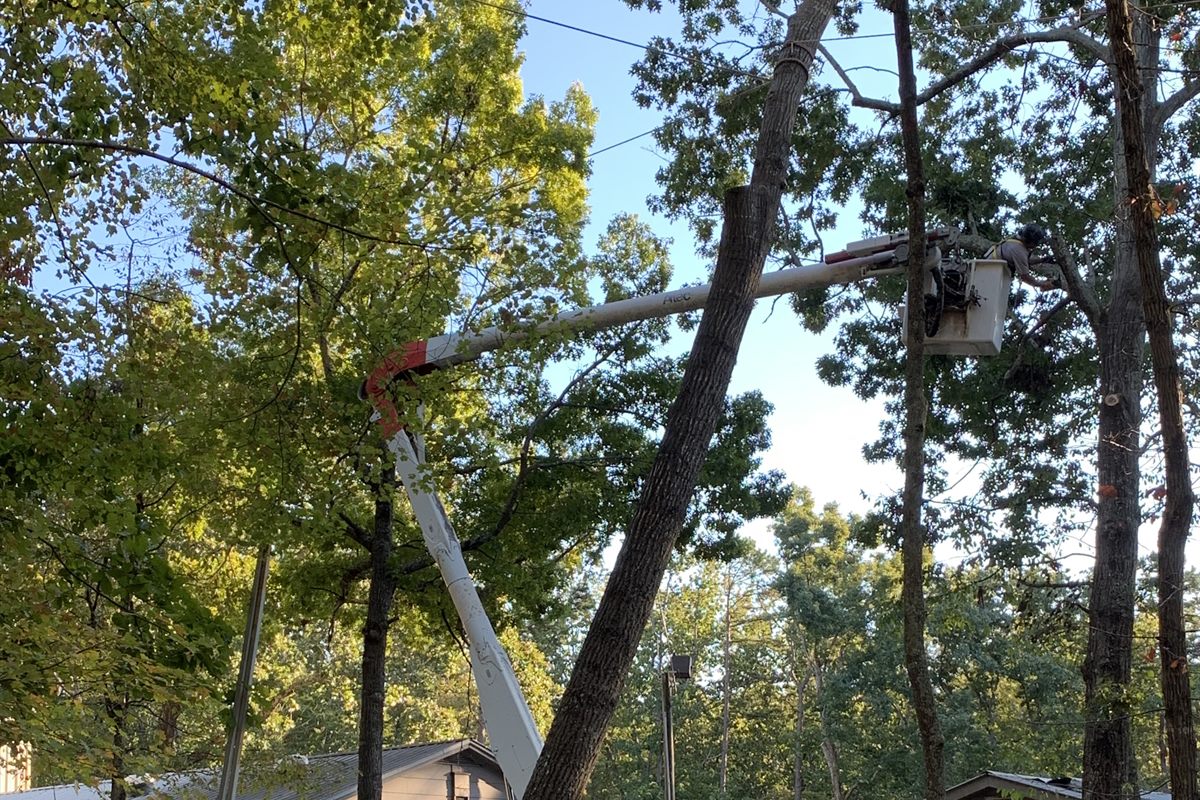
- Wood that cannot be climbed. Dead and decayed wood will not hold a climber’s weight or a rigged load, so the work has to happen from a lift or a crane. This is the most common trigger by a distance.
- No usable rigging anchors. Lowering a limb needs something sound above it to lower from. A tree with a hollow trunk or a broken top often has nothing to tie into.
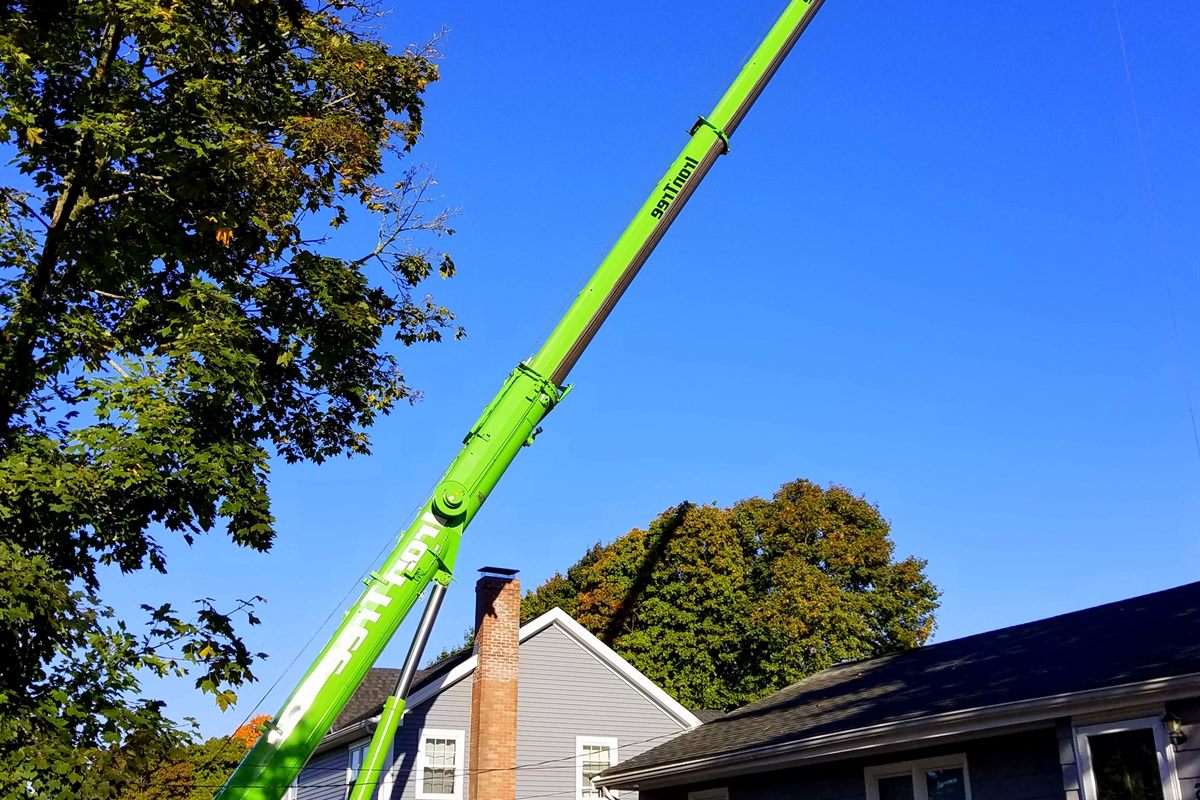
- A travel path over a structure. If sections cannot be lowered through the canopy and have to clear a roof, a pool or a neighbour’s fence, a crane picks them out instead.
Our guide to crane tree removal walks through how that call gets made on site, and the large and technical removal page covers what the method involves.
Pro tip: the cheapest large tree you will ever remove is the one you take out while it is still alive. Water oaks are the local example. NC State Extension puts a water oak’s life at 30 to 50 years and notes it is weaker-wooded than most oaks, breaking apart at maturity from rot. A water oak that is thinning at the top is on a clock, and removing it while a climber can still tie into it keeps the job in the large band instead of the technical one.
What Moves a Large Tree Quote Up or Down?
Inside the band, five details do almost all of the work.
Condition of the wood
A live tree with sound anchor points is rope work. A dead or hollow one is not, and it is the fastest way to add a thousand dollars or more to the same tree. If you are unsure which yours is, our post on how to tell if a tree is dead covers the checks you can do from the ground.
Access and the drag path
Can a chipper and a truck get near the work, or does every piece get hand-carried to the street? A fenced backyard on an older lot in Garner or Wendell can add hours of labour to a tree that would be straightforward out front. Gate width, slope, septic fields and soft ground all count.
What is standing underneath it
A large tree over open lawn drops where the crew wants it to. The same tree over a roof, a driveway, a shed, a fence, a pool or a power drop needs every piece controlled on the way down. Nothing changes a quote faster than what is in the fall zone.
Debris, logs and hauling
Chipping the brush is standard. What varies is the trunk. A large hardwood trunk is a great deal of weight to load and haul, and asking for the rounds to be left on site for firewood is one of the few genuine savings on a big job. Our post on keeping the logs and firewood covers what that looks like in practice.
The stump
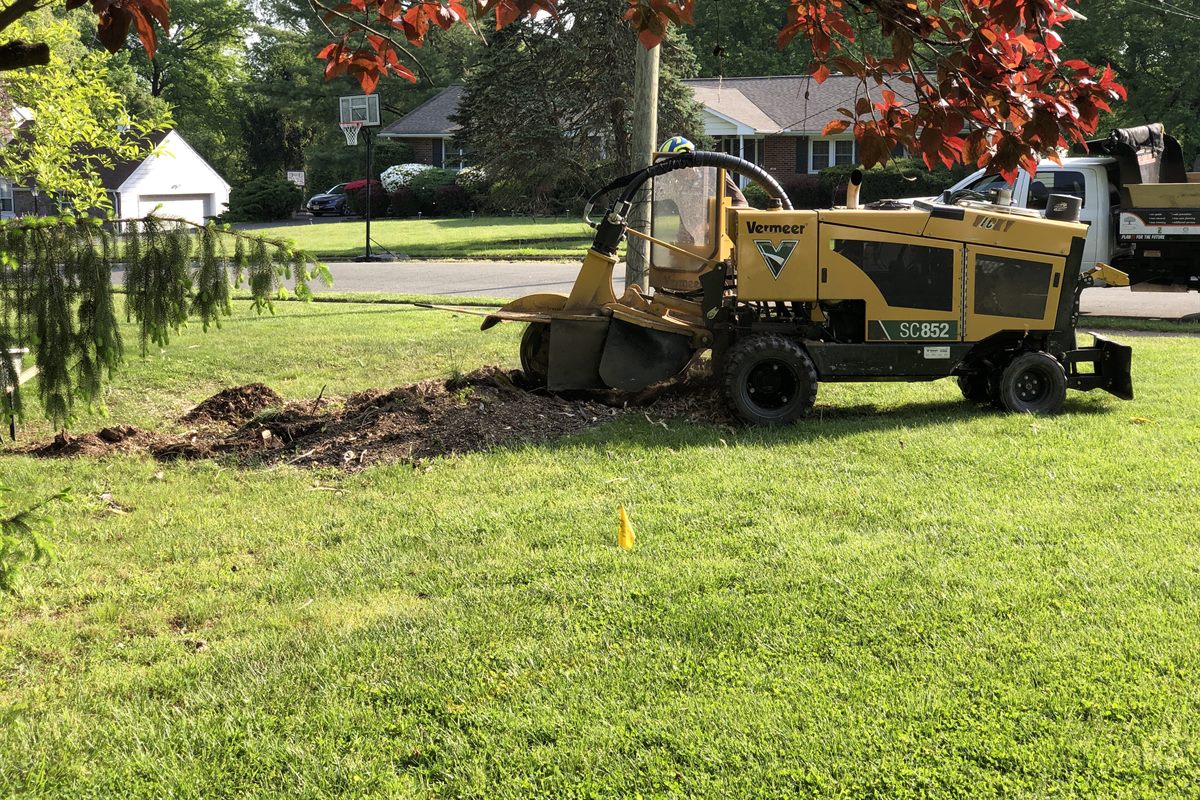
The stump is a separate machine and it belongs on the quote as its own line. Stump grinding runs $100 to $400 per stump, or about $3 to $6 per inch of diameter, with a trip minimum of $100 to $150 if the grinder has to come back separately. On a large tree the stump is at the top of that range, and doing it on the same visit is cheaper than a second trip.
How Can You Keep a Large Tree Removal Affordable?
Book it before it becomes urgent, and bundle everything that shares a mobilisation. Neither of those is a negotiating trick; both are just how the cost is built.
- Remove declining trees while they can still be climbed. This is worth more than every other saving combined, because it keeps the job out of the technical band.
- Bundle trees. The truck, the chipper and the crew are a fixed cost. Two or three tree removals on one visit almost always beats three appointments.
- Grind the stump on the same visit. The grinder is already on your street.
- Keep the wood. Rounds left on site save loading and hauling.
- Book in the quiet season. Late autumn and winter is the trough for removals in this market, and the reasons are covered in our guide to the cheapest time of year for tree removal.
- Get three written bids on the same scope. Not three phone numbers, three pieces of paper that say the same thing about debris, stump and protection.
What does not save money: hiring the crew that turns up in your neighbourhood after a storm with a chipper and no paperwork. Large trees are where that goes wrong most expensively.
Frequently Asked Questions
How much does it cost to remove a 70 foot tree in NC?
A seventy-foot tree normally sits in the large band at $1,500 to $3,000 in 2026 if it can be climbed and rigged down conventionally. If the wood is dead, there is nowhere to tie in, or sections have to clear the house, it moves into technical pricing instead. The height alone does not settle it.
Why is my large tree quote so much higher than my neighbour’s?
Usually species, access or condition rather than height. A spreading oak has far more heavy lateral limbs than a straight pine of the same height, a fenced backyard in Willow Spring means hand-carrying everything, and dead wood changes the method outright. Ask each bidder which method they priced.
Does a large tree removal include the stump?
Not automatically, and that is the most common surprise on a large job. Grinding is a separate machine at $100 to $400 per stump and it should appear as its own line. If a bid does not mention the stump at all, assume it is not in there and ask.
Is it cheaper to remove a large tree in winter?
Generally yes. A dormant hardwood produces far less brush, the bare crown is readable for rigging, and crews in Garner and east Wake have more open schedule between the autumn stump rush and the February storm surge. The saving is real but it is not a fixed percentage, so get it in writing.
What if the large tree is already down on the ground?
That is a different and much cheaper job. A fallen tree already on the ground runs $300 to $1,200 depending on size and access, because the dangerous part is over. Our fallen tree removal cost guide covers how that prices and what insurance does with it.
How do I know a large tree bid is legitimate?
It is written, it names the tree, it says what happens to the brush and the trunk, it prices the stump separately or says it is included, and the company sends a certificate of insurance without any friction. Ask every bidder for that certificate, including us. The full checklist is in what a tree removal quote should include.
Get a Real Number for Your Large Tree
If you have a big oak, pine or sweetgum in Garner, Clayton, Wendell or Willow Spring and you want to know whether it is a $1,800 job or a $4,000 one, that answer comes from a walk of the property: the condition of the wood, the anchor points, the drag path and what is sitting underneath it. We tell you the method, then put an up-front written price against it.
Request a free written quote or call (919) 322-8083. The scope, the debris, the stump and the property protection are all on the page before anyone starts a saw.