Tree Removal with Firewood Split and Stacked
Garner Tree Removal • August 29, 2026 • 10 min read
You Cut Down the Tree. Now What Happens to All That Wood?
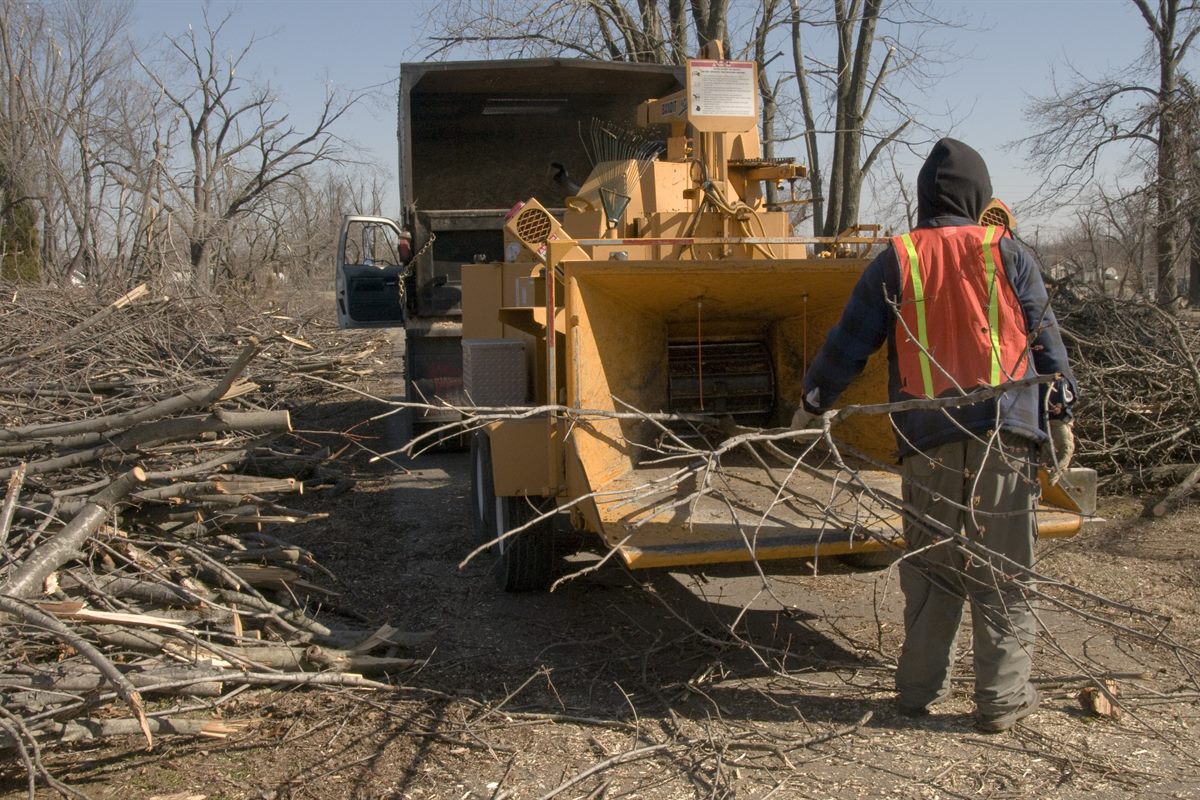
Every fall, Garner homeowners face the same dilemma: a tree comes down, the crew arrives with chippers and chainsaws, and then you watch a year’s worth of potential firewood get reduced to mulch chips in thirty minutes. By the time you realize you could have saved that oak for heating, it’s already gone. The chips get spread in your garden beds or hauled away, and you’re left wondering if you just lost money.
The truth is, most tree removal services default to chip-and-haul because it’s their standard process, not because it’s your only option. If you heat with wood, have a fireplace, or know neighbors who do, that tree represents real value: anywhere from 3 to 6 cords of seasoned firewood, depending on species and size. Adding firewood logs to your tree removal actually costs less than you think, but only if you know what you’re paying for and how long the seasoning takes.
What You’re Really Getting: Wood Quality and Species Matter
Not all firewood is created equal, and the species of tree in your Garner yard determines whether those logs are worth stacking or better left as chips.
Oak is the gold standard. If your tree is an oak (white oak, red oak, or water oak are common in Garner), you’re holding premium firewood. Oak burns hot and long, produces less creosote buildup in chimneys, and people will actually pay for it. One cord of fully seasoned oak can heat a modest Garner home for 2 to 3 weeks during winter, depending on efficiency. Oak’s density makes it heavy and slow-burning, which translates to fewer trips outside to refill the stove or fireplace.
Pine and softwoods are less ideal. If the tree is pine, ash, or other softwoods, the logs burn faster and produce more creosote, a flammable buildup inside chimneys that increases chimney fire risk. Softwood is still usable for outdoor fire pits or supplemental heating, but it won’t command the same value or heating performance as oak. Most Garner homeowners prefer not to stack pine for indoor heating unless they’re desperate.
Hickory and ash are middle-tier. These split well and burn decently, but they’re rarer in residential removals and usually not worth negotiating around.
When you call for a tree removal quote, ask what species you’re removing. That determines whether firewood splitting makes financial sense for you. If it’s oak or hickory, yes. If it’s pine, measure your heating needs against the extra work.
The True Cost of Firewood from Tree Removal
Here’s where the transparency matters, because you’ll see two different price structures, and they affect your decision.
Standard chip-and-haul: Your tree removal costs between $800 and $2,500 (depending on size, location, and access in Garner). The crew chips everything, hauls it away or spreads it as mulch. One price. Done.
Chip-and-haul plus log splitting: Same tree removal fee (see our Garner cost guide for typical ranges), but you add $50 to $150 per cord for splitting and stacking. A 30-foot oak yields roughly 3 to 4 cords of logs. So you’re looking at an extra $150 to $600 on top of the removal cost. This assumes straightforward access and no complications; trees in tight backyards near decks or pools cost more to process.
What does that $50 to $150 per cord actually cover?
- Cutting the logs to usable length: typically 16 to 18 inches for firewood.
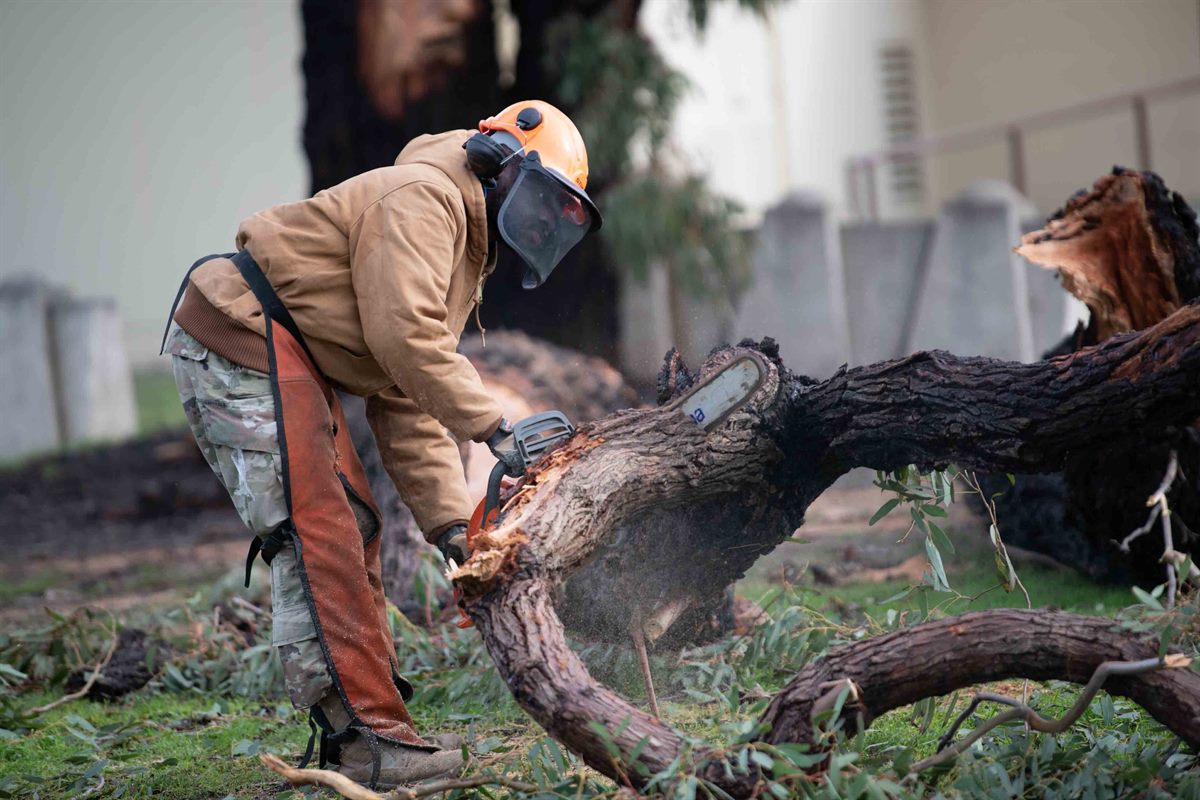
- Splitting each log: either by machine or by hand, depending on the crew’s equipment.
- Stacking for air drying: logs arranged in a neat pile with gaps for ventilation, protecting them from sitting flat on wet ground.
- Labor and fuel: for the chainsaws and splitters used.
The higher end of that range (closer to $150 per cord) applies to:
- Hardwoods (oak, hickory) that are difficult to split by hand.
- Logs already wet from recent rain, which require extra handling.
- Tight sites where the crew has to work in small spaces.
- Rush jobs (winter, when demand peaks).
The lower end ($50 per cord) applies to:
- Softer woods (ash, poplar) that split easily.
- Dry logs freshly cut on a clear day.
- Open sites with easy truck and equipment access.
- Off-season requests (spring or early summer).
Whoever you hire will quote you on-site after assessing the tree. Don’t assume the low end; get an actual estimate.
Seasoning: The Timeline No One Wants to Hear
The moment your logs are stacked, the clock starts. Wood isn’t ready to burn until it reaches a moisture content of 15 to 20 percent. Fresh-cut logs sit at 50 to 60 percent moisture. That gap is seasoning time, and it takes patience.
For Garner, with hot summers and humid springs, expect:
- Oak: 12 months minimum, often 18 months for large diameter logs.
- Ash and softer hardwoods: 6 to 9 months.
- Pine and softwoods: 6 months, though you probably won’t use it anyway.
You can accelerate this slightly by:
- Stacking in full sun with a southern exposure (south-facing stacks dry 20 percent faster).
- Raising the stack off the ground on concrete blocks or pallets (prevents moisture wicking from soil).
- Covering the top with a tarp (keeps rain off, but leave sides open for air flow).
- Splitting the logs thinner (smaller pieces dry faster than full logs, but take more work to split).
What you can’t do: buy wood in November for January burning. Garner doesn’t have the drying time. Plan to cut in spring or early summer for winter use. If you have a tree removed in October, that firewood is for next season.
Stacking vs. Loose Delivery: Which Costs Less?
Some crews offer to drop unsplit logs and pile them loosely; you handle splitting and stacking yourself. This saves you the per-cord labor fee. Loose delivery might save $30 to $50 per cord.
This almost never makes financial sense.
Here’s why: You’ll need a chainsaw (if you don’t own one, that’s $300 to $600), a log splitter (rent: $60 to $100 per day; purchase: $500 to $3,000), safety equipment (chaps, gloves, helmet: $150 to $300), and at least 20 to 40 hours of weekends and evenings to complete the work. By the time you factor in the learning curve, soreness, and risk of injury, you’ve lost that $150 to $200 savings and then some.
Loose firewood also doesn’t dry well: if logs are piled haphazardly without airflow, the bottom ends rot, and moisture penetrates faster than sun can evaporate it. You’ll end up with cord-long logs that are still wet at the core after two years.
Professional stacking ensures each log is oriented for maximum air circulation and keeps the stack compact, preventing animals or weather from scattering wood everywhere. For most Garner homeowners, the extra $50 to $150 per cord is money well spent.
Seasoning Protection: Tarps, Weather, and Reality
Once your logs are stacked, you want to keep rain off the top but allow air to reach the sides. This is where tarp strategy matters.
Do cover the top: A simple tarp or metal roof over the stack prevents heavy rain from soaking the upper logs. In Garner’s spring months, when thunderstorms roll through regularly, this saves weeks of drying time.
Don’t cover the sides: Wrapping the entire stack in plastic creates a humidity trap, and logs will mold or stay wet much longer. Leave at least 12 to 18 inches of clearance on all sides for wind to pass through.
Don’t use a tarp you haven’t inspected: Torn tarps let water in and funnel it onto the stack. Once a month, check that the tarp is tight and still covering properly.
Expect cracking: As logs dry, they shrink faster on the outside than the inside, causing radial cracks that run from the center outward. This is normal. It doesn’t mean the wood is ruined; it actually indicates good drying. Those cracks increase surface area for air to reach the core.
Insurance and Liability: You’re Responsible for That Stack
Here’s a detail most homeowners miss: once those logs are stacked on your property, they become your responsibility. If a neighbor’s kid climbs the stack and gets hurt, or if a wind storm topples it into a fence or car, you’re liable.
Most homeowner’s insurance policies don’t specifically cover stacked firewood as a liability item. Call your insurance agent before committing to a large wood stack. Some will extend coverage with a rider (usually $20 to $50 annually); others will ask you to put liability fencing around it.
Garner Tree Removal and other professional crews won’t take that liability onto themselves once the wood is off their truck and on your property. That’s why the contract always specifies who owns the wood and where it sits.
If you don’t have the liability coverage or want to avoid the risk, ask the crew to deliver split firewood to a neighbor who wants it, or donate it to a local park or community center. Some places in Garner will take a full cord for their outdoor programs.
Where the Wood Option Makes Sense
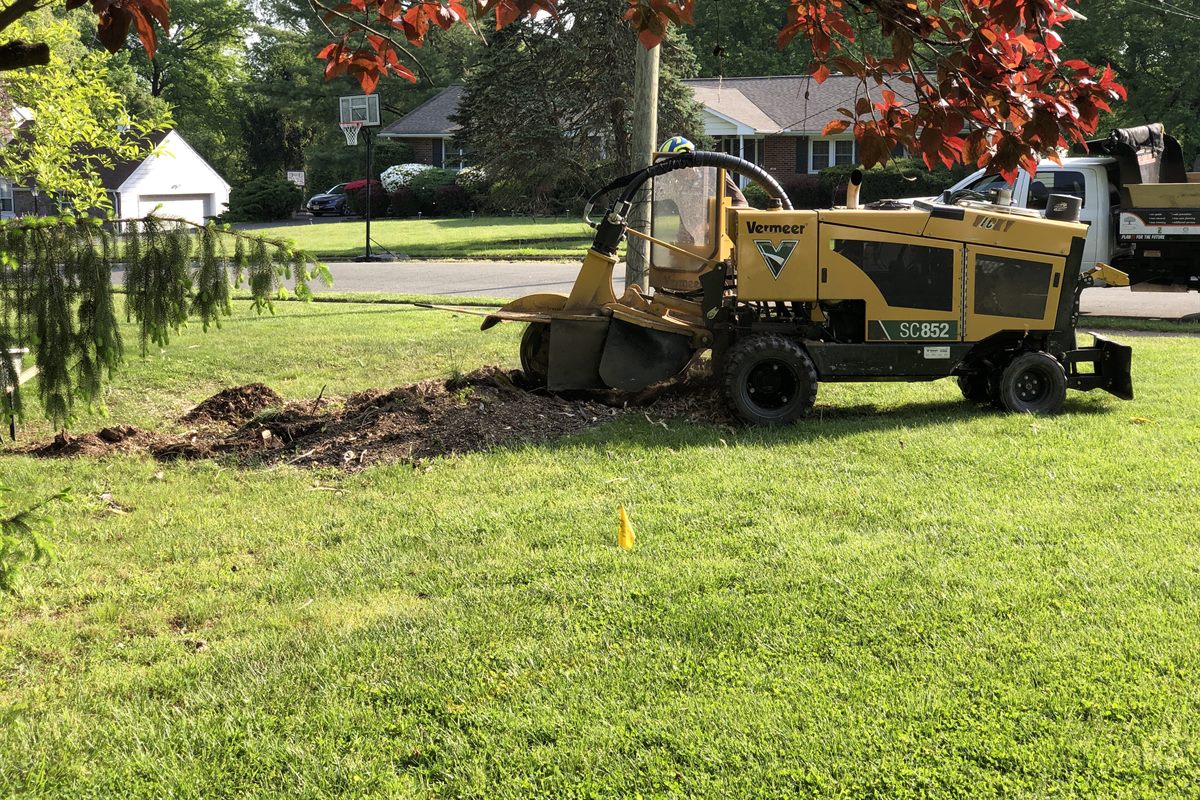
Keeping the wood works best where there is somewhere to put it. Larger lots toward Wendell, Willow Spring and Archer Lodge have the room for a stack to season for a year. On tighter Knightdale lots, hauling it off is usually the cheaper answer once you price the space it occupies. Either way the stump grinding is a separate line from the removal itself.
Frequently Asked Questions
What if I have the tree removed in winter? Can I still get firewood?
Yes, but with caveats. Winter wood is slower to dry (cold temperatures, lower evaporation), and you won’t have it ready for next winter without serious air-drying infrastructure (fans, solar tarps). If you remove a tree in December, plan to use that firewood for the winter after next, not the upcoming one.
How do I know when firewood is truly ready to burn?
Test it with a moisture meter (buy one for $20 to $40 at any hardware store). Ready firewood reads 15 to 20 percent. If you burn wood above 25 percent moisture, you’ll get excessive smoke, poor heat output, and creosote buildup in the chimney. Not worth the risk.
Can I split the logs myself if I own a chainsaw?
You can try. Splitting by hand with a maul takes roughly 20 to 30 seconds per log for softwoods, 45 seconds to 2 minutes for oak. Renting a log splitter is faster and safer. Either way, you need to know what you’re doing; a glancing blow from a maul or flying log from a splitter can cause serious injury.
What if I want the chips instead of firewood?
Ask your crew for wood chips instead of haul-away. Most give them to you for free or haul them to your mulch pile. Some charge a small amount to deliver and spread them. This is still cheaper than buying bagged mulch at a garden center.
Does stacked firewood attract pests?
Wood piles attract insects and rodents, yes. Keep the stack at least 20 feet from your house and check under it every few weeks. If you see pest activity, a pest control company can treat it. Don’t keep wood stacks directly against your foundation or deck.
Ready to Turn Your Tree Into Heat?
When you get quotes for tree removal in Garner, ask explicitly about firewood splitting and stacking as an add-on. Know the species before you commit, understand the seasoning timeline, and get a written per-cord price for splitting. If the math works and you have the storage space, this is one of the easiest ways to reduce heating costs over the next two years.
If you’re not sure whether firewood makes sense for your situation, contact us with photos of the tree and your heating setup. We’ll give you a straight answer about whether you’re looking at premium oak or lower-grade softwood, what it’ll cost to split and stack, and when you can actually use it. No pressure, just honest assessment.
Contact Garner Tree Removal today for a free on-site quote, or call (919) 322-8083 to discuss your firewood options.