Cheapest Time of Year for Tree Removal in NC
Garner Tree Removal • September 20, 2026 • 9 min read
There is a tree in your yard that you already know is coming down. Not today, not this month, but some time. The question is whether the month you pick changes what you pay, and the answer is yes: the cheapest time of year for tree removal in North Carolina is the stretch most people never think about, roughly November through January.
That is not a marketing claim about a winter special. It is what the demand calendar looks like across Garner, south Raleigh and the east Wake towns. Tree work is a seasonal trade with two loud peaks and one quiet trough, and the trough is where a crew with an open week prices differently from a crew booked three deep.
This guide walks the calendar month by month, explains why a dormant hardwood is genuinely less work rather than just less popular, covers the one job that runs on the opposite schedule, and marks the point where waiting for a cheaper month starts costing you money. Any figure here is a planning range for this market, not a quote.
When Is the Cheapest Time of Year for Tree Removal?
Late autumn and winter, from about November into January, is the value window in North Carolina, and demand does more of that work than difficulty does. Two things line up at once. The trees are dormant, which makes the physical job lighter and cleaner. And the phones are quiet, which is the part that actually shows up on the bottom line of a bid.
The peaks are the mirror image. Removal demand spikes in February, when winter storm damage catches up with everything that was already weak, and again in July, when summer thunderstorms roll through the Triangle and take limbs and whole trees with them. In both of those months you are competing for the same crews as every other homeowner on your street, and you are often competing on someone else’s timeline rather than your own.
What Does the Tree Work Calendar Look Like Month by Month?
The shape of the year is consistent enough to plan a removal around. Here is what the market is doing and what each stretch means for the number you get back in writing.
| Stretch of the year | What the market is doing | What it means for your quote |
|---|---|---|
| November to January | The removal trough. Dormant canopies, firm ground, open schedules | Best availability, most room to shop three bids, easiest on your lawn |
| February | The year’s first surge, driven by winter storm and ice damage | Crews shift to damage work; planned jobs get pushed back |
| March to May | Spring catch-up, as every tree that failed to leaf out gets noticed at once | Steady demand, longer lead times, full canopies back on |
| June to September | Thunderstorm season and tropical remnants across Raleigh and east Wake | The emergency-heavy stretch, with a hard peak in July |
| October to December | Removals slow down; stump work peaks | The one window where grinding and removal do not share a calendar |
Two readings matter here. First, the trough and the peaks are only a few weeks apart, so this is not a case of waiting a year. A tree you decide on in September can usually be on the schedule before the February surge. Second, the emergency stretch is expensive for a reason that has nothing to do with the tree: storm and after-hours work is widely observed to run 1.5x to 3x normal rates across this market, which is an observed range rather than our price list, and a tree that fails in a July storm loses you the ability to shop the job at all.
Want the exact number for your tree? Request a free written quote and we walk the property, then price it in writing.
Why Is a Dormant Tree Cheaper to Take Down?
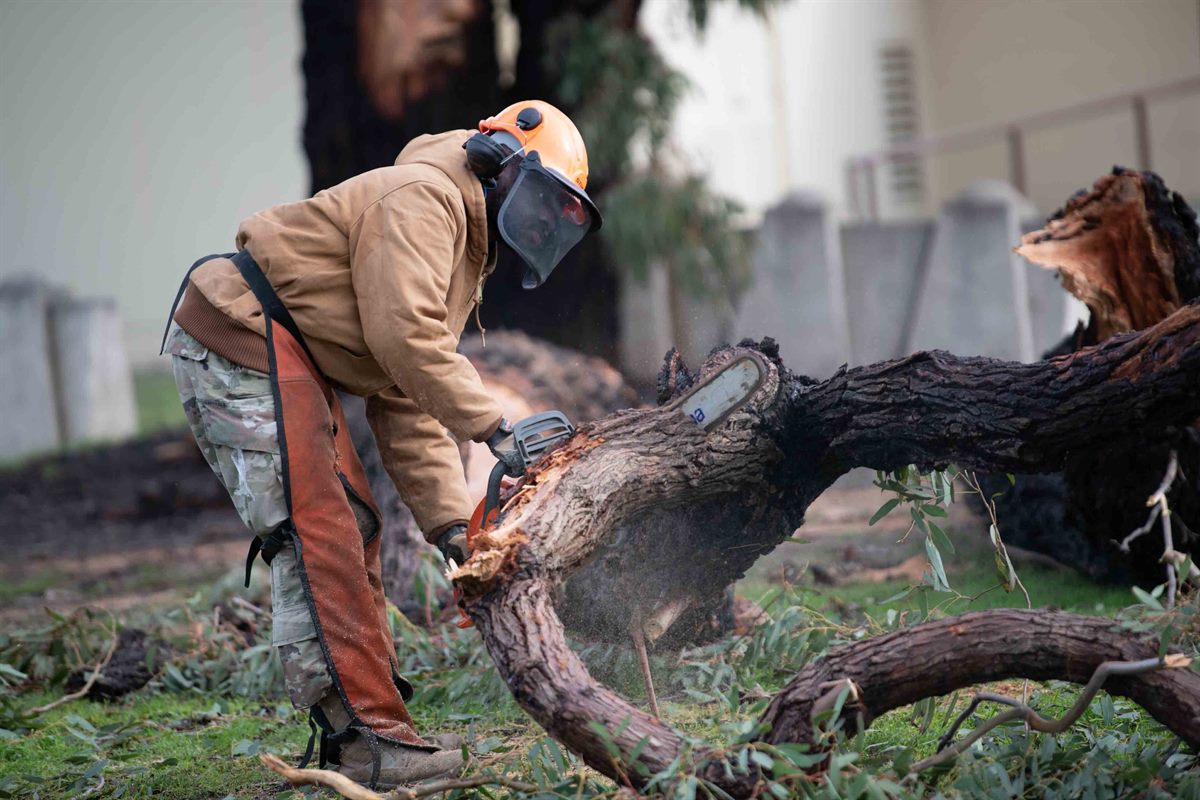
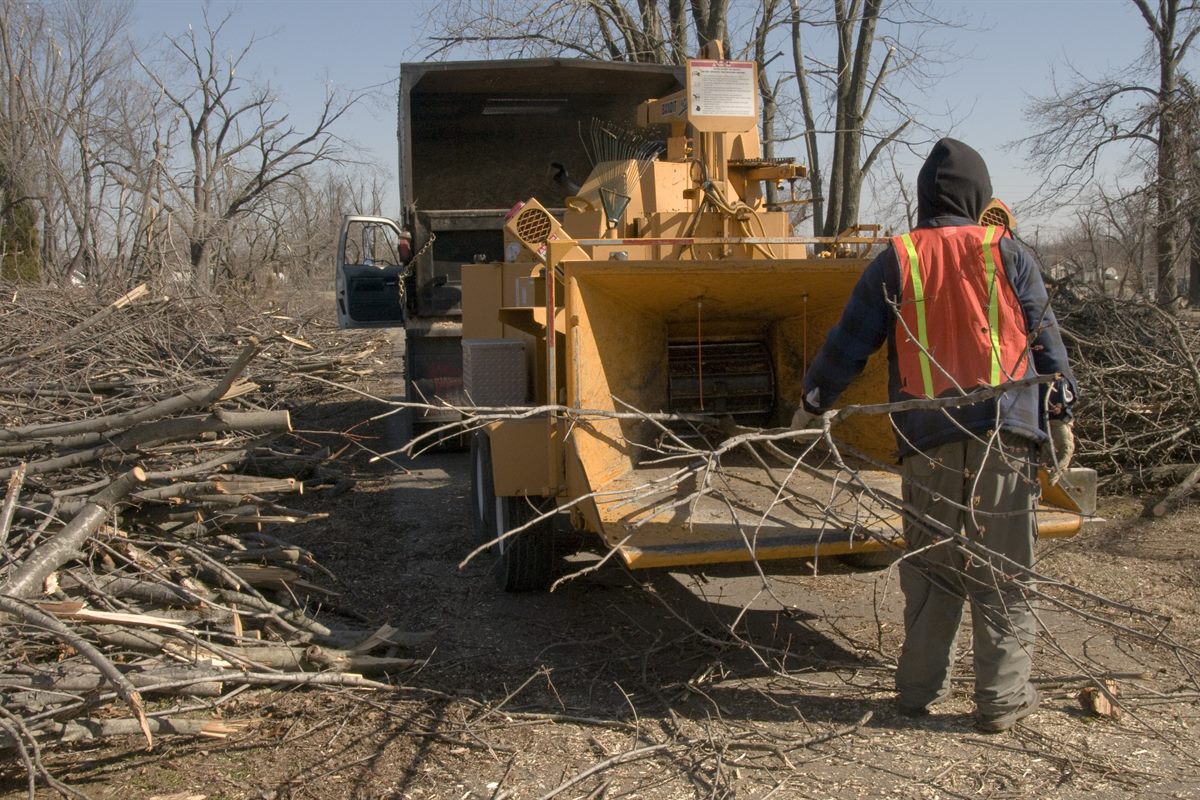
Because a bare hardwood is physically less tree. A mature willow oak in full leaf is carrying a canopy of foliage that has to be cut, handled, dragged and chipped, and every one of those steps is labour. Strip the leaves off and the same tree produces a fraction of the brush volume.
Sightlines are the second piece, and crews feel it more than homeowners do. Rigging a limb over a roof means reading the whole crown: where the anchor points are, where the decay is, where the limb will swing. Through a bare crown that read takes minutes. Through a full summer canopy it is guesswork, and guesswork gets priced as risk.
Ground condition is the third. Winter ground in the Triangle is firmer more often than summer ground, and a firm yard means a chipper and a truck can get closer to the work instead of the crew hand-carrying everything to the street. Flower beds are empty, irrigation is off, and the whole property is more forgiving of equipment.
And then there is the part that is pure scheduling. A crew with a gap in the calendar has a reason to fill it. That is the honest mechanism behind off-season pricing, and it applies to tree removal far more than to most trades, because tree crews cannot bank work for later.
Pro tip: the cheap month only helps if you use the time it buys you. Three written bids on a Garner willow oak in November is a genuinely different exercise from one bid on the same oak in February with a limb already on the roof. Use the quiet season to compare scope, not just price.
The One Job That Runs on the Opposite Calendar
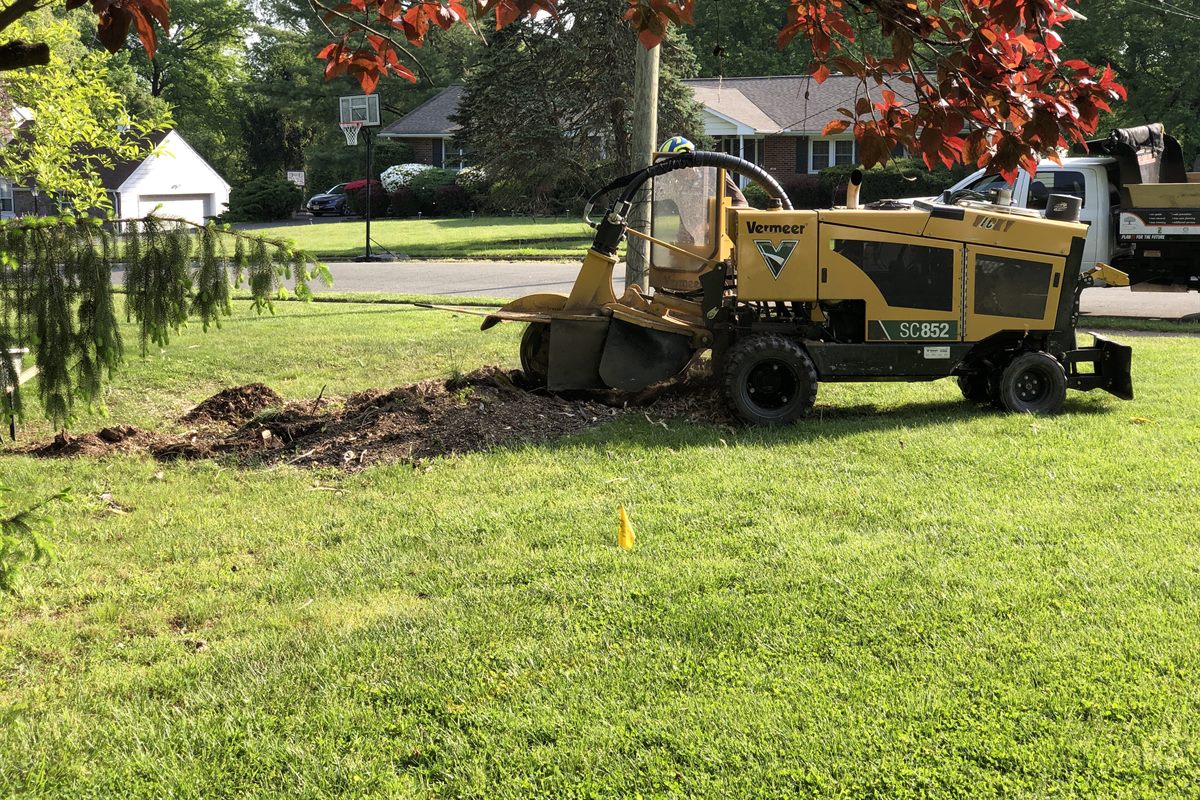
Stump grinding peaks from October to December, not in the removal trough, and the reason is simple: the stumps being ground in the autumn are left over from the summer’s removals. Homeowners who took a tree down in July look at the stump in October, decide they want the yard back before spring, and call.
That creates a scheduling quirk worth using. If you are removing a tree and want the stump gone too, getting both on one visit beats two separate appointments, because stump grinding carries a trip minimum of $100 to $150 on its own. A grinder already parked on your street does not charge you to show up twice.
If the stump is already there from an older job, the autumn window is busier but still far from storm season, and you are not competing with damage work for the same crew. Pricing for that side of the job sits in our Garner tree removal cost page, which is the source for every figure on this site.
When Does Waiting for a Cheaper Month Cost You More?
When the tree is already declining, already dead, or already leaning somewhere it should not. This is the one place in the calendar where the saving is an illusion, and the mechanism is worth understanding because it is about method, not timing.
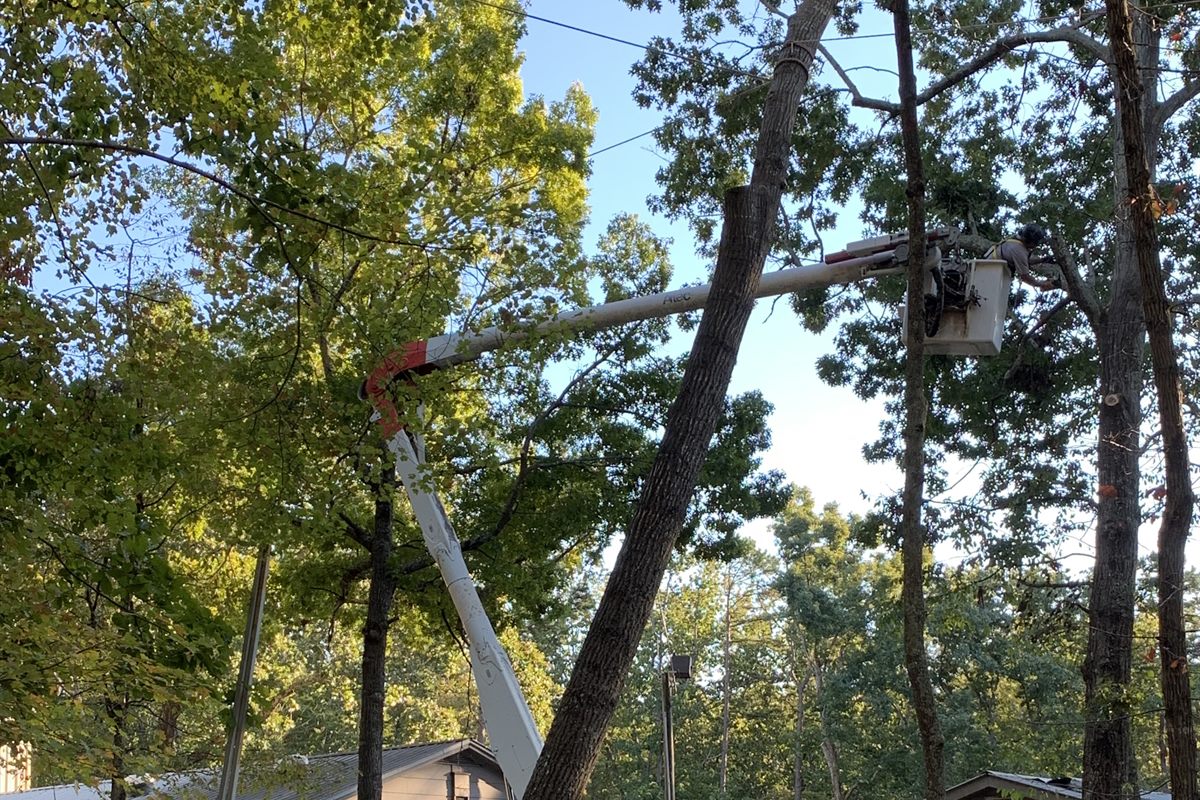
A live tree with sound wood can be climbed. A climber ties into the trunk and the major limbs, and the job is rope work. Dead wood cannot be safely climbed, because a climber cannot trust dead anchor points with their own weight or with a rigged load. Once a tree crosses that line, the same removal needs a lift or a crane, and it moves out of the large removal band and into the technical band. That is a method change, and it does not care what month it is.
So the rule is narrower than “wait for winter”. Wait for the quiet season if the tree is healthy and the removal is a choice. Do not wait if the tree is on the way out. Our guide to what a large tree removal costs walks through the size bands, and the statewide tree removal cost guide covers how condition moves a quote in either direction.
The same logic applies to pruning. Dormant-season trimming and pruning is standard practice on hardwoods and it lines up neatly with the removal trough, so bundling a prune on one tree with a removal on another in the same visit is usually the cheapest version of both.
Frequently Asked Questions
Is tree removal actually cheaper in winter in NC?
Usually yes, and by a margin worth planning around. A dormant hardwood produces far less brush, the crown is readable for rigging, and crews in Garner and Clayton have more open schedule between the autumn stump rush and the February storm surge. The saving is not a fixed discount, so get the number in writing rather than assuming a percentage.
What is the busiest month for tree companies here?
February and July, for different reasons. February is winter storm and ice damage catching up with weak trees, and July is thunderstorm season at full strength. In both months, damage work takes priority over planned removals, so lead times on non-urgent jobs stretch.
Does the season change what stump grinding costs?
Less than it changes removal pricing, because grinding is mechanical work that does not care about leaves. What season changes is availability: stump work peaks October to December. The bigger saving is bundling, since stump grinding on its own carries a trip minimum of $100 to $150 that disappears when the grinder is already on site.
Should I wait until winter to remove a dead pine?
No. Dead wood cannot be safely climbed, which pushes the job toward a lift or a crane regardless of the month, and standing dead pines get more unpredictable the longer they stand. A declining tree removed before it fully dies is the single largest saving available on this list, and it is worth more than any seasonal window.
Is winter a good time to prune as well as remove?
For most hardwoods in this area, yes. The dormant season is when structure is visible and the tree is least disturbed by cutting, which is why it lines up so well with the removal trough. Bundling a prune and a removal on one visit is covered in our pruning versus removal guide.
Do you take winter bookings across east Wake?
Yes. We work Garner, Knightdale, Wendell, Clayton, Zebulon, Fuquay-Varina, Archer Lodge, Willow Spring and south Raleigh, and the quiet season is the easiest time to get a crew on a specific date. Ask for the scope in writing either way, using the checklist in what a tree removal quote should include.
Book the Tree You Already Know About in the Quiet Season
If there is a tree in your yard in Garner, Clayton, Wendell or Knightdale that you have been putting off, the stretch from late autumn into winter is the cheapest time of year for tree removal and the easiest time to get three bids side by side. Tell us the height, what is underneath it, and whether a truck can reach it, and we walk the property and put an up-front written price on paper before anyone starts a saw.
Request a free written quote or call (919) 322-8083. No pressure to book on the spot, and the scope, the debris, the stump and the protection plan are all on the page before you decide.