What Should a Tree Removal Quote Include?
Garner Tree Removal • September 20, 2026 • 9 min read
Three bids on the same tree in Garner can come back at $900, $1,400 and $2,600, and most homeowners read that spread as three opinions about price. It usually is not. It is three different jobs described badly, and the only way to tell is to look at what the quote actually says.
A tree removal quote is a scope document with a number at the bottom. If the scope is vague, the number means nothing, because the cheap bid may not include the stump, may leave the trunk in rounds on your lawn, or may be priced by someone with no insurance behind them. This guide covers the five things a written quote has to specify, the red flags that should end a conversation, and how to line three bids up so you are comparing the same work.
This is general information about the quoting process rather than legal or insurance advice; your own insurer or attorney is the right call for your specific situation.
What Should a Tree Removal Quote Include?
Five things: exactly which trees are coming down, what happens to the wood and the brush, whether the stump is in or out, how your property gets protected, and proof of insurance with clear payment terms. A quote missing any one of those is a quote you cannot compare to another one.
Everything else on the page is detail. These five are the ones that turn into arguments in the driveway when they are left off, and they are the ones that explain almost every gap between two prices on the same tree.
The Five Things, One at a Time
1. Which trees, described so there is no argument
“Take down the big one out back” is not a scope. A written quote names the tree by location and, ideally, by species and rough size: the seventy-foot willow oak at the back left corner of the fence, the two loblolly pines along the property line. If several trees are involved, they should be numbered or ribboned on site so you and the crew are looking at the same trees on the day.
This sounds pedantic until a crew arrives while you are at work and takes the wrong pine. Species and location cost nothing to write down.
2. What happens to the brush, the trunk and the debris
Chipping the brush is normal. What varies from bid to bid is the trunk, and it is worth hundreds of dollars. Three common versions: everything hauled away, the trunk bucked into rounds and left on site, or the trunk cut into logs and left full length. All three are legitimate, and all three price differently.
The quote should say which one you are buying, and whether the chips go with the crew or stay in your beds. If you want the wood, ask for that before the number is written; our post on keeping the logs and firewood covers what that looks like in practice.
3. The stump: in, out, or a separate line
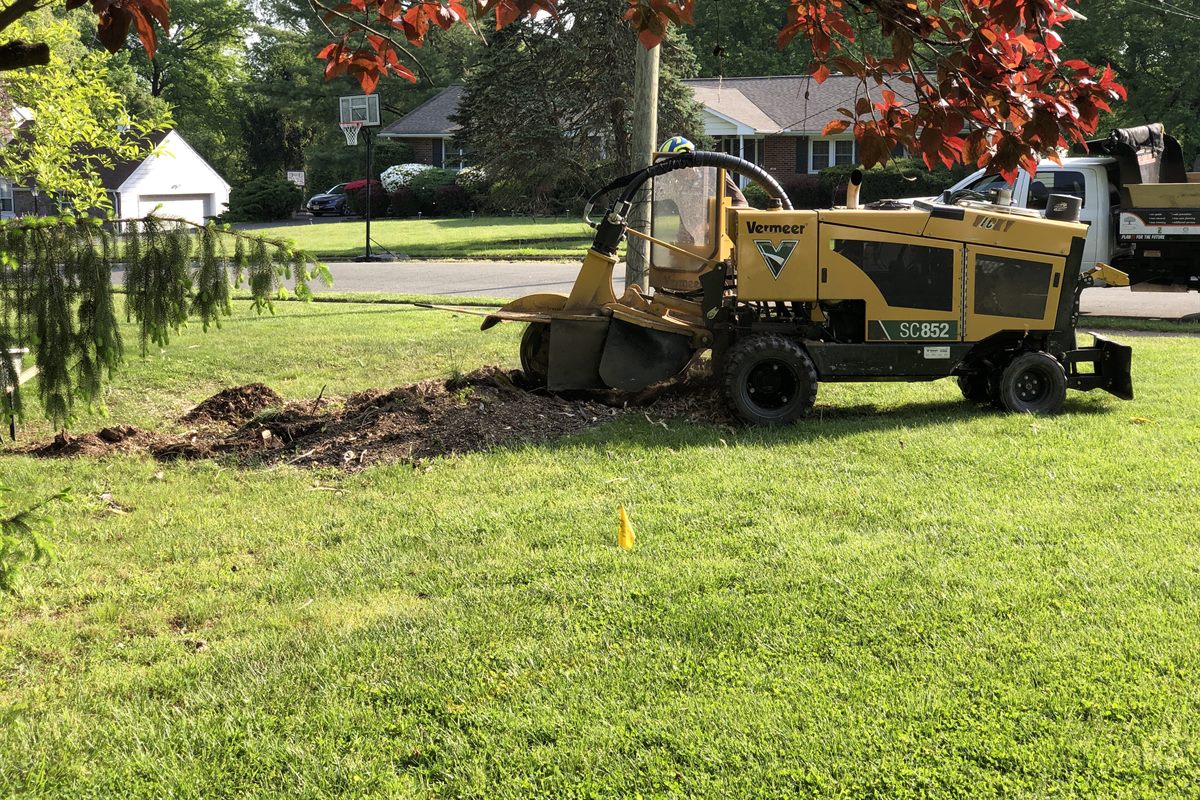
The most common surprise on a residential job is discovering that the stump was never in the price. A quote should state one of three things: stump grinding is included at a stated depth, stump grinding is available at a stated extra price, or the stump is not part of this scope.
Stump grinding is mechanical removal of the stump to six to twelve inches below grade, leaving the root system in the ground. It is a separate machine and often a separate trip, which is why it is priced separately. Doing it on the same visit is cheaper than bringing the grinder back, and the current bands are on our Garner tree removal cost page.
4. How the property gets protected, and how the crew gets in
A large removal puts weight on your yard. The quote should say how the crew reaches the tree, where the truck and chipper park, which gate or side yard gets used, and what goes under the equipment: plywood, mats, or nothing. It should also say what happens if there are ruts afterwards.
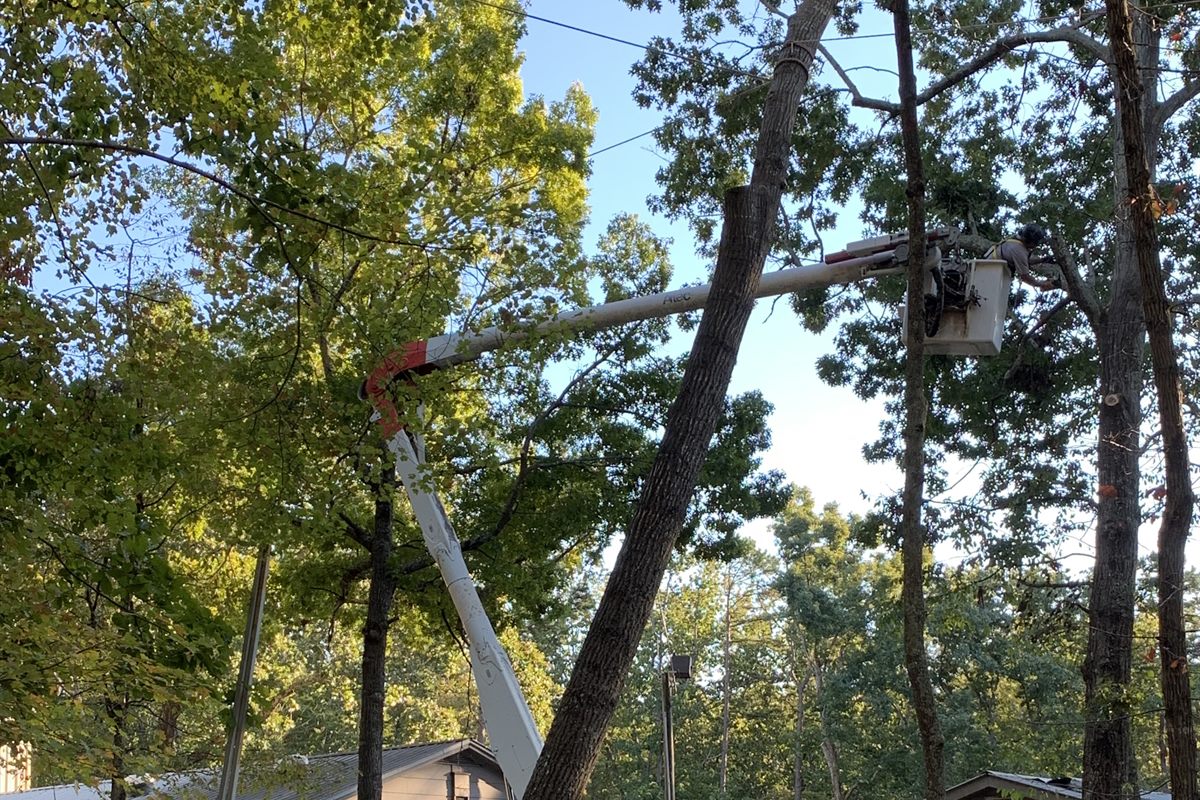
The access plan is also where the method shows up, and method is the biggest single driver of price. A tree that gets climbed, a tree that needs a bucket lift, and a tree that needs a crane are three different jobs at three different numbers, which our guide to crane tree removal explains in full. A bid that does not say which one it priced is not comparable to a bid that does.
5. Insurance, payment terms and who checks the rules
Ask every bidder for a certificate of insurance showing general liability and workers compensation. Do not accept “we’re covered” as an answer. The certificate should come from the insurer or the agent, not as a photo of a card.
The quote should also state the payment schedule, whether the price is fixed or conditional on what the crew finds, and who is responsible for checking whether any local approval applies. Tree rules vary by parcel, by scope and by jurisdiction, and the town or county office is the one that makes that determination, so the honest version on a quote is a named person who will ring and check rather than a blanket claim either way.
| What a complete quote says | What a vague quote says |
|---|---|
| ”Remove 70 ft willow oak, rear left corner, adjacent to fence" | "Remove big tree in back" |
| "Brush chipped and hauled; trunk bucked to 16 in rounds, left on site" | "Clean up included" |
| "Stump grinding to 8 in below grade, $280, optional” | Stump not mentioned |
| ”Access via north side gate; plywood under chipper track path” | Nothing about access |
| ”COI for GL and workers comp attached; 50% on completion" | "We’re insured, don’t worry” |
Hold every bid you collect to the left column, ours included. Request a free written quote and we walk the property, then price it in writing.
What Are the Red Flags in a Tree Removal Bid?
The pattern to watch for is urgency plus paperwork that never arrives. Individually, some of these have innocent explanations. Two or three together is a reason to stop.
- Door-knockers after a storm. Crews that appear in a Knightdale or Clayton neighbourhood the day after a blow, quoting from the driveway with no paperwork, are the source of most of the horror stories in this trade. A local company will still be reachable in March.
- No certificate of insurance. This is the one that can cost you your house rather than your deposit. An uninsured injury on your property can become your problem.
- A large deposit in cash before work starts. Materials deposits make sense in trades that buy materials. Tree work does not buy materials.
- A verbal scope. If the scope is not written, there is nothing to compare and nothing to enforce.
- Pressure to sign today. A genuine hazard justifies moving quickly. It never justifies refusing to let you get a second bid on a tree that is not actively falling.
- A price that drops sharply when you hesitate. A number that falls by a third on the spot was never based on the work.
- No local address, no written business name, no truck lettering. Ask where the yard is.
- An offer to “top” your tree. Topping means cutting the crown back to stubs, and it is not the same thing as pruning to a structure. If that is a bidder’s default answer on a healthy hardwood, ask them to explain the pruning cuts instead, and compare it against a proper trimming and pruning scope.
Pro tip: ask every bidder one question in the same words: “what happens to the trunk?” The answers separate the bids faster than anything else on the page, because hauling a large hardwood trunk is real weight and real money, and a bid that has not thought about it has not priced the job.
How Do You Compare Three Quotes Fairly?
Write your own scope first, then ask all three bidders to price that. It takes ten minutes and it converts three opinions into three comparable numbers.
Put four lines on a piece of paper: which trees, what happens to the trunk, stump in or out, and who protects the yard. Hand the same four lines to everyone who walks the property. Any bidder who will not price against it is telling you something useful.
Then read the gaps rather than the totals. If one bid is much lower, find the line it left out. If one is much higher, find the method it priced: a crane pick or a lift on a tree the others planned to climb explains a large difference honestly. For context on what the bands should look like, most single-tree removals in this area run $500 to $2,000, with the full breakdown in our tree removal cost guide.
Finally, watch your timing. Bids gathered in the quiet season are easier to compare than bids gathered with a limb on the roof, and the seasonal shape of this market is covered in our guide to the cheapest time of year for tree removal.
Frequently Asked Questions
Should a tree removal quote always be in writing?
Yes, without exception. A written quote is the only version of the scope that exists after the crew leaves, and it is what settles a disagreement about the stump, the trunk or the ruts in the lawn. Any company working in Garner, Zebulon or east Wake can produce one before starting.
What insurance should a tree company carry?
General liability and workers compensation, and you should see certificates for both rather than a verbal claim. Ask for them from every bidder, including us. This matters more in tree work than in most trades because the failure modes involve heavy weight moving over your roof.
Is the cheapest tree removal quote usually the problem?
Not always, but a bid well below the others is usually missing a line rather than being generous. Check the stump, the trunk disposal and the insurance first. If all three are present and it is still lower, you may simply have found a crew with an open week, which is common in the autumn and winter trough.
Should the quote say whether a permit is needed?
It should say who is checking. Requirements vary by parcel, scope and jurisdiction, and the town or county office makes the determination, so a quote that flatly claims nothing is required is overreaching. A named person who will ring and confirm is the useful version.
Can I ask for the stump to be quoted separately?
Yes, and you should. Seeing tree removal and grinding as two lines lets you decide whether to do both now or the stump later, and it makes three bids far easier to line up. Grinding on the same visit is almost always cheaper than a return trip.
Do I need an arborist to review a quote?
Not for the price. An arborist diagnoses condition and writes reports; a tree service prices and does the work. If the question is whether the tree needs to come down at all, our guide on choosing an arborist or a tree service covers which one to call first.
Get a Tree Removal Quote You Can Actually Compare
If you are collecting bids in Garner, Knightdale, Clayton or Archer Lodge, ask every one of them for the same five things: the trees named, the debris plan, the stump line, the access plan, and a certificate of insurance. Then put our number next to theirs.
We walk the property, tell you the method we would use, and put an up-front written price on paper covering scope, debris, stump and property protection before anyone starts a saw. Request a free written quote or call (919) 322-8083.