Do I Need an Arborist or a Tree Service?
Garner Tree Removal • September 20, 2026 • 9 min read
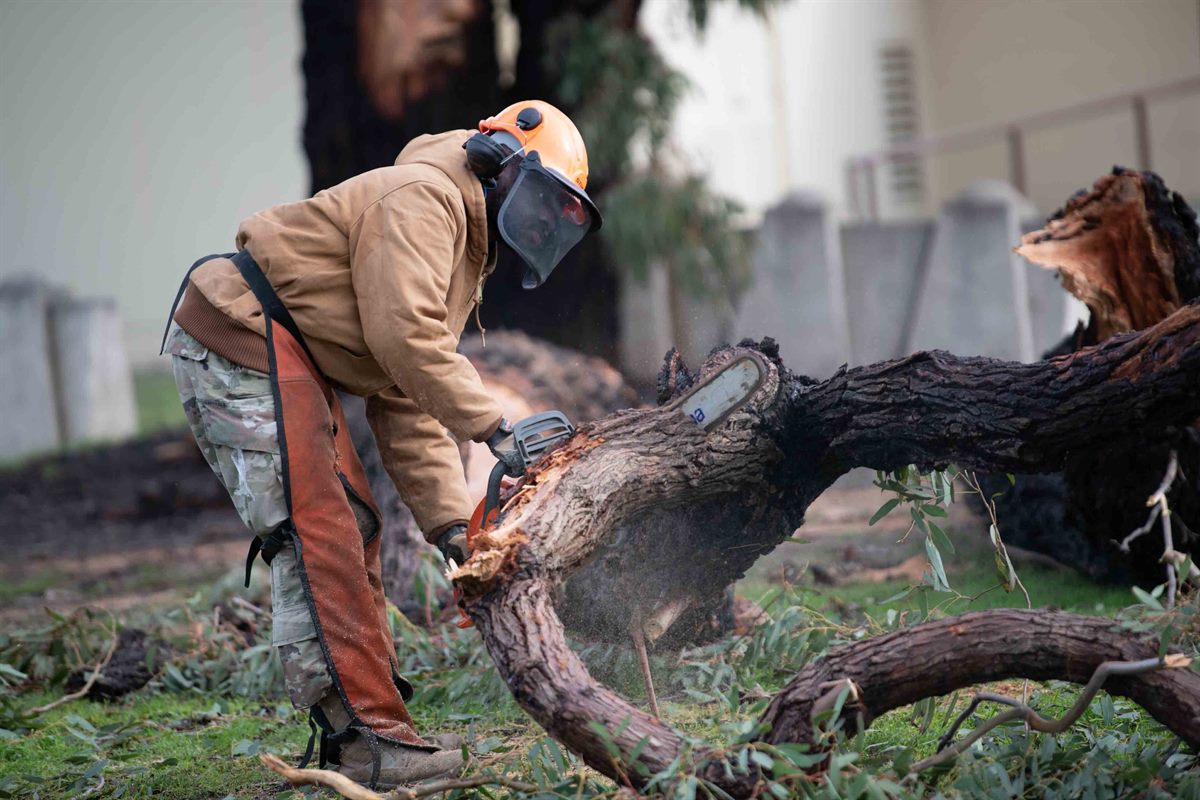
Two phone calls look identical from the outside. You ring about a mature oak that has you worried, someone comes out, someone gives you a piece of paper. But one of those visits produces a diagnosis and the other produces a price, and getting them the wrong way round is how homeowners in Garner and south Raleigh either pay for a report they did not need or remove a tree that did not need removing.
The split is simple once you see it. An arborist diagnoses and writes reports. A tree service removes, prunes and grinds. They are different trades with different credentials, and we say so plainly because we are the second one: we do not diagnose disease and we do not perform tree risk assessments.
This guide covers which call to make first, what an ISA Certified Arborist actually is, when a written report is worth paying for, and when you can skip it and go straight to bids. Any figure here is a planning range for this market rather than a quote.
Do You Need an Arborist or a Tree Service?
If your question is “what is wrong with this tree” or “how dangerous is it”, you need an arborist. If your question is “what will it cost to take it down”, you need a tree service. The decision comes down to whether the removal is still an open question.
Most homeowners already know the answer before they pick up the phone. A pine has snapped, a water oak is hollow at the base, a sweetgum is in the way of a new driveway: the tree is coming down and the only open item is price and method. That is a tree service call, and there is no report worth buying first.
The arborist call is the other case: the tree is valuable, the symptoms are ambiguous, or somebody else (an insurer, an HOA, a neighbour, a buyer) needs an independent opinion on paper. Paying for a diagnosis before a removal you have not committed to is the cheapest way to avoid removing a tree that had ten good years left.
Arborist vs Tree Service: What Does Each One Actually Do?
The two roles overlap less than the marketing suggests. Here is the honest division of labour.
| The question you have | Who answers it | What you get |
|---|---|---|
| Is this tree diseased, declining or dying? | Arborist | A diagnosis, usually written |
| How likely is this tree to fail, and onto what? | Arborist, qualified in risk assessment | A risk assessment report |
| Can this tree be saved with treatment? | Arborist | A management plan, and treatment if they offer it |
| What will it cost to remove it? | Tree service | A written quote with scope and method |
| Can you prune it back off my roof? | Tree service | A pruning scope and price |
| Can you grind the stump afterwards? | Tree service | A grinding line on the same quote |
| Is a crane needed, or can it be climbed? | Tree service | A method call made on site |
Notice which side the money sits on. A tree service is paid to do work, which is exactly why an independent diagnosis is worth buying from someone who is not quoting the removal. If you want to know whether the tree can be saved, ask somebody whose income does not depend on the answer.
Want the price and method for a tree you have already decided about? Request a free written quote and we walk the property, then price it in writing.
What Is an ISA Certified Arborist?
ISA Certified Arborist is a credential from the International Society of Arboriculture, earned by passing a written exam after documented experience in arboriculture and kept current with continuing education under a code of ethics. It is a professional certification, not a state licence, and it is the most widely recognised one in this field.
Two things are worth knowing about it. First, certification covers tree biology, care and safety broadly; there are separate specialist qualifications layered on top, including one specifically for tree risk assessment. If what you need is a formal opinion on failure likelihood, ask whether the person holds that specific qualification rather than assuming the base credential covers it.
Second, certification belongs to a person, not a company. “Certified arborists on staff” is a claim about one employee, which may or may not be the person who walks your property. Ask who is coming and what they hold. That applies to any company you ring, and it is a fair question to put to a crew as well as to a consultant.
Pro tip: when you ring an arborist, ask two questions before booking: do you carry out removals yourself, and what is the fee for the consultation or the written report? An independent consulting arborist who does no removal work has no stake in the outcome, and knowing the fee up front turns the whole exercise into a straightforward decision rather than a surprise.
When the Report Has to Come First
There are situations where a written arborist opinion is not optional, and they come up regularly across Wake and Johnston counties.
- An insurer or an adjuster asks for one. If a claim turns on whether a tree was already failing before the storm, the report is the evidence.
- A neighbour dispute. A tree overhanging a boundary, or a dead tree on one side of a property line, gets resolved faster with an independent assessment than with two opinions shouted over a fence.
- An HOA or a covenant. Some neighbourhoods require documentation before a mature tree comes out.
- A sale or a purchase. A buyer’s agent who spots a big leaner over the house may want more than a removal quote. Our post on tree removal before selling a home covers how that usually plays out.
- A tree you genuinely want to keep. A valuable willow oak showing early decline is exactly the case where a diagnosis pays for itself. NC State Extension puts willow oak at 80 to 90 years in urban conditions against 100 or more in forest, so a mature one in Raleigh or Garner may have decades left or may not.
Our guide to what a tree risk assessment is covers what that process involves and what the report contains.
When You Can Go Straight to a Tree Service
When the tree is dead, when it is already down, or when you have already made the decision for reasons a report will not change. In those cases a diagnosis is a delay, not a safeguard.
Dead is the clearest example. A standing dead tree does not need an opinion about its health; it needs a method. Dead wood cannot be safely climbed, which pushes the work toward a lift or a crane and changes the price band, and that call is made by the crew on site rather than by a consultant. Our post on how to tell if a tree is dead covers the checks you can do yourself from the ground in about five minutes.
The same goes for trees in the way of construction, trees dropping limbs onto a driveway you use daily, and trees you simply do not want. Tree removal in this area runs $500 to $2,000 for most single trees, with the bands broken out on our Garner tree removal cost page. Pruning is the other half of what a crew does: tree trimming and pruning handles limbs over the roof or the drive without touching the removal question at all.
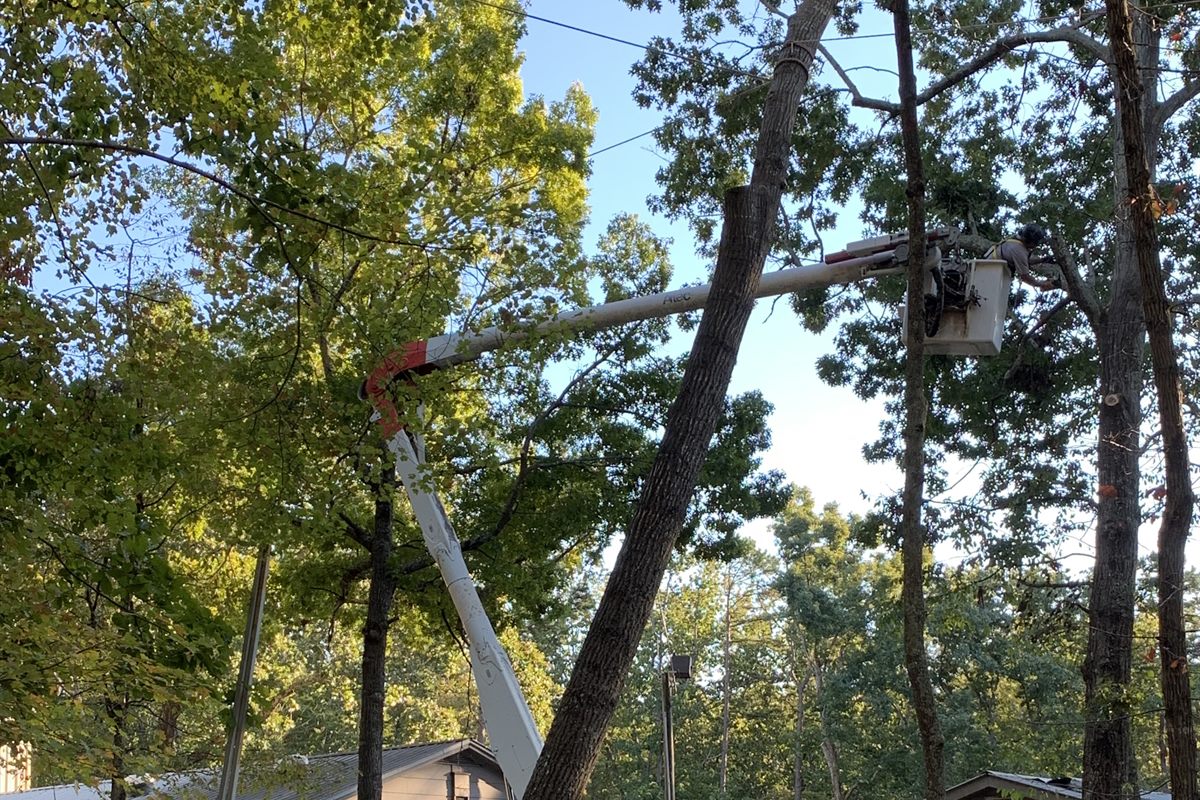
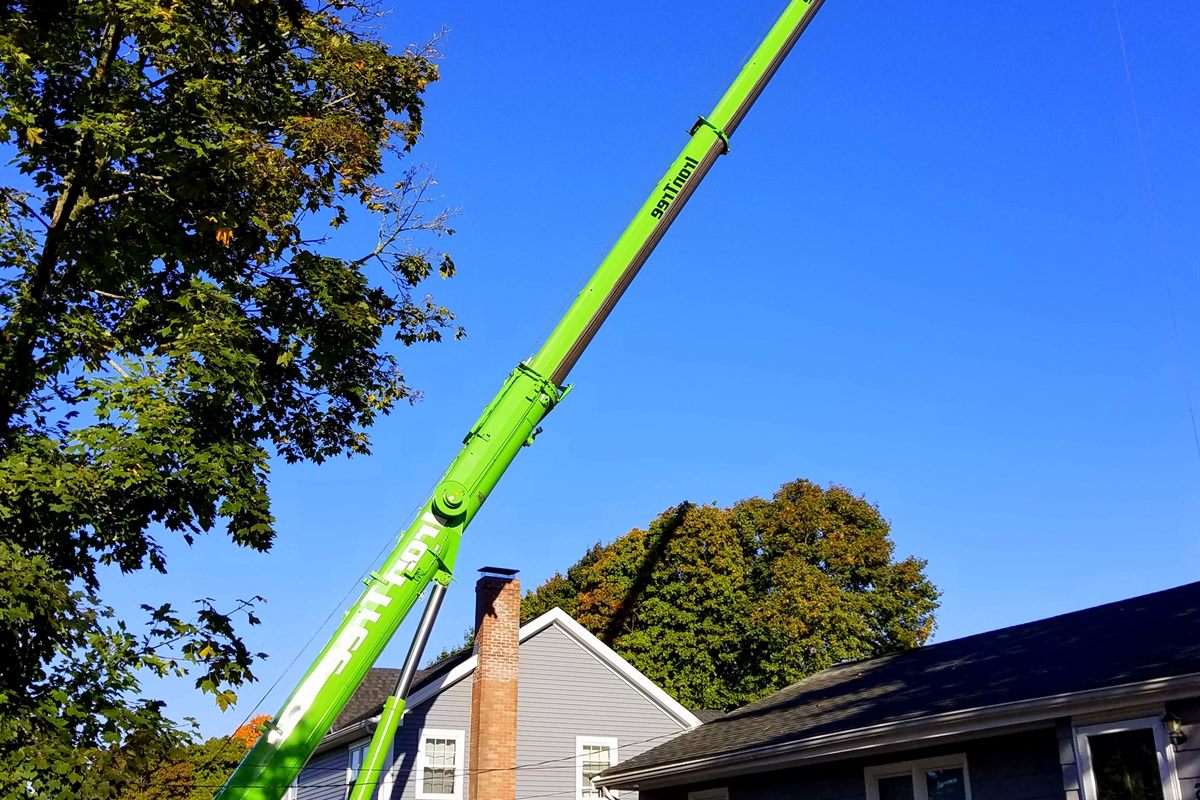
If the tree is big, the useful call is about method rather than diagnosis, which is what large and technical removal work is. Whether yours is a climb, a lift or a crane pick is covered in our guide to crane tree removal.
Frequently Asked Questions
Can a tree service tell me if my tree is sick?
We can tell you what we see and what it usually means, and we will say when something looks past saving. What we will not do is diagnose a disease or produce a formal risk assessment, because those are an arborist’s work and it would be dishonest to pretend otherwise. For a tree you are trying to save in Fuquay-Varina or Garner, ring an arborist first.
Is an ISA Certified Arborist the same as a licensed tree company?
No. ISA certification is a professional credential held by an individual, assessed by exam and kept current with continuing education. It is separate from whatever business registration or insurance a company carries. Ask for both when you are comparing bidders, and ask for the certificate of insurance from every one of them.
Does an arborist charge for a visit?
Usually yes, because the product is their opinion rather than a job. Ask for the consultation or report fee before booking so there are no surprises. A tree service quoting removal work is a different transaction: that visit produces a price, and ours is a free written quote.
Should I get an arborist report before removing a dead tree?
Generally not. A dead tree is a method problem rather than a diagnostic one, and a report will not change the outcome. The exception is a claim or a dispute where somebody else needs documentation of the tree’s condition, in which case get the report before the tree is gone.
Do arborists remove trees as well?
Some do and some are strictly consultants. That is the distinction worth asking about, because a consulting arborist with no removal business has no financial stake in recommending removal. If the person diagnosing your tree is also bidding to take it out, that is not automatically wrong, but you should know it.
Who do I call about a tree leaning over my house in east Wake?
If it just started leaning, treat it as urgent and get eyes on it. If it has leaned for years and you want to know whether that is a problem, an arborist answers that better than a crew does. Our post on a tree leaning toward the house covers which signs separate the two, and we work Garner, Wendell, Willow Spring and the surrounding towns.
Get a Price and a Method, Not a Sales Pitch
If you have already decided a tree in Garner, Wendell, Fuquay-Varina or Willow Spring is coming down, you do not need a report to get a number. We walk the property, tell you whether it is a climb, a lift or a crane pick, and put an up-front written price against scope, debris, stump and property protection.
And if you are still deciding, we will say so and point you at an arborist rather than quoting you a removal. Request a free written quote or call (919) 322-8083.