Cost to Cut Down a Tree in NC (2026)
Garner Tree Removal • September 10, 2026 • 8 min read
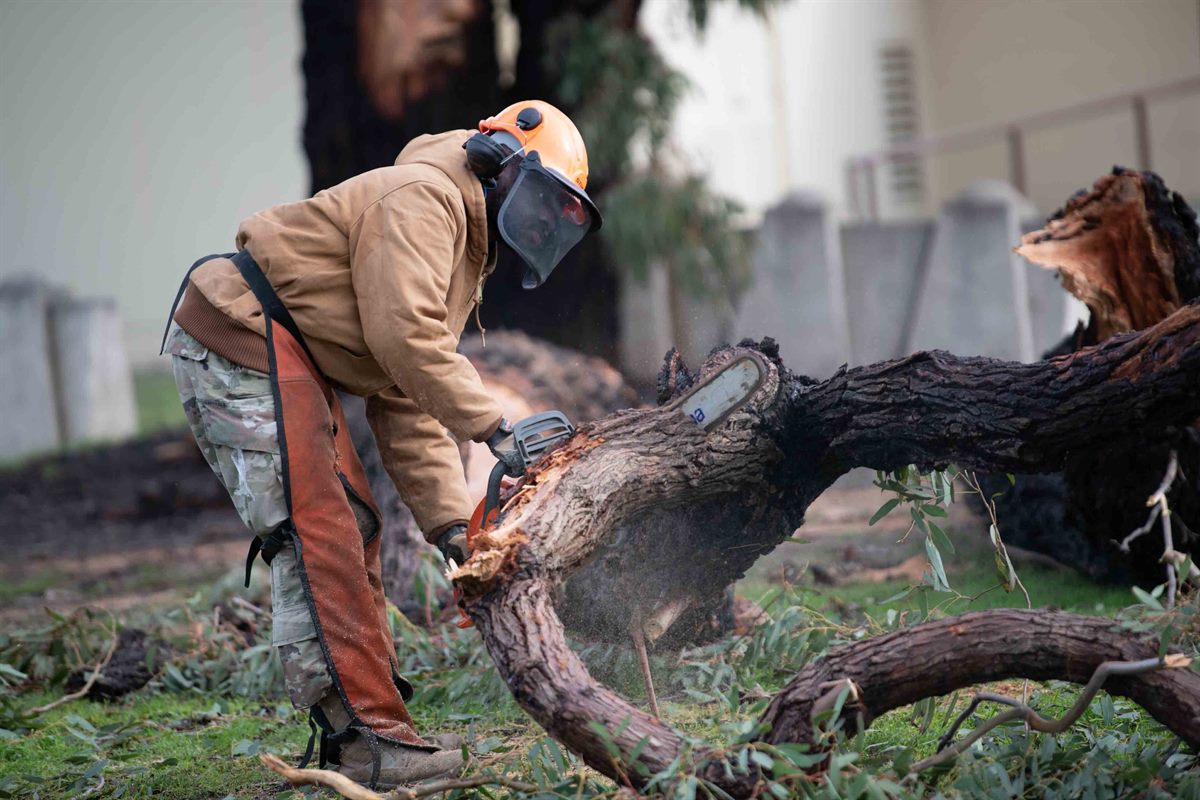
“How much to cut down a tree” is the question almost everyone starts with, and it depends on four things you can assess yourself in about five minutes: how tall it is, what it is standing over, whether a truck can get to it, and whether you want the stump gone too.
This guide gives you real 2026 numbers for North Carolina and, more useful, shows you how to estimate your own tree before you call anyone. These are planning ranges for the NC market rather than quotes.
What Does It Cost to Cut Down a Tree in NC?
Most trees come down for $300 to $2,000 in 2026. Small yard trees sit at the bottom of that range, and large hardwoods over a structure sit well above it. The number moves with height first and access second.
| Tree height | Typical cost to cut down (2026) | What this usually looks like |
|---|---|---|
| Under 30 ft | $300 to $800 | Bradford pear, dogwood, young maple in an open yard |
| 30 to 60 ft | $500 to $1,500 | Loblolly pine, river birch, mid-size maple |
| 60 to 80 ft | $1,500 to $3,000 | Mature willow oak or water oak |
| Over 80 ft, or over a structure | $2,500 to $6,000+ | Big hardwood leaning over a roof or power drop |
| Add stump grinding | $100 to $400 per stump | Quoted separately in almost every case |
Two clarifications that resolve most of the confusion in online price ranges. First, the quoted price almost never includes the stump unless it says so explicitly, and stumps are a separate trade with separate equipment. Second, the very low prices you find online usually describe felling a tree whole into an open field, which is not what most NC properties allow.
Estimate Your Own Tree in Five Minutes
Before you call, work through these four questions. With the answers, most crews can quote you over the phone within a couple hundred dollars.
1. How tall is it, roughly?
You do not need to be precise. Compare it to your house: a typical two-story home in the Triangle is around 25 feet to the roof peak. A tree twice that height is about 50 feet. A tree that dwarfs your house is likely 70 feet or more and belongs in the upper rows above.
2. What is underneath it?
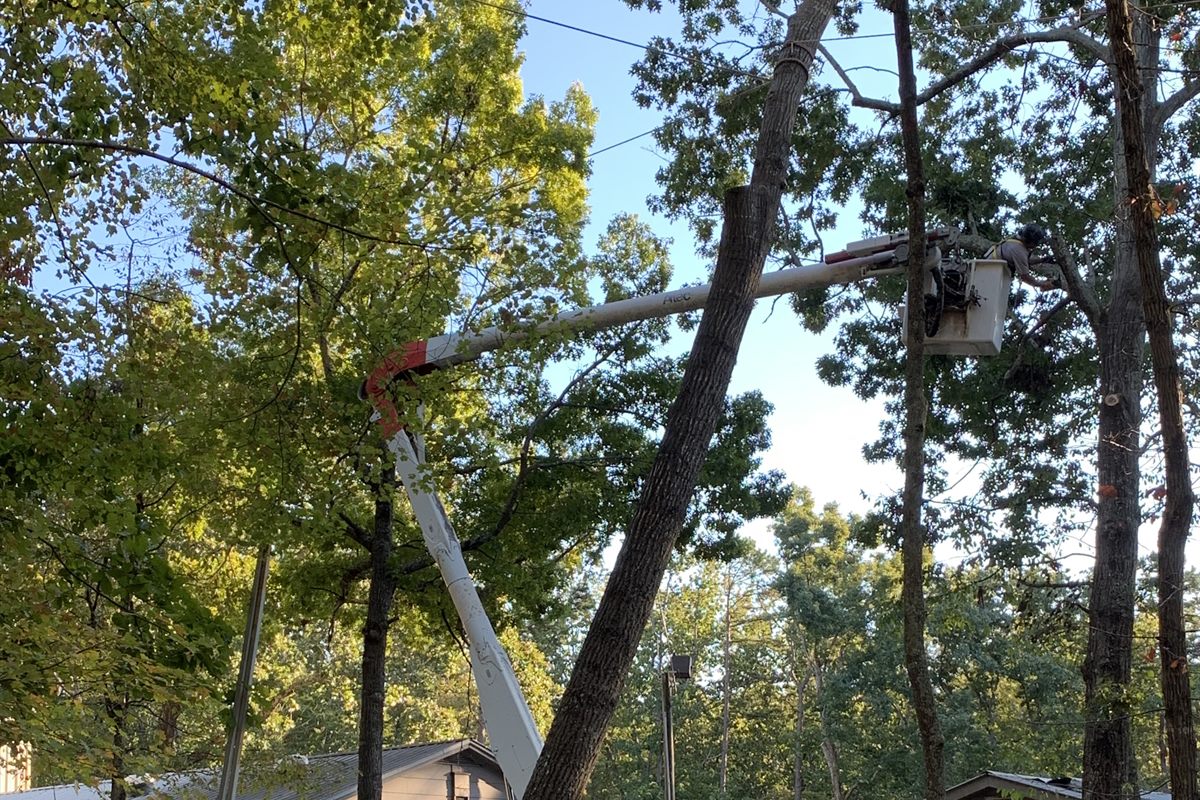
This is the factor that moves the price most. A tree with 40 feet of open lawn in every direction can often be felled in one or two controlled drops. A tree whose canopy overlaps your roof, your neighbor’s fence, a shed, or the service drop to your meter has to come down in roped sections, piece by piece. That single difference commonly doubles the cost.
3. Can a truck reach it?
Bucket trucks and chippers need access. A front yard tree beside the driveway is the easy case. A backyard tree behind a 36-inch gate means everything gets carried out by hand, and a climber does work a bucket would otherwise do. Check your gate width and whether the ground is firm enough for equipment.
4. Is it alive?
Counterintuitively, dead trees cost more. Rotten wood cannot be safely climbed and limbs break unpredictably under load, so crews rig conservatively or bring a crane. If your pine has been standing dead since last summer, it is in a more expensive category than it was when it was alive, and it gets more expensive every season you wait.
Cost by Scenario, Not Just Size
Height tables only get you so far. These are the situations that actually show up on NC properties.
| Scenario | Typical cost | Why |
|---|---|---|
| Mid-size tree, open yard, truck access | $500 to $1,000 | Best case: fell, buck, chip, done |
| Mid-size tree, fenced backyard | $900 to $1,800 | Climber, hand carry, no bucket |
| Large oak over the house | $2,500 to $5,000 | Every piece roped and lowered |
| Dead pine, standing, open access | $800 to $1,800 | Cannot be climbed, needs a lift |
| Tree on the power drop | Call the utility first | Often their responsibility to the meter |
| Storm-damaged tree on a structure | $1,500 to $5,000+ | Emergency rates, insurance usually involved |
| Multiple trees, same visit | 15 to 30 percent off each after the first | Mobilization is a fixed cost |
If a storm put a tree on your house, stop and read our guide on who is responsible for fallen tree removal in NC before you pay anyone out of pocket. There are common cases where your insurer, your neighbor’s insurer, or the utility carries the cost rather than you.
What Is Usually Included, and What Is Not
Typically included in a standard NC removal quote:
- Felling or sectioning the tree
- Cutting the trunk into manageable lengths
- Chipping the brush and hauling debris away
- Raking the immediate work area
Typically extra, and worth confirming line by line:
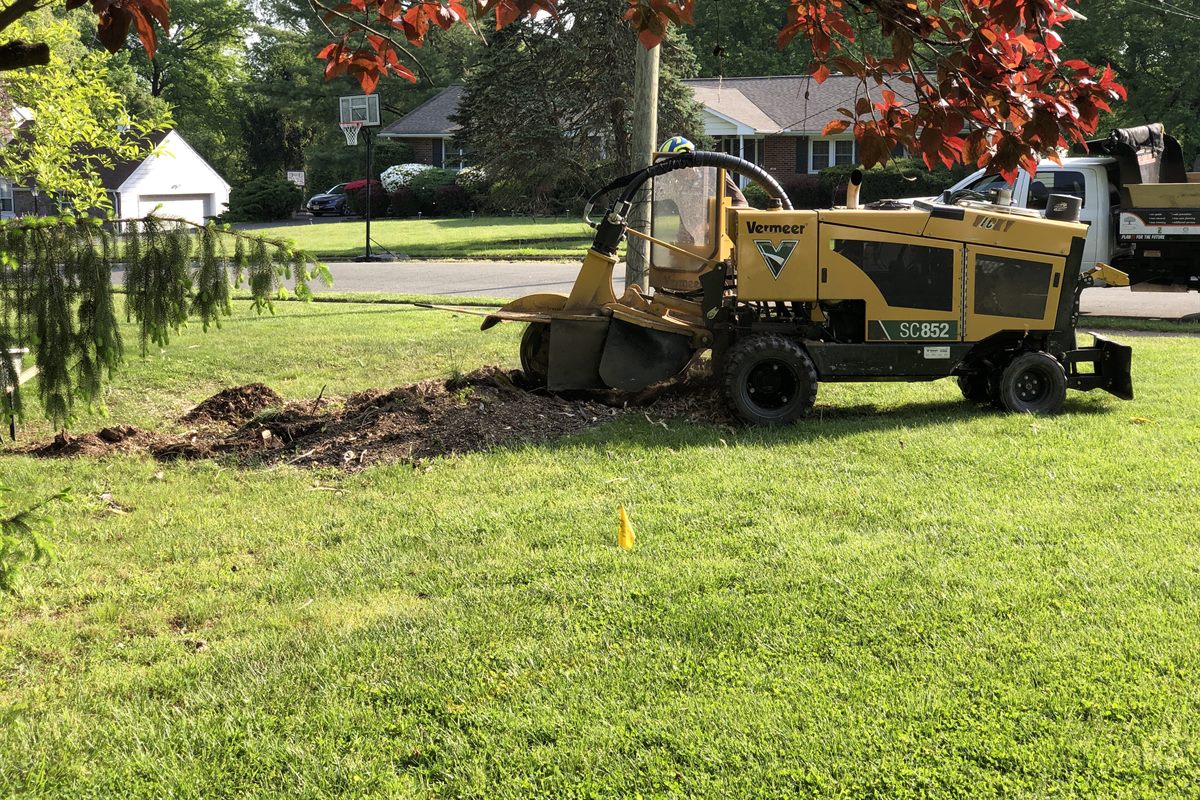
- Stump grinding, $100 to $400 per stump
- Hauling the logs off, rather than leaving them stacked
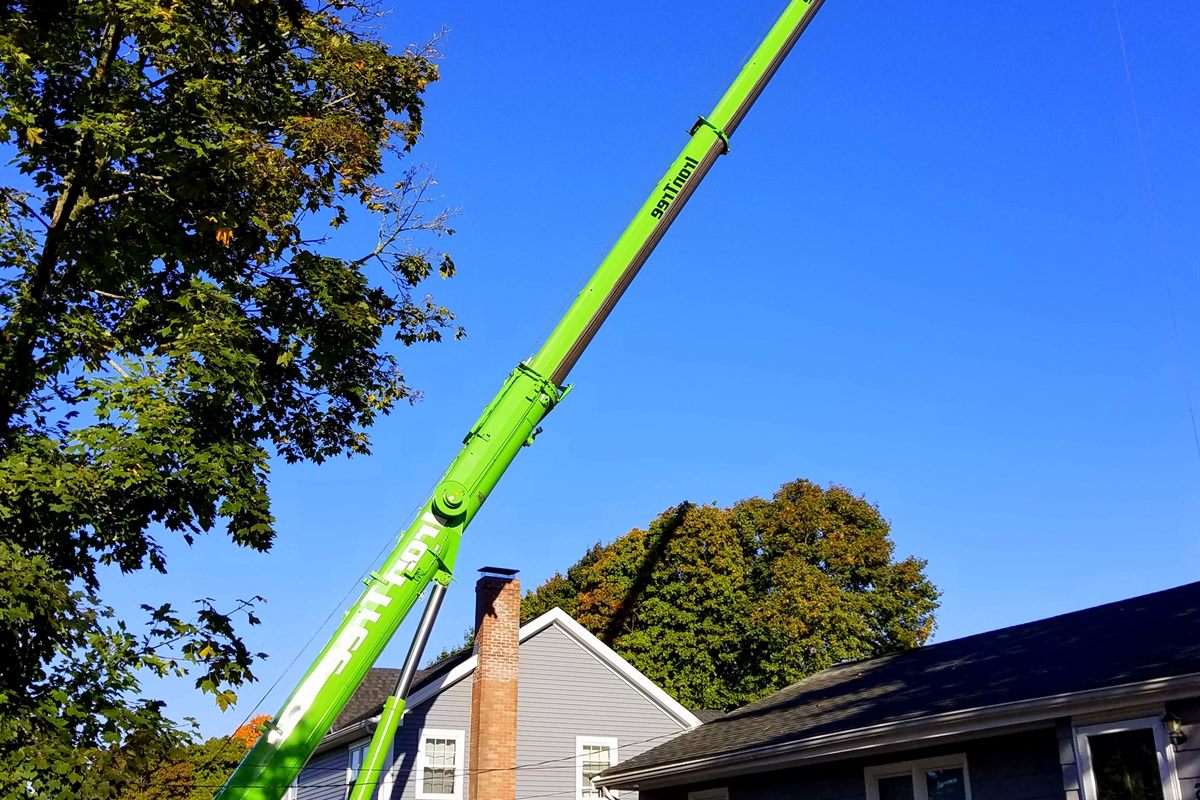
- Crane time on technical removals, $500 to $1,500+
- Permit fees where a municipal tree ordinance applies
- Repairing lawn ruts from equipment
- Emergency or after-hours response
The log question is the one most people forget to ask. Leaving the trunk bucked into firewood lengths on site often saves real money, because hauling heavy oak is a significant share of the labor. If you have a fireplace or a neighbor who does, say so.
How Can You Save Money Cutting Down a Tree?
- Bundle the work. Taking down three trees on one visit is far cheaper than three separate mobilizations.
- Keep the wood. Ask for the trunk bucked and stacked rather than hauled. Our guide to what to do with logs and firewood covers whether that is worth it for you.
- Do it before it dies. A living tree is cheaper to remove than the same tree standing dead two years later. This is the most expensive form of procrastination in tree work.
- Schedule in the dormant season. Winter is generally easier to book and slightly cheaper than post-storm demand peaks.
- Improve access yourself. Taking down a fence panel can move your job from climber pricing to bucket pricing.
- Get the stump quoted at the same time. Adding it to the original work order beats a separate visit later. See our stump grinding cost guide for what that should run.
- Get three quotes, but read them. The cheapest number is frequently the one that excludes debris haul-off, the stump, and insurance.
A Word on Uninsured Crews
Tree removal is the job where the gap between the cheap quote and the real quote usually comes down to insurance. A crew without liability and workers’ compensation coverage can quote lower because they are not carrying the cost of the risk. You are.
If an uninsured climber is hurt in your yard, or drops a limb through your roof, that becomes your exposure. Always ask for a certificate of insurance, and verify it covers both liability and workers’ comp. Any legitimate NC company will produce it without hesitation.
Where These Numbers Apply
The ranges above hold across the east Raleigh belt, with access doing most of the work between the low and high end. Tight in-town lots in Knightdale and older Clayton streets price toward the upper half because there is nowhere to drop a section. Larger parcels toward Wendell and Willow Spring often come in lower on the same size tree, because a crew can fell it in one piece and chip on site.
Frequently Asked Questions
How much does it cost to cut down a 60-foot tree?
In the NC market, a 60-foot tree typically runs $1,500 to $3,000 depending on species and what is below it. A straight loblolly pine in an open yard sits at the low end. A spreading willow oak over a driveway sits at the high end, and over a roof it moves above the range.
Is it cheaper to cut down a tree yourself?
For a genuinely small tree in open space, yes. For anything over about 25 feet or near a structure, almost never. Chainsaw injuries and misjudged falls are common, homeowner policies often exclude the resulting damage, and the equipment rental plus disposal adds up quickly. The economics only work at the small end.
Does it cost more to remove a dead tree?
Yes, typically 25 to 50 percent more. Dead wood is unpredictable and often cannot be climbed at all, forcing crews to use a lift or crane and to rig far more conservatively.
Do I need a permit to cut down a tree in NC?
On private property in unincorporated areas, usually not. Several municipalities have tree protection ordinances covering specified species, trees above a certain diameter, or trees in protected buffers and rights-of-way. Our tree removal permit guide covers the local rules, and checking first is far cheaper than a violation.
How long does it take to cut down a tree?
Most single-tree removals are a half day. A straightforward yard tree can be a couple of hours. A large technical removal over a house, with rigging and a crane, can take a full day or longer.
Will my insurance pay to cut down a tree?
Generally only when a covered peril has already brought it down onto an insured structure. Preventive removal of a healthy or even a hazardous standing tree is almost always the homeowner’s cost. Policies differ, so read the tree removal clause rather than assuming.
Get a Real Number for Your Tree
Height, what it stands over, truck access, and whether it is alive. Those four answers get you a quote that will not move much when someone walks the property.
We handle tree removal and large technical removals across Garner, south Raleigh, Clayton, Knightdale, and the surrounding east Wake towns. For the fuller breakdown by species and size, see our tree removal cost guide, and if the tree is staying, our tree trimming cost guide covers the maintenance alternative.
Call (919) 322-8083 or request a free quote with a photo and we will give you a straight answer, including when we think the tree does not need to come down at all.