Do You Need a Tree Removal Permit in Raleigh?
Garner Tree Removal • August 17, 2026 • 9 min read
You have a dying water oak in the backyard, a quote in hand, and one nagging question before the saw starts: is it even legal to cut this tree down, or does Raleigh want paperwork first? It is a fair worry. Some US cities require a permit for any tree over a certain size, and the internet cheerfully mixes those cities’ rules into search results for ours.
Here is the short version up front, with the details and exceptions below. One line of housekeeping first: this is general information, not legal advice, and local rules change; a two-minute call to the city or your town’s planning department is the only answer that counts before cutting.
Do You Need a Permit to Remove a Tree in Raleigh?
On private single-family residential property in Raleigh, a permit is usually not required to remove a tree, but confirm it for your parcel before you cut. If the tree stands in your own yard, on a lot you own and live on, you can typically remove it for any reason: dead, dying, leaning, shading the garden, or simply in the way. That covers the overwhelming majority of homeowner situations in Raleigh and the surrounding towns.
Worth being precise about how well supported that is, because it is the whole question. NC State Extension’s guide for North Carolina municipalities lists “existing or proposed single-family detached dwellings or two-family dwellings on individually owned lots” among the exemptions that ordinances commonly contain, and names what normally triggers tree protection rules instead: new development, expansion of existing development, or a change of land use.
That is a statement about how NC municipalities typically write their ordinances. It is not a statement about what Raleigh’s ordinance currently says, and we are not going to pretend otherwise. Each city writes its own exemptions, they get amended, and the only authoritative answer for your parcel comes from the city. Treat “generally no permit” as the likely starting point and the city as the decider.
The trouble is that “generally” hides a handful of exceptions that trip people up every year, and the penalties for getting one wrong can be far more expensive than the removal itself. Here is the quick map:
| Situation | Permit or approval usually needed? |
|---|---|
| Tree in your own yard, single-family home you occupy | Generally no |
| Street tree in the right-of-way (between sidewalk and curb, or roughly the first several feet from the street) | Yes, city approval; the city manages these trees |
| Tree inside a recorded tree conservation area or development buffer | Yes, protected; do not cut without checking |
| Commercial, multifamily, or rental development property | Different rules; landscaping and tree cover requirements often apply |
| Lot being developed, subdivided, or under an active site plan | Yes, tree rules attach to the project |
| HOA neighborhood | The town may not care, but your covenants might |
If your situation is the first row, your real questions are probably cost and scheduling, which our NC tree removal cost guide covers in detail. If it is any other row, read on before anyone starts a saw.
Pro tip: if you are not sure where your property ends, the strip between the sidewalk and the curb is the usual answer, and it is usually not yours. Pull your plat or check the county GIS parcel viewer before a saw comes out. A five-minute look is cheaper than a tree you were not entitled to cut.
The Exceptions That Actually Catch Homeowners
Street trees in the right-of-way
The strip of land along your road, often between the sidewalk and the curb, usually belongs to the public right-of-way even though you mow it. Trees planted there are city-managed street trees, and Raleigh handles them through its urban forestry staff. That includes the willow oaks lining older south Raleigh streets and the newer plantings in subdivision verges. You cannot remove, and in many cases cannot even significantly prune, a right-of-way tree on your own initiative; the city decides, and it has a process for requesting work on a street tree that concerns you. If you are not sure where your property line meets the right-of-way, your survey or the county GIS map will show it, and when in doubt, ask before cutting. Removing a city street tree without approval is the classic expensive mistake in this category.
Tree conservation areas and development buffers
When subdivisions are built in Raleigh, developers are commonly required to set aside tree conservation areas: recorded strips or blocks of existing trees preserved as a condition of approval. The same goes for stream buffers and perimeter buffers. These areas do not stop being protected when the builder leaves; the protection is recorded against the land, which means the loblolly pines at the back of your lot might legally be off limits even though they are inside your fence. This surprises people constantly in newer developments. Your plat, your closing documents, or a call to the planning department will tell you whether any part of your lot carries a conservation or buffer designation. If it does, do not touch those trees without written guidance, even dead ones, because there is usually a defined process for hazard trees inside protected areas.
Commercial, multifamily, and development properties
Own a rental duplex, a small commercial building, or bare land you plan to build on? Different world. Non-residential and multifamily properties in Raleigh are typically subject to landscaping, tree cover, and site plan requirements, and removing trees can put a property out of compliance with the approvals it was built under. Land being actively developed or subdivided has tree rules baked into the project. If your property is anything other than the single-family home you live in, assume approval is needed until the planning department tells you otherwise.
Dead and hazardous trees
Even where trees are protected, every jurisdiction has some path for genuinely dead or hazardous trees; no town wants a rotten oak standing over a bedroom because of paperwork. But the path usually involves documentation before removal, not forgiveness after. Photograph the tree, get a written assessment from a tree professional, and contact the relevant office first. If a tree is an immediate emergency, on a structure or about to be, document everything and act; that is the situation our large tree removal crews handle most carefully, and the one where records protect you afterward.
What About Garner, Knightdale, Clayton, Wendell, Zebulon, and Fuquay-Varina?
The east Wake and Johnston County towns follow the same general pattern as Raleigh: on a private single-family residential lot, you can generally remove your own trees without a town permit, while street trees, buffers required by a development approval, and commercial properties are where rules attach. That pattern holds broadly across Garner, Knightdale, Clayton, Wendell, Zebulon, and Fuquay-Varina.
Two cautions keep that paragraph honest. First, each town writes its own ordinances and updates them as it grows, and these towns are growing fast; a rule that was true when your neighborhood was built may not be true today. Always confirm with the town planning department before cutting, especially for large trees near the street. Second, HOA covenants are a separate layer entirely. Plenty of subdivisions around Clayton, Fuquay-Varina, and Wendell have covenants restricting tree removal, requiring architectural committee approval, or protecting trees over a certain size, and the town’s blessing does not override your HOA. Check your covenants before you check anything else, because HOA fines arrive faster than town ones.
Why This Guide Will Not Give You a Section Number
You will find pages quoting a specific trunk diameter that triggers a Raleigh permit, a named permit type, and a dollar figure for the fine. Some of that is probably right. We are not repeating it, because the only sources we could find for those specifics were other tree companies’ marketing pages, and a tree company’s website is not where a city ordinance lives.
What we can tell you is the shape of it, which is what actually matters before you cut: your own yard is usually fine, the strip by the street is not yours, overlay districts change the answer, and one phone call settles it for your parcel. If you want the section number, the City of Raleigh’s Urban Forestry staff will give it to you, and it will be current, which is more than a blog post can promise.
Who to Call Before You Cut
The good news: this is a five-minute errand, not a bureaucratic odyssey.
- Your town or city planning department. One call, three questions: is my lot subject to any tree conservation area or buffer, is this tree in the right-of-way, and do I need anything in writing to remove it? For Raleigh right-of-way trees specifically, ask for the urban forestry staff.
- Your HOA, if you have one. Ask for the covenant language on tree removal and whatever approval form they use. Get the yes in writing.
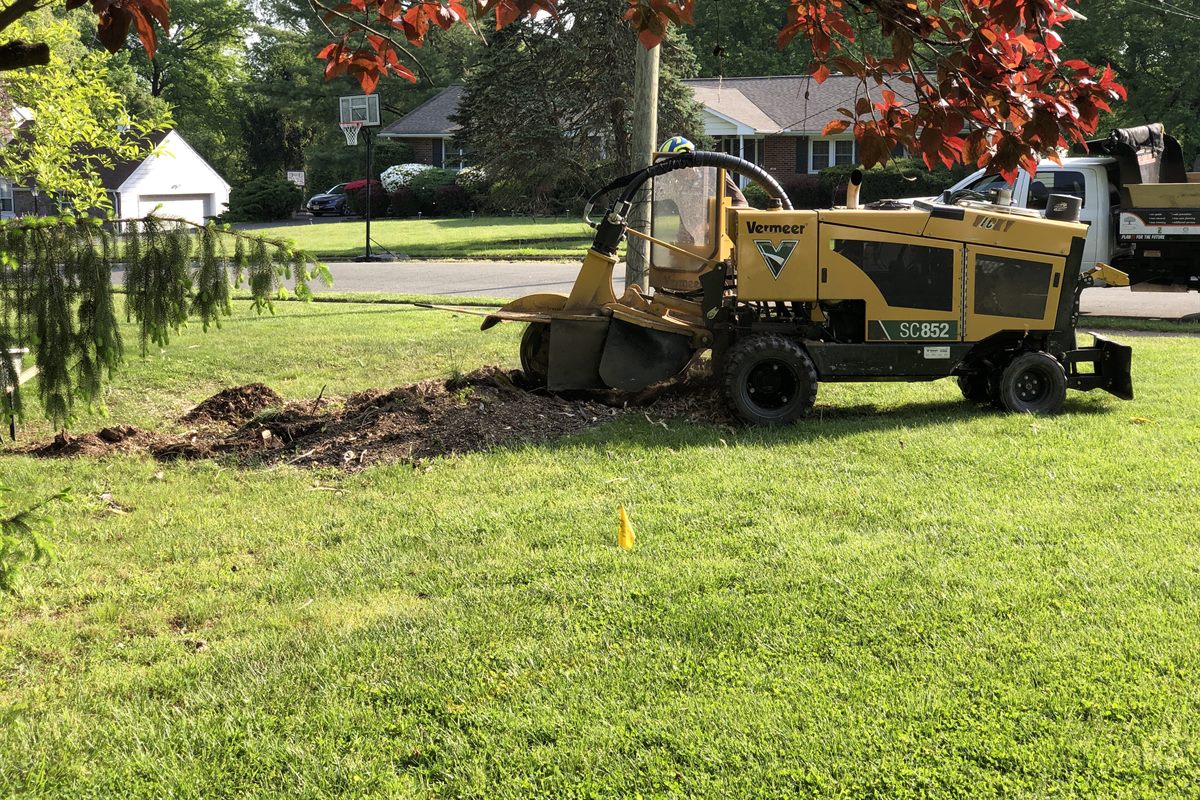
- NC 811, before any digging. Not a tree permit, but if stump grinding or root ball excavation is part of the plan, utilities get located first. Our stump grinding cost guide covers that side of the job.
- A reputable tree company. A crew that works these towns every week knows what a conservation easement plat looks like and will flag a right-of-way tree before quoting it. If a contractor shrugs at the question, that tells you something.
Make the calls in that order and keep any written answers with your removal invoice. If a question ever comes up later, a dated email from the planning department is worth everything.
Frequently Asked Questions
Do I need a permit to cut down a tree on my own property in Raleigh?
Generally no, not on private single-family residential property you occupy. The exceptions are street trees in the right-of-way, recorded tree conservation areas and buffers, and non-residential or development properties. Confirm with the city before cutting; rules change.
Can I remove the tree between the sidewalk and the street?
No, not on your own. Trees in the public right-of-way are city-managed street trees, and removal goes through the city’s urban forestry staff. Cutting one without approval is the most common and most expensive permit mistake homeowners make.
Are trees at the back of my lot in a new subdivision protected?
Possibly, yes. Many newer subdivisions carry recorded tree conservation areas or buffers along rear and side lot lines. Check your plat or ask the planning department before touching them; the protection survives the builder and applies to you.
Do Garner, Clayton, or Knightdale require tree removal permits?
Generally no for private single-family lots, following the same pattern as Raleigh, but each town sets its own rules and updates them as it grows. Call the town planning department to confirm, and check HOA covenants, which can restrict removal regardless of what the town allows.
Does a permit change what tree removal costs?
The removal price itself does not change: most Triangle removals still run $500 to $2,000, with large technical trees higher, as covered in our tree removal cost guide. What changes is timing; build in a few days for planning department or HOA answers before scheduling, and see our oak tree removal cost guide if the tree in question is one of our big mature oaks.
Get the Tree Looked At Before You Decide
Whether the tree is a hazard, a nuisance, or a question mark, the first step is the same: get experienced eyes on it. Garner Tree Removal quotes tree removal across Garner, south Raleigh, Knightdale, Clayton, Wendell, Zebulon, and Fuquay-Varina, and we will tell you up front if a tree looks like a right-of-way or conservation-area situation that needs a phone call first. Call (919) 322-8083 or request your free quote online today.
Sources: NC State Extension: Protecting and Retaining Trees, a Guide for Municipalities and Counties in North Carolina · NC State Extension: Practicing Forestry Under Local Regulations