Oak Tree Removal Cost in NC (2026)
Garner Tree Removal • August 17, 2026 • 8 min read
Raleigh calls itself the City of Oaks for a reason: the streets of the older neighborhoods from South Raleigh down through Garner and out to Clayton were planted with willow and water oaks decades ago, and those trees are now enormous. When one of them has to come down, homeowners are often shocked that the quote is higher than the pine of the same height that came out of the neighbor’s yard last spring. That is not padding; it is physics.
Every figure here is a 2026 planning range for the Garner and east Raleigh market, not a quote. Oak pricing swings with access, canopy spread, and what the tree hangs over, so treat these as budgeting numbers.
How Much Does Oak Tree Removal Cost in NC?
Removing a mature oak in the Triangle typically costs $1,000 to $4,500 in 2026, more than most other species at the same height, because oak is dense, heavy wood with wide canopies. A 60-foot loblolly pine is a tall skinny pole; a 60-foot willow oak is a tall pole plus a crown that can spread 60 feet wide, every limb of it heavy enough to require rigging.
Here is how oak removal prices out by size:
| Oak size | Typical 2026 range |
|---|---|
| Young oak, under 30 ft | $400 to $900 |
| Mid-size oak, 30 to 60 ft | $1,000 to $2,500 |
| Mature oak, 60 to 80 ft | $2,000 to $4,500 |
| Giant oak or over-structure removal | $4,000+ |
Within each row, access moves the needle most. An oak standing in an open front yard with room to drop wood is priced near the bottom of its band; the same oak wedged in a fenced backyard, leaning over the house, or sharing its root zone with a septic field climbs toward the top. Haul-away versus leaving the wood on site shifts the number too, often by a few hundred dollars on a big oak.
For context against other species, our full tree removal cost guide for NC covers the whole market, where single-tree removals run $500 to $2,000 for typical trees and $2,000 to $6,000+ for large or technical jobs. Oaks simply spend more time at the top of those ranges. If the tree overhangs your roof or a neighbor’s property, you are in large tree removal territory and should budget from the upper band.
Why Oaks Cost More Per Foot Than Other Trees
Three properties of oak drive the premium, and none of them are negotiable.
Wood density
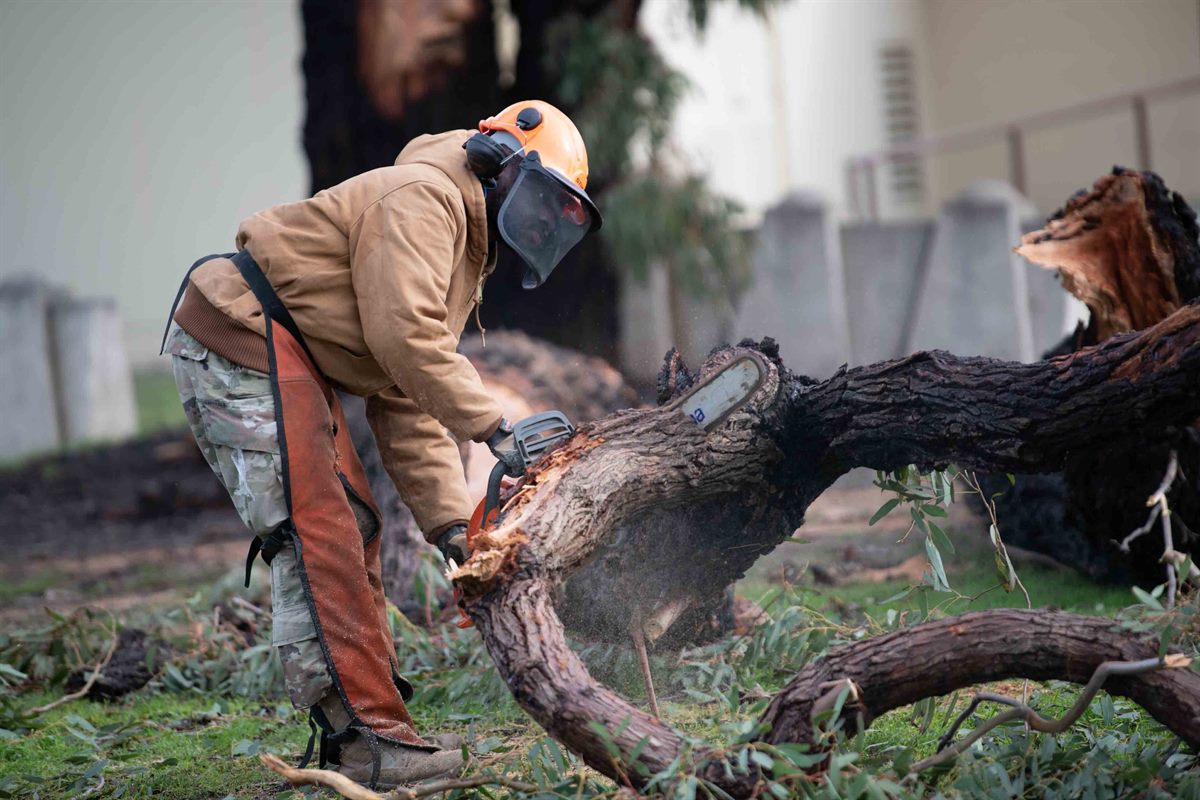
Oak is one of the heaviest woods in the yard. Green oak runs roughly 60 to 75 pounds per cubic foot, versus low-to-mid 50s for loblolly pine and less for sweetgum or Bradford pear. A single 10-foot section of mature oak trunk can weigh over a ton. That weight shows up everywhere in the job: more chainsaw time, more loader trips, more hauling weight, more wear on equipment.
Canopy spread
Willow and water oaks grow wide, not just tall. A mature specimen in an older Raleigh or Garner yard can spread its crown over the house, the driveway, the fence, and the neighbor’s shed all at once. Every limb over a target has to be roped down instead of dropped free, and a wide crown means dozens of rigging cycles where a pine might need a handful.
Rigging weight limits
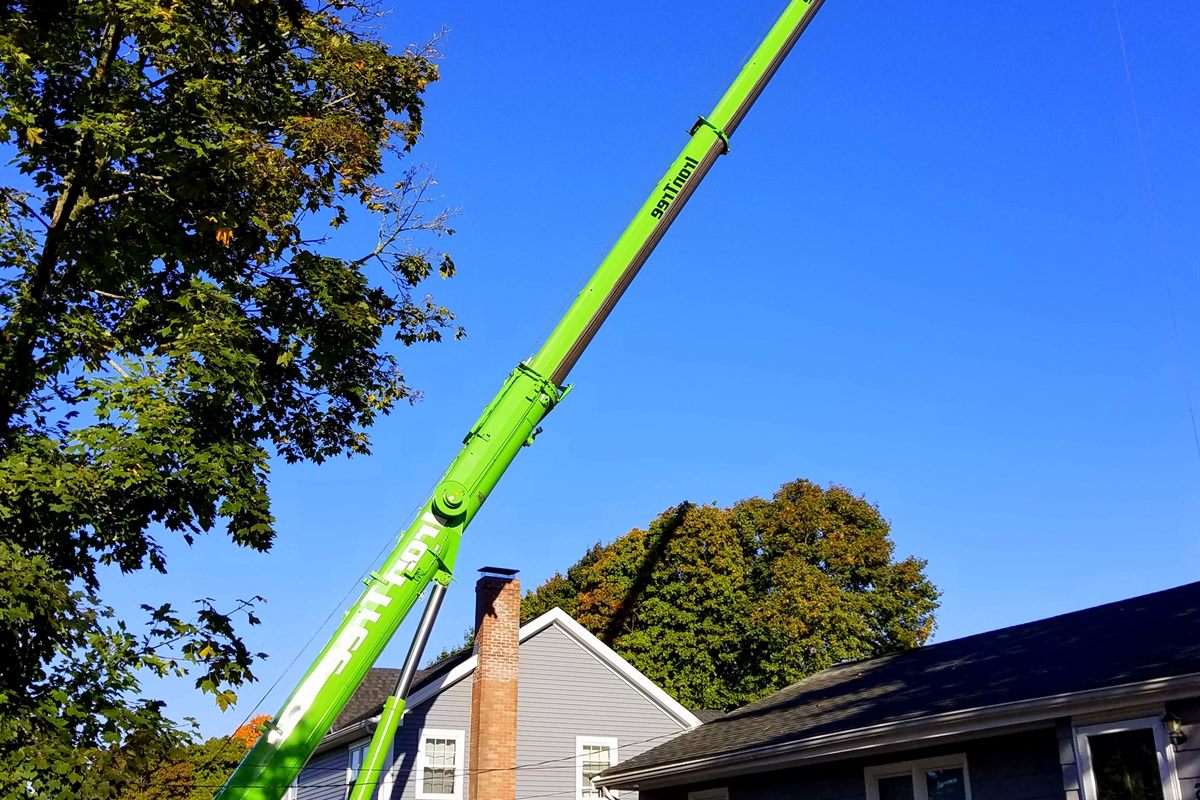
Ropes, blocks, and anchor points all have working load limits, and dense oak hits those limits with much shorter pieces. Where a crew might lower a 12-foot pine section in one pick, the same setup over your roof might only safely handle a 5-foot chunk of oak. Smaller pieces means more cuts, more lowering cycles, and more hours. On the biggest oaks, a crane becomes cheaper than three days of piecework, which is why over-structure giants start around $4,000 and climb.
The Water Oak Problem in Older Triangle Neighborhoods
If your home is in an established neighborhood in Garner, South Raleigh, Knightdale, or Clayton, there is a decent chance a water oak is standing within falling distance of your roof, and this species deserves its own warning. Water oaks are fast growers and were widely planted through the mid-1900s, but they are short-lived by oak standards. At 60 to 80 years old they commonly begin shedding large limbs without warning and developing internal trunk rot that is invisible from the outside.
Do the math on the planting dates and you will see the problem: an enormous share of the Triangle’s water oaks are sitting in that 60-to-80-year window right now. The warning signs are mushrooms or shelf fungus at the base, hollow-sounding trunk sections, big deadwood in the crown, and a history of dropping limbs in ordinary weather. Our heavy Cecil red clay adds a second failure mode: when it saturates in a tropical remnant, even a solid-looking water oak can tip out of the ground root plate and all. A proactive removal at $2,000 to $4,500 is painful; the same tree through the master bedroom is an insurance claim, an emergency crane, and months of repairs. If you are already past the falling point, see our emergency tree removal cost guide.
Willow oaks, by contrast, are the signature street tree of the City of Oaks and generally age far more gracefully. Most willow oak removals happen for construction, root conflicts with foundations and sewer lines, or storm damage rather than the systemic decline water oaks are known for. But their sheer size means that when one does have to go, it is nearly always a top-of-range job.
”Will Someone Pay Me for the Oak Logs?”
This question comes up on almost every big oak removal, so here is the short version: almost never. Sawmills and log buyers want straight, clean trunks from forest-grown trees in quantity. Yard oaks are the opposite of what they want: short trunks, wide branching, and, critically, the risk of embedded metal. Decades of clotheslines, fence wire, nails, and treehouse hardware end up grown into neighborhood trees, and one hidden nail can destroy a sawmill blade worth hundreds of dollars. Buyers will not gamble on it, and hauling a one-off log is not worth their trip.
The realistic options: a hobbyist with a portable mill may take or slab the trunk if you find one yourself (a fun project, not a payday, and usually you pay them), or you keep the wood as firewood. Do not expect the wood to offset your removal cost; expect to pay a bit less if the crew can leave the trunk bucked in the yard instead of hauling it.
Keeping oak firewood
Oak makes excellent firewood, arguably the best commonly available in the Triangle, but it seasons slowly. Split it soon after the removal and give it at least 12 months under cover, ideally closer to 18 to 24 for big splits, before burning. A mature oak can easily yield two or more cords, so make sure you actually have somewhere to stack it before telling the crew to leave the wood; a mountain of unsplit oak rounds in the backyard has been the start of many abandoned projects from Wendell to Fuquay-Varina.
Do Not Forget the Stump
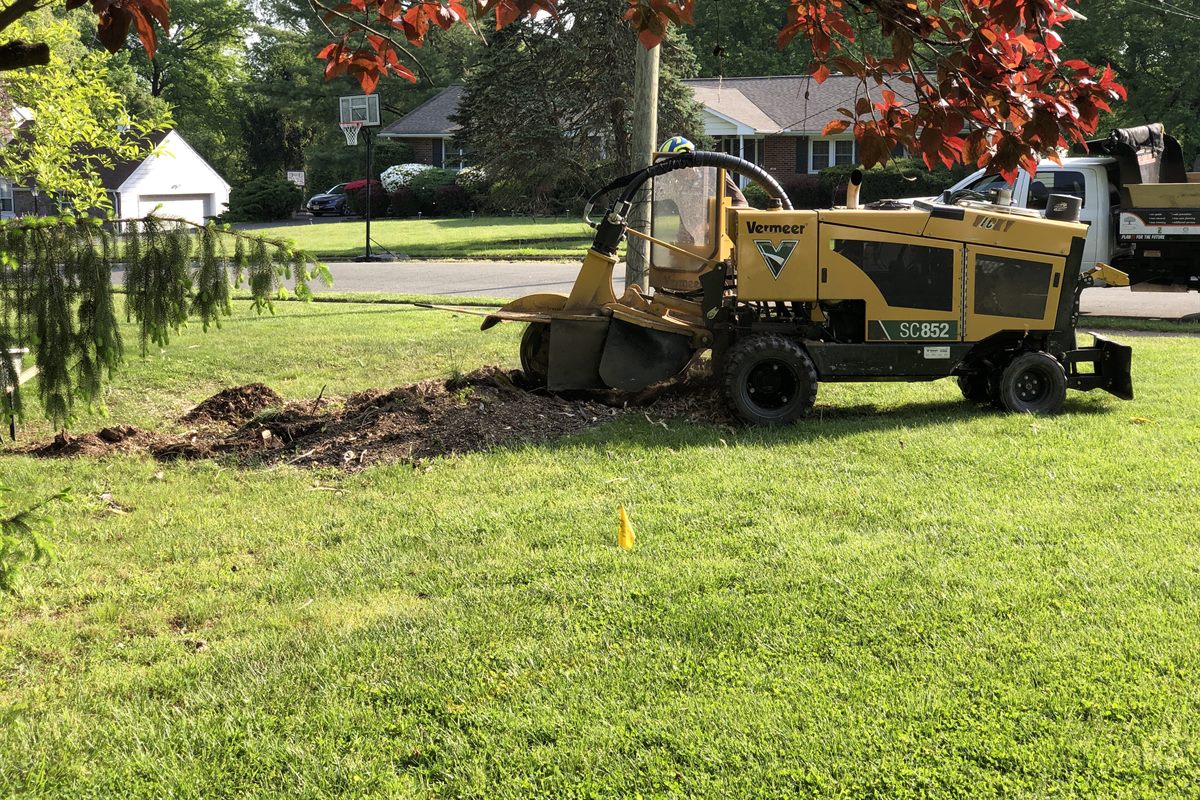
Oak stumps are their own line item, and they are bigger than they look. Mature oaks develop wide root flares, so a trunk that measures 30 inches at chest height can flare to 45 or 50 inches at the ground, and grinding is priced on that ground-level measurement. Typical stump grinding in our market runs $100 to $400 per stump at roughly $3 to $6 per inch, and big oak flares commonly land at $250 to $400 or more. Grinding is almost always cheaper when booked with the removal, since the machine is already mobilized. Full pricing details are in our stump grinding cost guide for the Raleigh area, and once the grinding is done, our guide on what to do with stump grindings covers the mound you will be left with.
Frequently Asked Questions
How much does it cost to remove a large oak tree in NC?
A mature oak of 60 to 80 feet typically costs $2,000 to $4,500 to remove in the Triangle in 2026. Mid-size oaks run $1,000 to $2,500, and giant oaks or removals over a structure start around $4,000 and climb from there.
Why does oak removal cost more than pine removal?
Density and spread. Green oak weighs roughly 60 to 75 pounds per cubic foot, and wide oak crowns force crews to rig down many small pieces instead of dropping large ones. The same height pine is lighter, narrower, and faster.
Should I remove an old water oak near my house?
If it is 60 to 80 years old and showing fungus at the base, trunk cavities, or dropped limbs, take it seriously. Water oaks commonly decline and shed large limbs in that age window, and a planned removal is far cheaper than an emergency one.
Will a sawmill buy my oak tree?
Almost certainly not. Yard trees carry embedded-metal risk and poor log form, so log buyers rarely pay anything for residential oaks. Keep it for firewood (seasoned 12+ months) or have it hauled.
How much does oak stump grinding cost?
Plan on $250 to $400 or more for a big oak stump, priced off the wide ground-level flare at roughly $3 to $6 per inch. Standard stumps run $100 to $400.
Get a Straight Price on Your Oak
Garner Tree Removal handles tree removal across Garner, South Raleigh, Knightdale, Clayton, Wendell, Zebulon, and Fuquay-Varina, including the big willow and water oaks that other crews turn down. We will look at the tree, tell you honestly whether it needs to come down at all, and give you a firm written price. Call (919) 322-8083 or request a free quote today.