What to Do With Stump Grindings
Garner Tree Removal • August 17, 2026 • 11 min read
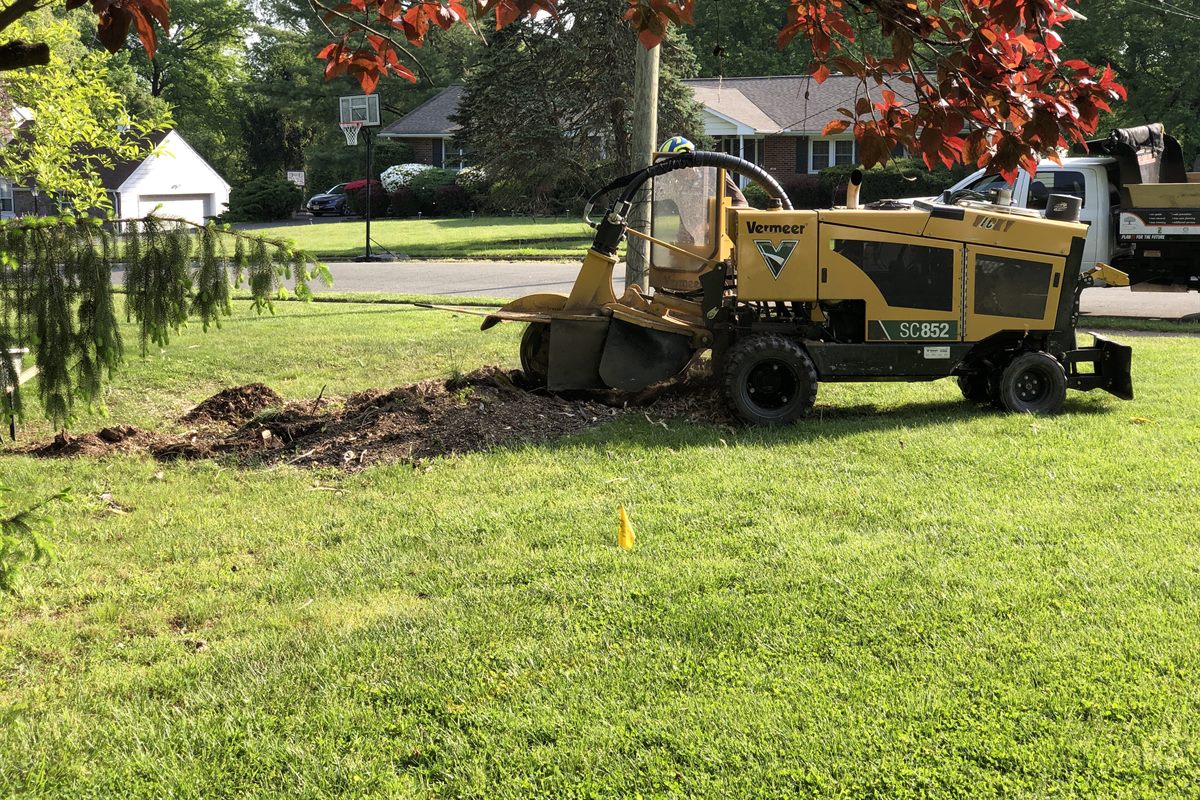
The grinder leaves, the stump is gone, and in its place sits a mound of shredded wood and soil that looks far bigger than the stump ever did. Nobody warns you about the mound. It is the number one follow-up question we get after stump grinding jobs from Garner to Clayton: what am I supposed to do with all this?
Good news: every option is cheap or free, and none of them are urgent. This guide covers the four realistic paths, plus the two situations where you should not reuse grindings and the termite question everyone asks. Any prices mentioned are planning ranges for our area, not quotes.
What Should You Do With Stump Grindings?
After grinding, you are left with a mound 2 to 3 times the stump’s visible volume, and you have four options: leave them to settle, use them as mulch, compost them, or pay $50 to $150 extra to have them hauled. The volume surprises people because grinding fluffs solid wood into loose chips and mixes in soil, the same way a log becomes a much bigger pile of chips. A modest 24-inch stump can easily produce several wheelbarrow loads.
| Option | Cost | Best for |
|---|---|---|
| Leave in the hole to settle | Free | Low-visibility spots, no rush for grass |
| Use as mulch | Free | Beds, paths, around (not against) trees |
| Compost them | Free | Gardeners with nitrogen scraps to mix in |
| Have them hauled away | $50 to $150 extra | Clean slate, replanting, small yards |
Those figures sit alongside the grinding itself, which runs $100 to $400 per stump or about $3 to $6 per inch of diameter. The Garner cost page and the Garner stump grinding cost guide break both down.
Which one is right depends on where the stump was and what you want growing there next. Here is each option in detail.
Getting a stump ground in the first place? Request a free written quote and tell us whether you want the grindings left or hauled, because it changes the number.
Option 1: Leave them and let the hole settle
The zero-effort path: rake the mound back into the grinding hole, mound it slightly above grade, and walk away. The chips will decay and settle over the next one to three years, and the spot will sink as they do, so expect to top it up once or twice. If you want grass, do not seed straight into pure grindings; they hold too much air and too little nitrogen. Instead, once the pile has settled below grade, remove the top few inches of remaining chips, cap the hole with real topsoil, and seed into that. In our heavy Cecil red clay, a chip-and-soil mix under the surface actually drains better than the native clay, so the spot often ends up healthier than the surrounding lawn.
Option 2: Use them as mulch
Fresh grindings work as a rustic mulch for paths, bed edges and around established shrubs, and badly anywhere you want new plants to establish, because fresh wood ties up nitrogen at the soil surface as it breaks down. Which bed you choose decides whether this is free mulch or a lost season.
That distinction, plus the two species you should never spread at all, is covered properly in are stump grindings good mulch.
Option 3: Compost them
Grindings are a classic carbon-heavy “brown,” so they compost well if you pair them with nitrogen-rich “greens”: grass clippings, vegetable scraps, coffee grounds, manure. Layer roughly one part greens to two or three parts grindings, keep the pile damp, and turn it occasionally. Pure grindings alone will still break down, just slowly, on the order of two or three years instead of one. The finished compost is excellent for amending our red clay, which is exactly what most Triangle gardens need anyway.
Option 4: Pay for haul-away
If the stump sat in the middle of a small front lawn in Wendell or Fuquay-Varina, or you plan to replant or lay sod immediately, hauling is the clean-slate option. Most crews in our area charge $50 to $150 extra to load and haul the mound, depending on volume, and it is cheapest to book at the same time as the grinding while the equipment and trailer are already on site. For what the grinding itself costs (typically $100 to $400 per stump, around $3 to $6 per inch), see our stump grinding cost guide for the Raleigh area.
Pro tip: decide about the grindings before the grinder arrives, not after. Hauling them off adds $50 to $150 to a job that is already on site. Change your mind next week and you are paying for a whole second visit instead. If you want grass on that spot this season, pay the haul-away.
What Do You Fill the Hole With?
Fill it with topsoil, not with the grindings, if you want anything to grow there soon. Grindings are almost all carbon. As they break down they pull nitrogen out of the surrounding soil, which is the same reason they work as a path mulch and fail as a seed bed.
The practical method, in order:
- Rake the grindings out of the hole and off to wherever they are going.
- Pull out the obvious root pieces and the larger chunks; they are the slowest thing in the pile to break down.
- Backfill with screened topsoil, mounded 2 to 3 inches above grade, because it will settle.
- Water it to settle it deliberately rather than waiting for rain to do it unevenly.
- Seed or sod after it has settled, not before.
If you skip the topsoil and just rake the grindings back in, expect the spot to sink over the following year and expect grass to struggle in it. That is not a failure of the grinding, it is the carbon doing what carbon does.
Grindings mixed with dirt
Most of what comes out of a grinder is already a mix of wood and soil, because the machine takes the stump plus the dirt around the root flare. That mix is worse as a mulch than clean chips (more weed seed, more compaction) and better as a backfill than pure grindings. If the pile looks more brown than blonde, it is soil-heavy, and it is fine to put back in the hole under a topsoil cap.
How Long Do Stump Grindings Take to Decompose?
There is no single number: particle size, how wet the spot stays and whether anything is feeding the pile nitrogen all change it. Fine grindings spread thin in a damp bed can be largely gone inside a year, while a mounded pile left where it fell takes two to three years for the bulk of it. Species matters too, and the slow ones are exactly the trees people here have ground.
The variables, the species timeline and what the pile actually looks like each year are in how long stump grindings take to decompose.
What About the Roots Left Behind?
Grinding takes the stump, not the root system. A grinder goes 6 to 12 inches below grade and the roots stay where they are, running out under the lawn, and that is normal rather than a job half done.
Those roots decay on their own over years. Two things follow from that. First, the ground over a big root run can settle slightly as they go, so a lawn laid over a large removal may need a top-up of soil in a year or two. Second, roots left in place are still holding soil while they decay, which is genuinely useful on a slope or near water.
Full extraction, digging the root plate out rather than grinding it, is a different and much more expensive job that tears up everything around it. It is worth it for a building footprint and almost never worth it for a lawn. The side-by-side is in stump grinding vs stump removal.
Can you plant a tree where a stump was?
Yes, with two caveats. Plant off to the side of the old stump rather than into it if you have the room, and if you have to use the same spot, excavate the grindings out properly and backfill with soil rather than planting into wood. The one rule that overrides the rest: do not replant the same species where the last one died of a root disease.
Offset distances, the deeper grind to ask for when you already know you are replanting, and which species to swap to are covered in can you plant a tree where a stump was.
When You Should NOT Reuse Grindings
Two exceptions are worth knowing before you spread anything.
Diseased trees
If the tree came down because of disease, especially root and butt rots like armillaria, do not spread its grindings around healthy trees and shrubs. Some pathogens can persist in the chips and soil mix. Have those grindings hauled, or at minimum compost them fully and hot before reuse. If you are not sure why the tree died, ask the crew that removed it; this is worth mentioning when you book tree removal and grinding together.
Black walnut
Black walnut wood and roots contain juglone, a natural compound that stunts or kills many garden plants: tomatoes, peppers, potatoes, blueberries, azaleas, and plenty of ornamentals. Black walnut grindings do not belong in vegetable beds or around sensitive plantings, period. Composting for a year or more breaks juglone down, but the safe play with walnut grindings is paths, wooded natural areas, or the haul-away trailer. (Oak, pine, maple, and sweetgum grindings, the bulk of what comes out of Triangle yards, carry no such problem; if your removal was one of the big oaks covered in our oak tree removal cost guide, mulch away.)
Do Stump Grindings Attract Termites?
not the way people fear. Grindings do not summon termites to your property; eastern subterranean termites are already present in virtually every yard in Wake and Johnston counties, working through roots and buried wood whether you grind stumps or not. A layer of chips in a garden bed is not a meaningful attractant, and researchers have found termites do not thrive in loose wood-chip mulch itself.
The real risk is location, not the material. A damp pile of wood pressed against your foundation, whether it is grindings, firewood, or bagged mulch, creates the moist, sheltered bridge termites love and hides the mud tubes an inspector would otherwise spot. So follow the standard rule: keep all mulch, grindings included, at least 6 to 12 inches away from siding and foundation, and never let it pile above the top of the slab or the brick weep holes. Do that and grindings are no riskier than any other mulch. One related note: grinding actually removes the buried stump wood that termites genuinely do feed on, which is one reason we recommend grinding over leaving stumps to rot; leftover roots below the grind depth decay harmlessly in almost all cases.
The Sprouting Question
One last cleanup note. Grinding kills most trees outright, but some species in our area resprout from the roots left behind: Bradford pears are the worst offenders, along with crape myrtles, sweetgums, and black locust. If shoots pop up around the old grinding site in spring, mow or cut them persistently, or hit the sprouts with a brush killer; the roots will exhaust themselves within a season or two. Oaks and pines, the most common removals from Clayton to Zebulon, almost never come back. Full removal pricing, stump included, is in our tree removal cost guide for NC.
Frequently Asked Questions
How much extra does it cost to haul stump grindings away?
Typically $50 to $150 extra, depending on the size of the mound, and it is cheapest booked together with the grinding itself, which runs $100 to $400 per stump in our market.
Can I plant grass on top of stump grindings?
Not on top of them, no. Rake the grindings out, backfill with topsoil mounded a couple of inches above grade because it will settle, water it to settle deliberately, then seed. Grindings are almost all carbon and pull nitrogen out of the soil as they break down, which is exactly what new grass cannot spare. How much topsoil each stump size needs, and when to seed in the Triangle, are in can you plant grass after stump grinding.
Are stump grindings good mulch?
Yes, with two rules: keep them a few inches off trunks and stems, and 6 to 12 inches away from your foundation. Expect a temporary nitrogen tie-up at the surface as they break down, so do not till fresh chips into planting beds.
Do stump grindings attract termites to my house?
Grindings by themselves do not attract termites, which are already present in nearly every NC yard. The risk is a damp wood pile against your foundation, so keep any mulch clear of the siding and slab line.
Can I get the stump ground on the same visit as the removal?
Yes, and it is the cheapest way to buy it, because you pay one mobilisation instead of two. Ask for it on the original work order rather than calling back: stump grinding as its own trip carries a minimum of its own. The same logic applies to any tree removal where you already know the stump is going.
Which grindings should I never reuse in the garden?
Grindings from diseased trees and from black walnut. Disease organisms can ride along in the chips, and walnut’s juglone harms tomatoes and many other garden plants. Haul those loads or compost them hot for a year first.
Grinding, Hauling, or Both
Garner Tree Removal grinds stumps across Garner, South Raleigh, Knightdale, Clayton, Wendell, Zebulon, and Fuquay-Varina, and we will quote grinding and haul-away together so there are no surprises, including honest advice on whether your grindings are worth keeping. Call (919) 322-8083 or request a quote online and we will handle the stump and the mound.