Can You Plant Grass After Stump Grinding?
Garner Tree Removal • September 20, 2026 • 8 min read
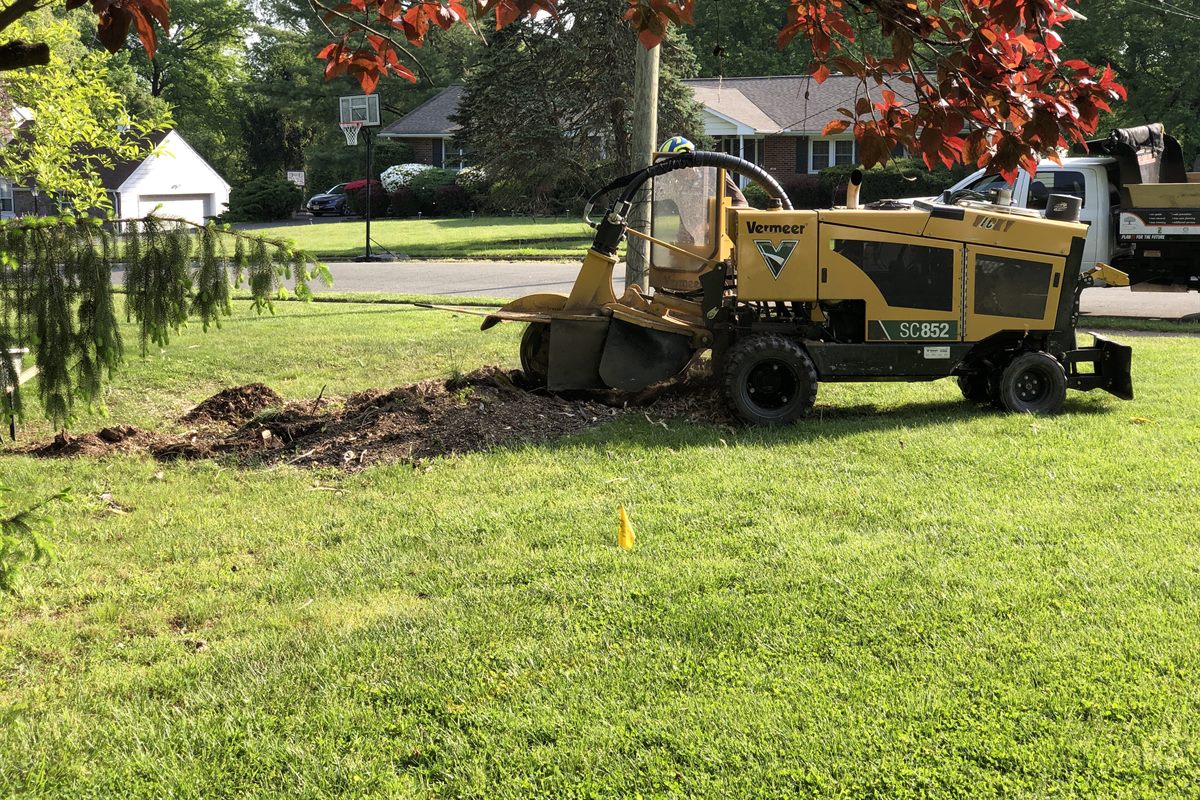
The stump is gone and your lawn now has a brown dish in it, three or four feet across, full of loose wood. The question almost every homeowner asks next is whether you can plant grass after stump grinding, and how soon the spot will stop looking like a scar.
You can, and in most Garner yards the patch knits into the surrounding turf inside one growing season. The failures are predictable and they all come from the same mistake: seeding into the grindings instead of into soil. Wood chips and lawn seed want opposite things, and the fix is a few wheelbarrows of topsoil and the right month.
This guide covers why seed fails in fresh grindings, how much topsoil the hole actually takes, the order the work goes in, the seeding window for the Triangle, and how long the spot keeps settling afterwards. Any prices below are planning ranges for our area, not quotes.
Can You Plant Grass After Stump Grinding?
Yes, and it usually takes in one season, but only if you pull the grindings out and cap the hole with 4 to 6 inches of real topsoil before you seed. Seed broadcast straight onto a bed of chips germinates thinly, yellows, and thins out again by midsummer.
Grinding leaves a shallow dish, not a crater. Most machines work to 6 to 12 inches below grade, so the void is wide and not especially deep. Filling that dish properly is a half-day job with a wheelbarrow, and it is the difference between turf that closes over the spot and a bald patch you reseed every autumn.
Why Seed Fails in Fresh Grindings
Four things work against you, and they stack.
Nitrogen goes missing. Grindings are nearly all carbon. The microbes breaking them down pull nitrogen out of the surrounding soil to do it, and seedling grass is one of the hungriest things you can ask to grow in a nitrogen-poor pocket. Established shrubs shrug this off; a two-week-old fescue seedling does not.
The bed is too airy. Loose chips hold enormous air space. Seed needs contact with fine particles that stay damp. In chips, the root hairs bridge air gaps instead of soil, then dry out the first week nobody waters.
It sinks under you. A hole backfilled with grindings drops as they decay, and a seedbed that falls two inches after the grass takes leaves you with a dip that collects water and scalps under the mower.
Water moves wrong. A deep layer of fresh wood mats down and sheds water off the surface, then holds it underneath. Neither half of that helps seed.
How Much Topsoil Does the Hole Need?
More than people expect, because the dish is wider than the stump was. The machine has to clear the root flare, so plan on a hole roughly a foot to a foot and a half wider than the trunk in every direction.
| Stump diameter | Typical hole across | Dish depth | Topsoil to order | 40 lb bags, roughly |
|---|---|---|---|---|
| 12 inches | About 2.5 feet | 6 to 8 inches | 3 to 4 cubic feet | 5 to 7 |
| 18 inches | About 3 feet | 8 inches | 5 cubic feet | 8 to 10 |
| 24 inches | About 3.5 feet | 8 to 10 inches | 8 cubic feet | 12 to 15 |
| 36 inches | About 5 feet | 10 to 12 inches | 18 to 20 cubic feet | a bulk scoop is cheaper |
That is planning arithmetic off the size of the dish, so measure your own hole before you buy. Once you are past about 15 cubic feet, a half yard of bulk screened topsoil delivered beats hauling bags home.
Want the exact number for your stump? Request a free written quote and we walk the property, then price the grinding and the haul-off in writing.
The Order the Work Goes In
- Rake the grindings out of the dish and barrow them off. Every chip you leave is a chip that decays and drops your new lawn with it.
- Pull the root chunks and the fist-sized pieces. Those are the slowest material in the pile and the ones that leave voids when they finally go.
- Check the depth. You want at least 4 inches of clean soil under the seed, and 6 is better. If the grinder took the stump to 6 inches and you scrape out another 2, you have room.
- Backfill with screened topsoil, mounded 2 to 3 inches above the surrounding grade. It will settle, and a slight crown now reads as flat in six weeks.
- Water it deliberately to settle the fill rather than waiting for a storm to do it unevenly. Then top up the low spots.
- Rake to grade and firm it lightly. A footprint should press in about a quarter inch, not sink.
- Seed and feed. Use a starter fertiliser, because the material still decaying under the patch is competing for nitrogen with your seedlings for a year or two.
Pro tip: order the topsoil before the grinder books in, not after. The dish is easiest to fill while it is fresh and the edges are clean, and a week of rain turns an open grinding hole in our heavy clay into a soup bowl you then have to bail and dig out before you can fill it.
When Should You Seed in the Triangle?
For tall fescue, the fall window is the one that matters: NC State Extension’s TurfFiles puts the Piedmont fall seeding target at roughly mid-September into early October, with September seedings doing better than late ones because germination slows as the soil cools. Their rate for turf-type tall fescue is 6 pounds per 1,000 square feet, which on a stump patch means a couple of handfuls rather than a bag.
| Grass | Best window | What to do if the stump came out off-season |
|---|---|---|
| Tall fescue | Mid-September into early October | Fill and cap the hole now, mulch it lightly, seed in the fall |
| Bermuda or zoysia | Late spring into early summer, once soil is warm | Fill now, plug or sprig when the ground warms |
| Any lawn, in a hurry | Sod, any time the ground is workable | Fill and firm properly first, because sod hides nothing |
If your removal happened in February, the practical move is to fill the hole properly, keep it mulched or covered so it does not wash, and wait for the seeding window. Fescue seeded into a Garner lawn in May spends July dying.
Sod is the shortcut, and it works, but it magnifies every mistake underneath. Lay it over a dish that has not settled and you get the same sunken patch with a seam around it.
How Long Before the Spot Stops Sinking?
Expect to top the patch up once or twice over the first two years. The fill you put in settles over the first few months, and the roots still running out under the lawn below grind depth decay slowly after that.
Around here that second part takes a while. Willow oak, water oak and hickory are slow to break down, so a big oak removal in Vandora Springs or off Aversboro Road can show a faint depression over the old root runs a year later. That is normal, not a failed grind. A wheelbarrow of topsoil and a handful of seed in the fall closes it. The full timeline is in our guide to how long stump grindings take to decompose.
If the grindings themselves are still sitting somewhere on your property, they are not waste. The full set of options for the mound, from mulch to compost to the haul-off, is in what to do with stump grindings.
Frequently Asked Questions
Can I just rake the grindings back in and seed over them?
You can, and it is the single most common reason the patch fails. Grass comes up thin, yellows in its first summer, and the spot sinks as the wood breaks down. If you are not fussed about that corner of the yard it is a reasonable shortcut; if it is the front lawn in Clayton or Garner, cap it with topsoil.
How deep does the grinder go?
Standard stump grinding takes the stump to 6 to 12 inches below grade, which is plenty for turf. Deeper grinds are for replanting and for footings, and they cost more because they take longer and pull up more material.
Do I have to get every last chip out?
No. Aim to get the bulk out and the big pieces gone, then cap with 4 to 6 inches of clean soil. A scatter of fines mixed into the bottom of the hole is fine, and it actually drains better than our native clay does.
Will sod work better than seed?
Sod gives you instant cover and it is the right call if you are selling. It does not fix a bad base, so the fill, the settling and the watering all still have to happen first. Sod over an unsettled dish tells on you within a month.
What does stump grinding cost around Garner?
Most single stumps run $100 to $400, priced at roughly $3 to $6 per inch of diameter measured across the widest point including the flare, with a trip minimum of $100 to $150 if the grinder comes out on its own. Details sit on the Garner cost page and in the Garner stump grinding cost guide.
Do you take the grindings away in Knightdale?
Yes, and it is a line on the quote rather than an assumption either way, in Knightdale, South Raleigh and across east Wake. Hauling the pile off adds $50 to $150 to a job already on site, and it is the fastest route to a seeded lawn.
Grinding and Grass in Garner and East Wake
If you want the spot mowable rather than mounded, say so when you ask for the number. We grind stumps and quote the haul-off alongside tree removal across Garner, Knightdale, Clayton and Wendell, and the cheapest time to buy the grinding is on the visit that takes the tree down rather than as a second trip.
You get an up-front written price before anyone starts, with the grindings and the mound handled the way you want them. Request a free written quote or call (919) 322-8083 during business hours.