Storm Damage Tree Removal Cost in NC (2026)
Garner Tree Removal • August 17, 2026 • 9 min read
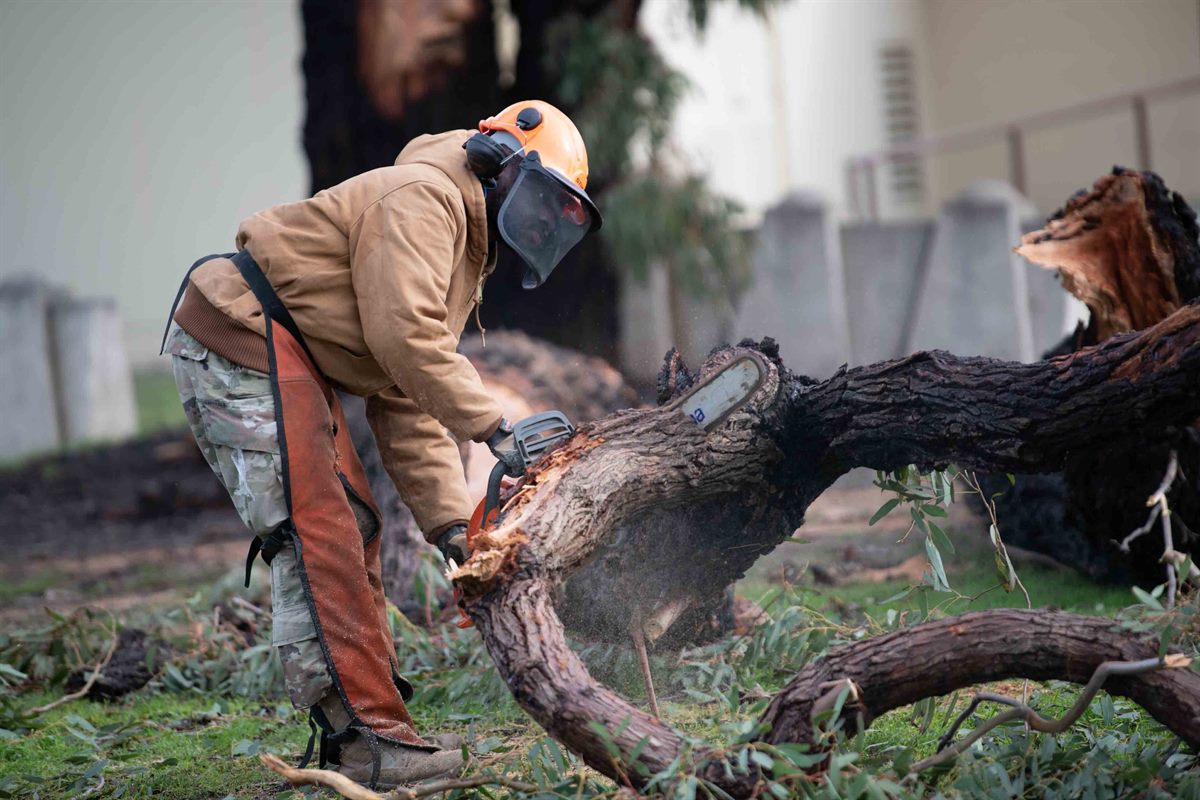
The thunderstorm rolled through at 6 p.m., and now there is a willow oak limb resting on your shingles, or worse, a whole loblolly pine across the back of the house. After “is everyone okay” the next question is usually “what is this going to cost me?” Storm tree work is priced differently from a scheduled removal, and knowing how before you start calling around puts you in a much stronger position, especially in the chaotic days after a big storm.
Every number in this guide is a planning range for the Garner and east Raleigh market, not a quote. Storm jobs vary more than any other kind of tree work, because no two trees fall the same way.
Read this first: we do not run an after-hours emergency crew. If a tree is on your house right now, on a power line, or hanging over somewhere people walk, call a 24-hour tree service or Duke Energy, not us. This guide is here so you know what the work costs before you agree to a price under pressure. Once the immediate hazard is handled, we quote the planned removal and cleanup in writing.
How Much Does Emergency Tree Removal Cost in NC?
Emergency tree work in the Triangle typically runs 1.5 to 3 times normal rates, with after-storm callouts starting around $250 to $500 and tree-on-house removals commonly $1,500 to $6,000 and up. For comparison, a scheduled single-tree removal usually lands between $500 and $2,000, so the same tree that would cost $1,200 on a Tuesday appointment can cost $2,500 to $3,500 as a Saturday-night emergency with a roof involved.
Here is how common storm scenarios price out in 2026. These are observed market ranges for after-hours and post-storm work as of September 2026, not figures from our own price list: the Garner cost page prices planned removals, and storm work sits above it.
| Storm scenario | Typical 2026 range |
|---|---|
| Hanging limb over roof or driveway | $250 to $800 |
| Tree blocking driveway or access road | $300 to $1,000 |
| Tree on roof, no structural crush | $1,500 to $4,000 |
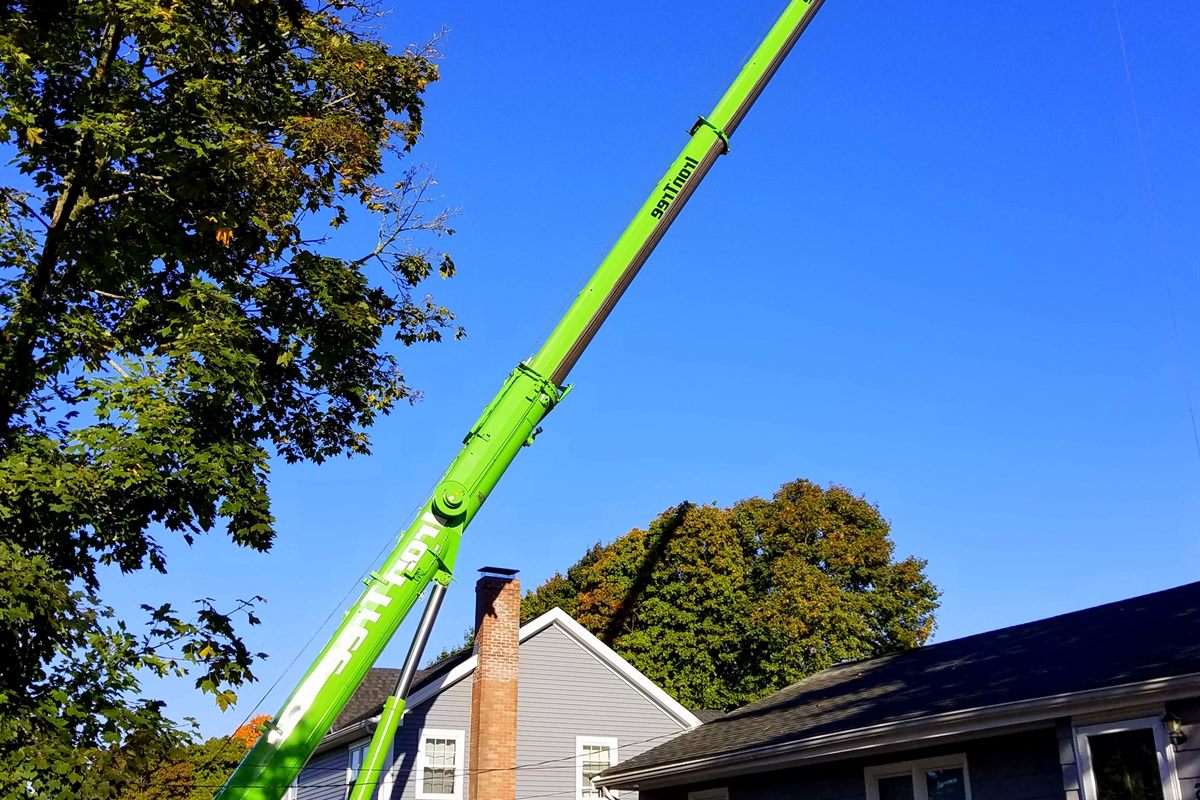
| Tree through structure, crane needed | $3,000 to $9,000 |
Two things to notice. First, the ranges get wide fast once a structure is involved, because large tree removal over a house is rigging work, not chainsaw work. Second, a tree that fell harmlessly in the yard is not really an emergency at all, and we cover that cheaper scenario in our fallen tree removal cost guide. For baseline non-emergency pricing on any tree, start with our tree removal cost guide for NC.
Why Emergency Work Costs More
Emergency pricing is not a penalty for bad luck. It reflects three real cost drivers that do not exist on a scheduled job.
Risk and unknowns
A standing tree is predictable. A tree resting on a house is a loaded spring. Trunks under tension can kick violently when cut, rootballs can shift, and crews often work on wet roofs in the dark. Every cut has to be planned so the load releases in a controlled way, which means slower work by more experienced climbers, sometimes with a crane. That skill premium is most of the difference between a $1,200 removal and a $3,500 one.
Overtime and callout crews
A 10 p.m. response means a crew leaving their families, running lights, and working past midnight. Reputable companies that do run after-hours crews in the Garner, Knightdale, and Clayton area charge a callout fee of roughly $250 to $500 to mobilize, then bill the work itself at elevated hourly or flat rates. Ask which of the two you are being quoted before the crew rolls.
Demand spikes after storms
When a hurricane remnant drags through Wake and Johnston counties, every tree service in the region books solid for one to three weeks in a single evening. Prices rise with demand, and the hardest-hit neighborhoods see the biggest spikes. This is also exactly when out-of-town operators flood in, which we cover below.
What to Do in the First Hour
What you do before the crew arrives affects your safety, your insurance claim, and sometimes your final bill.
Safety before anything else
Get everyone out of rooms under the damaged section of roof. Do not go outside to inspect while wind is still gusting; limbs that survived the first blow come down in the second. If the tree took down a power line, stay far away and call Duke Energy first, not a tree company. No tree service should touch a tree tangled in an energized line.
Photos before cleanup
Photograph everything from multiple angles before anyone cuts a single limb: the tree, the point of impact, interior ceiling damage, the whole scene. Insurance adjusters work from documentation, and once the tree is gone, your photos are the only record of how it landed. Timestamped phone photos are fine.
Tarp what you can reach safely
If there is an open hole in the roof and rain is coming, a tarp prevents thousands of dollars of secondary water damage. Many emergency tree crews will tarp as part of the visit; ask when you call. Insurers generally expect homeowners to take reasonable steps to prevent further damage, and they typically reimburse those costs on a covered claim.
How Insurance Usually Treats Emergency Tree Removal
The general pattern in North Carolina: homeowners insurance helps most when a covered structure was damaged. If the tree hit your house, garage, or fence, the policy usually covers repairing the structure and removing the tree from it, minus your deductible. If the same tree fell flat in the yard and touched nothing, most policies pay little or nothing toward cleanup, sometimes a small cap like $500 to $1,000, sometimes zero.
A few practical notes. Call your insurer early, but do not wait for an adjuster to make the property safe; document, then act. Keep every invoice. And know that whose tree it was matters less than people assume: in most storm scenarios, your policy handles what lands on your property. We break down the neighbor-tree question in detail in our guide to who is responsible when a tree falls in NC.
When Waiting a Day Cuts the Bill in Half
Here is the honest advice most storm-week callers do not hear: if nothing is in danger, you probably do not need emergency service. A tree flat on the back lawn, a limb down across the garden, a snapped Bradford pear leaning into its own canopy in the corner of the yard: none of that gets worse overnight.
Waiting even one or two days moves you from emergency pricing back toward standard tree removal rates, often cutting the number by 30 to 50 percent. A grounded tree with no target under it is a $500 to $2,000 scheduled job, not a $3,000 midnight callout. The 2x to 3x premium exists to solve genuine emergencies: a tree on the house, a blocked driveway, a trunk hanging over a bedroom. If your situation is ugly but stable, say so when you call and ask for the next regular slot. A good local company will tell you the truth about which one you have.
Storm-Chaser Red Flags
After every named storm, trucks with out-of-state plates work the neighborhoods from Zebulon to Fuquay-Varina, knocking doors while the power is still out. Some are legitimate crews chasing work; some are the reason “storm chaser” is an insult. Watch for:
- Cash up front, especially large deposits. Reputable local companies bill when the work is done or take a modest deposit for crane scheduling.
- No certificate of insurance. Ask for proof of liability and workers’ comp coverage before anyone climbs. If a worker without coverage is hurt on your property, that problem can become yours.
- No local address or phone number. If the truck is from three states away and the “office” is a cell phone, any warranty on the work leaves when they do.
- Pressure to sign over your insurance claim. An assignment-of-benefits form hands a stranger control of your claim. Do not sign one at your door.
- A price that seems too good. Storm-week bargains often end with an unfinished job, a damaged lawn, or a second company charging full price to fix it.
The Triangle’s Storm Calendar
Emergency tree work here follows a predictable rhythm. Summer thunderstorms run June through September, and their straight-line winds are what snap limbs out of the big willow and water oaks in older east Raleigh and Garner neighborhoods. The same months carry hurricane-remnant risk: Fran in 1996 remains the benchmark storm that dropped trees across the whole Triangle at once, and Matthew in 2016 and Florence in 2018 both soaked the region and toppled trees days after the rain stopped.
That delayed toppling is a local quirk worth understanding. Our Cecil red clay soil holds water, and when it saturates, root plates lose their grip. Shallow-rooted loblolly pines and mature oaks can stand through the wind and then fall on a calm morning two days later. If a large tree near your house is leaning after a wet storm, or the soil around its base has lifted or cracked, treat it as urgent even though the sky is blue.
Winter brings the other season: ice storms. A quarter inch of ice adds hundreds of pounds to a canopy, and pines and Bradford pears fail first. Ice events tend to produce many small emergencies at once, hanging limbs and blocked driveways more than crushed roofs.
Frequently Asked Questions
How much does emergency tree removal cost in NC?
Expect 1.5 to 3 times normal rates: callouts start around $250 to $500, and tree-on-house removals commonly run $1,500 to $6,000 and up. A tree through the structure requiring a crane can reach $3,000 to $9,000.
Does homeowners insurance pay for emergency tree removal?
Usually only when a covered structure was hit. If the tree damaged your house, garage, or fence, removal from the structure is typically covered minus your deductible. A tree that fell in the yard without hitting anything is often capped at $500 to $1,000 of coverage, or excluded entirely.
Is it cheaper to wait instead of calling for emergency service?
Yes, when nothing is in danger. Waiting one or two days for a scheduled slot often cuts the price by 30 to 50 percent, moving a grounded tree back into the normal $500 to $2,000 removal range.
What should I do first when a tree hits my house?
Get people away from the damaged area, stay clear of any power lines, then photograph everything before any cutting starts. Call your insurer, tarp exposed roof if it can be done safely, and keep every invoice.
How do I spot a storm-chaser scam?
Never pay large amounts of cash up front, and never hire a crew that cannot show a certificate of insurance. Out-of-state plates, no local address, and pressure to sign over your insurance claim are the other classic warning signs.
Storm Cleanup Quotes in Garner and East Wake
Once the hazard is stable and the insurer has your photos, the rest is ordinary tree work: get the tree off the property, grind the stump, haul the debris. That part we quote in writing, across Garner, South Raleigh, Knightdale, Clayton, Wendell, Zebulon and Fuquay-Varina.
We are not the call for a tree that is on your roof tonight. We are the call for the planned tree removal and stump grinding that follows, at planned-work prices rather than storm rates. Request a free written quote or call (919) 322-8083 during business hours, and compare it against whatever the storm-week crews quoted you.