Fallen Tree Removal Cost in NC (2026)
Garner Tree Removal • August 17, 2026 • 8 min read
A tree on the ground looks like half the job is already done, and in a way it is: gravity handled the dangerous part. But if you woke up after a summer thunderstorm to a pine across the fence, or worse, an oak resting on your roof, the prices you are about to hear can range from a few hundred dollars to more than the tree would have cost to remove standing. This guide explains why, with real 2026 numbers for the Garner, south Raleigh, and east Wake area.
The usual honesty line applies: these are planning ranges for the Triangle market, not quotes. With storm work especially, no one can price a downed tree accurately without seeing what it is resting on.
How Much Does Fallen Tree Removal Cost in NC?
A tree already on the ground typically costs $300 to $1,200 to cut up and haul in the Triangle, while a tree on a house, garage, or fence runs $1,500 to $6,000 and up because it has to be rigged or craned off carefully. The gap between those two numbers is the entire economics of storm work, and where your tree landed decides which side of it you are on.
| Situation | Typical cost (2026) | What drives it |
|---|---|---|
| Small tree down in open yard | $300 to $600 | Chainsaw work and hauling only |
| Large pine or oak down, clear access | $600 to $1,200 | Volume of wood, haul trips |
| Tree down on fence or shed | $1,500 to $3,000 | Careful sectioning to limit further damage |
| Tree on house or garage | $2,500 to $6,000+ | Rigging or crane lift, coordination with roofers |
| Multiple trees down after a storm | Priced per tree, bundled | One mobilization, several cuts |
For context against standing removals, compare these numbers with our full tree removal cost guide for NC: a grounded tree costs a half to a third of the same tree standing, and a tree on your house costs as much or more.
Why Is a Tree on the Ground So Much Cheaper?
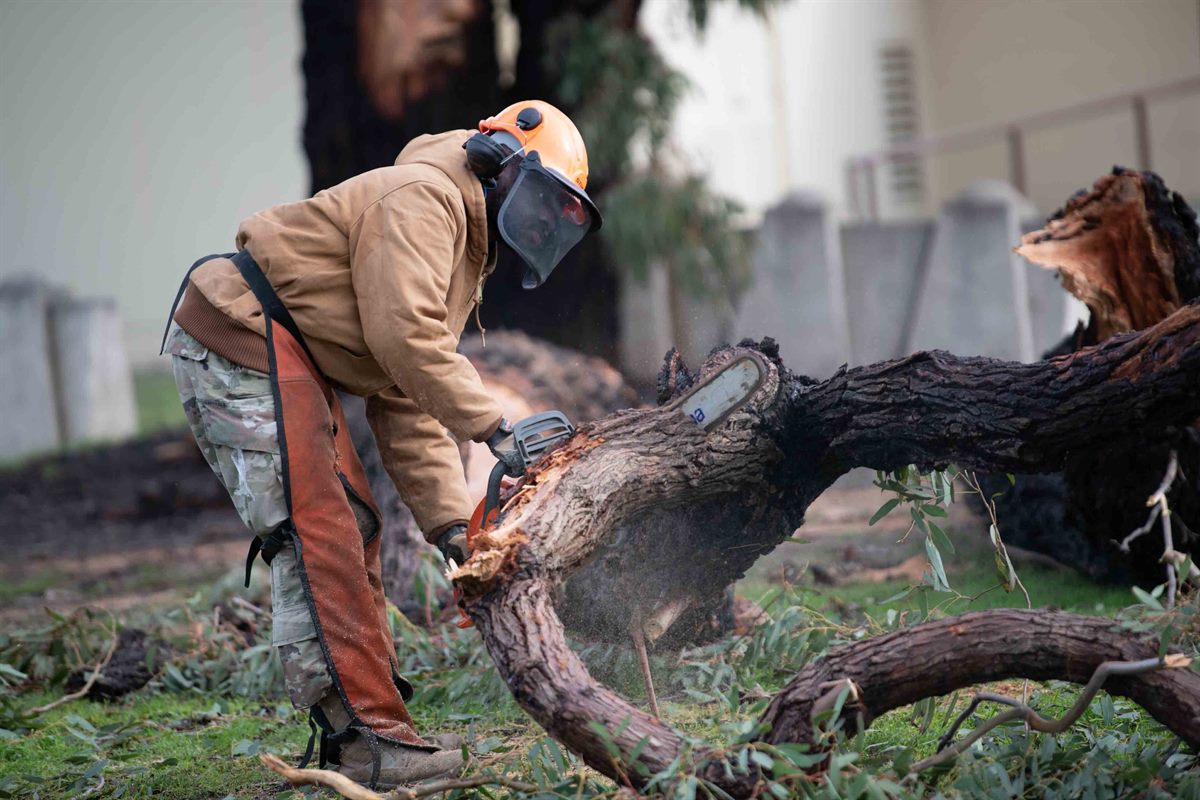
Standing removal is expensive because of what happens above your head: climbing, roping limbs down, controlling where thousands of pounds of wood land. A windthrown loblolly lying in the yard needs none of that. There is no climbing, no rigging, and no drop-zone management; it is chainsaw sectioning, chipping, and hauling. That is why a 70-foot pine that would cost $1,500 standing might cost $700 flat on the ground.
Two things still push grounded-tree prices up. Wood volume is one: a mature willow oak holds a startling tonnage, and hauling it takes trips. Tension is the other: a trunk suspended across a ditch or lying loaded against another tree stores spring energy, and cutting it wrong is one of the most common chainsaw injuries in storm cleanup. If a downed trunk is bowed, bridged, or holding another tree up, that is a professional’s cut even though the tree is “just lying there.”
Why Is a Tree on Your House So Expensive?
Because the job is no longer removal, it is extraction. A tree resting on a structure is partially supported by that structure, and every cut changes the load. Take weight off in the wrong order and the trunk rolls, punching a second hole in the roof or collapsing the section of wall that was holding. Crews work it in small, calculated pieces, often lifting sections straight up with a crane so nothing drags across the shingles. Crane time, extra crew, and the slow pace put on-structure work in the $2,500 to $6,000 and up range, and a large oak through the middle of a roofline can exceed it.
This is exactly the scenario our emergency tree removal service exists for, and it is worth knowing before storm season that response order in the first 48 hours goes to trees on occupied structures first.
Storm surcharges are real, and mostly fair
After a hurricane remnant moves through the Triangle, demand for tree crews multiplies overnight. Fran in 1996 is still the benchmark storm here, and Matthew in 2016 and Florence in 2018 both left parts of Johnston and Wake counties waiting weeks for cleanup. In those windows, expect emergency premiums of 25 to 100 percent for immediate response, plus after-hours rates for night work on occupied homes. A fair company applies the premium to genuine emergencies and books the harmless yard trees at normal rates a week or two out. If a tree fell in the back corner of your lot in Zebulon and is threatening nothing, waiting out the surge is the single best cost move you can make.
The insurance angle, in plain language
One line first: this is general information, not legal or insurance advice; your policy and adjuster control your specific claim.
The pattern most Triangle homeowners see is simple. Homeowners insurance usually helps when the tree damaged a covered structure: the house, a garage, a shed, a fence. Policies commonly cover removing the tree from the structure and repairing the damage, subject to your deductible and policy limits, and some include a modest amount for debris removal. A tree that fell harmlessly in the yard is usually on you, because no covered property was damaged. It also mostly does not matter whose tree it was; in NC the damage where the tree landed is typically handled by the policy of the property it landed on, unless the tree’s owner was clearly negligent about a known hazard. We cover that neighbor-tree tangle in detail in who is responsible for fallen tree removal in NC.
Practical moves: photograph everything before any cutting, call your insurer early, and keep the removal invoice itemized so the on-structure portion is clearly separated from general yard cleanup.
What about the root ball and stump?
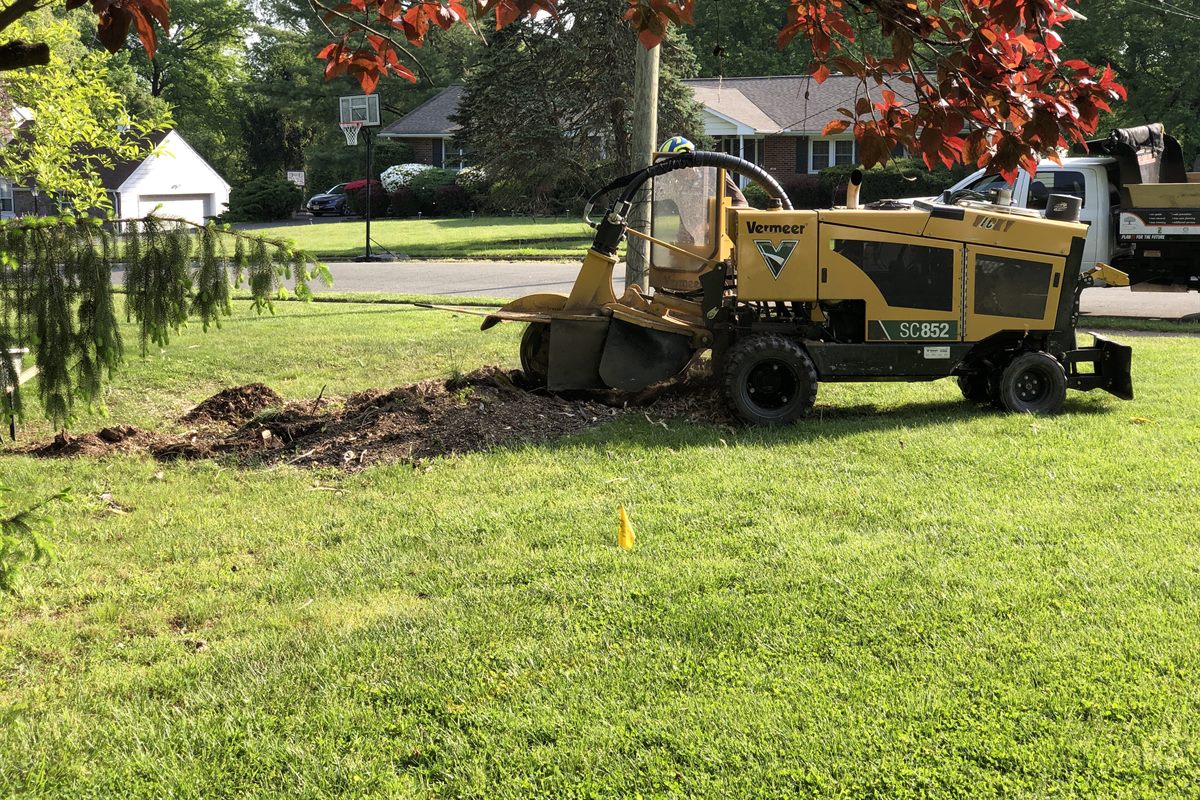
A windthrown tree in our shallow, wet Cecil red clay often tips root ball and all, leaving a crater and a wall of roots and mud standing on edge. You have three options. Cutting the trunk free and letting the root ball settle back into its hole is cheapest, and sometimes it sits down almost flush. Grinding whatever stump and flare remain runs the normal $100 to $400 per stump; our stump grinding cost guide has the full breakdown. Excavating the root ball entirely costs several times more and is usually only worth it where you are rebuilding lawn or hardscape on that exact spot.
How Can You Save Money on Fallen Tree Removal?
- Separate the emergency from the cleanup. Pay the premium only for the part that cannot wait, like the section on the roof. Book the trunk sectioning and hauling for a normal-rate visit later.
- Wait out the surge for harmless trees. A tree flat in the yard in Wendell or Clayton costs less two weeks after the storm than two days after.
- Keep the wood. Bucked oak rounds left on site cut the hauling, which is a big share of a grounded-tree bill.
- Bundle the neighborhood. Storms rarely drop one tree on one street. Crews discount when the chipper works one block all day.
- Handle only the truly small stuff yourself. Limbs on open ground, fine. Anything under tension, over head height, or touching a structure or line is not a homeowner cut.
How to Spot Storm Chasers After a Triangle Blow
The days after a big storm bring out-of-state trucks and door-knockers, and they generate most of the industry’s complaints. Walk away from: door-to-door solicitation with “we’re already working your street” pressure, demands for cash or a large deposit before work starts, no local address or NC insurance certificate, quotes that only exist verbally, and anyone who wants to start cutting on your roof before your insurer has photos. A legitimate local crew gives you a written scope, proof of liability and workers comp, and will not be offended if you take an hour to verify it. Trees down across Knightdale do not change that standard.
What Usually Comes With It
A tree already on the ground is rarely the whole job. The stump is still there once the trunk is gone, and stump grinding on the same visit costs less than bringing a grinder back separately. If the tree came down because the rest of the canopy is failing, pruning the neighbours at the same time saves a second mobilisation.
Frequently Asked Questions
How much does it cost to remove a fallen tree in NC?
A tree on the ground typically runs $300 to $1,200 in the Triangle, depending on size and hauling. Small trees in open yards sit at the bottom; a big oak with heavy wood volume sits at the top.
How much does it cost to remove a tree that fell on a house?
Plan on $1,500 to $6,000 and up for a tree on a house, garage, or fence, because it must be rigged or craned off in controlled sections. Very large trees through a roof structure can exceed that range.
Will insurance pay to remove a fallen tree?
Usually only if it damaged covered property. If the tree hit your house, garage, or fence, homeowners insurance typically helps with removal from the structure and repairs, minus your deductible. A tree down harmlessly in the yard is generally your cost. This is general information, not insurance advice; confirm with your carrier.
Is it cheaper to remove a fallen tree than a standing one?
Yes, substantially. A grounded tree often costs a half to a third of the standing price, because there is no climbing or rigging. Compare with the standing ranges in our NC tree removal cost guide.
What does emergency tree removal cost after a storm?
Expect premiums of 25 to 100 percent over normal rates for immediate response in the days after a storm, plus after-hours rates at night. Our emergency tree removal cost guide breaks down when the premium is worth paying and when waiting saves real money.
Storm Damage? Get Eyes on It Fast
Send us photos of the tree and what it is touching, and we can usually tell you quickly whether it is an emergency lift or a next-week cleanup, and roughly what each costs. Garner Tree Removal responds across Garner, south Raleigh, Clayton, Knightdale, Wendell, Zebulon, and Fuquay-Varina. Call (919) 322-8083 or request a free quote online today.