Tree Over House Removal in Garner | Rigging Above Roof Cost
Garner Tree Removal • August 29, 2026 • 9 min read
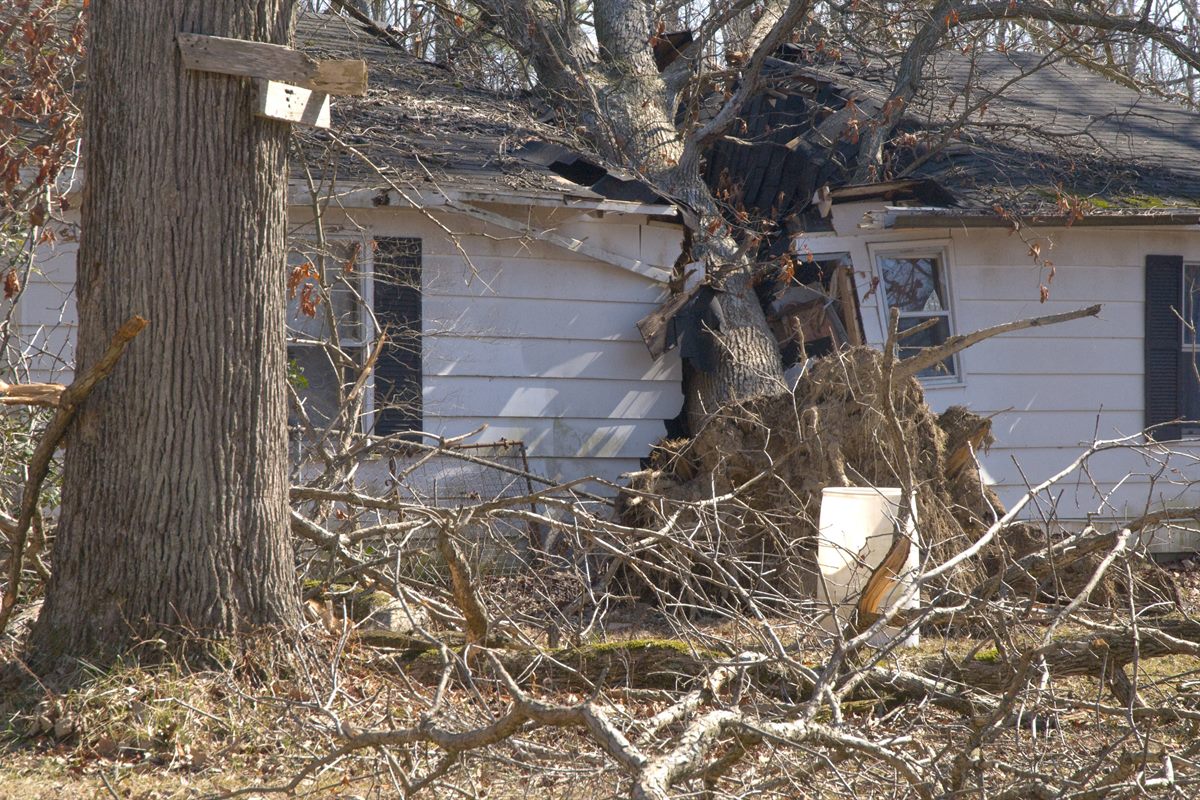
The 3 AM Problem: When a Tree Over Your House Becomes a Liability
It starts with a sound you can’t ignore. Wind picks up. Branches creak against your roof. You lie awake wondering if the oak leaning over your bedroom will survive the next storm, or if it will crash through your ceiling at 3 in the morning.
A tree hanging over your Garner home isn’t just a landscaping problem. It’s a liability. A falling branch can damage your roof ($3,000-$10,000 repair), injure someone on your property, or destroy a parked car. Your homeowner’s insurance may refuse to cover damage from a tree you knew was unsafe and didn’t remove.
The question isn’t whether to take it down. It’s how much it will cost and whether you can get it done safely without massive out-of-pocket expense.
If that tree is within striking distance of your house, the answer involves rigging, strategic removal, and often crane work. Here’s what you need to know.
Why Trees Over Houses Cost More: The Rigging Premium
A standard tree removal in Garner typically runs $800-$1,800, depending on size and access. Remove that same tree from five feet above your roof, and the price jumps to $1,500-$3,500.
Why the jump?
The problem: You can’t drop the tree. You can’t fell it into the backyard. You can’t let branches fall freely onto your roof, fence, deck, or driveway. Every piece of wood has to be controlled as it comes down.
The solution: Rigging, the core of our large and technical removal work.
Rigging Techniques and Why They Matter
Rigging is the practice of using ropes, pulleys, and mechanical advantage to lower tree sections piece-by-piece instead of letting them fall.
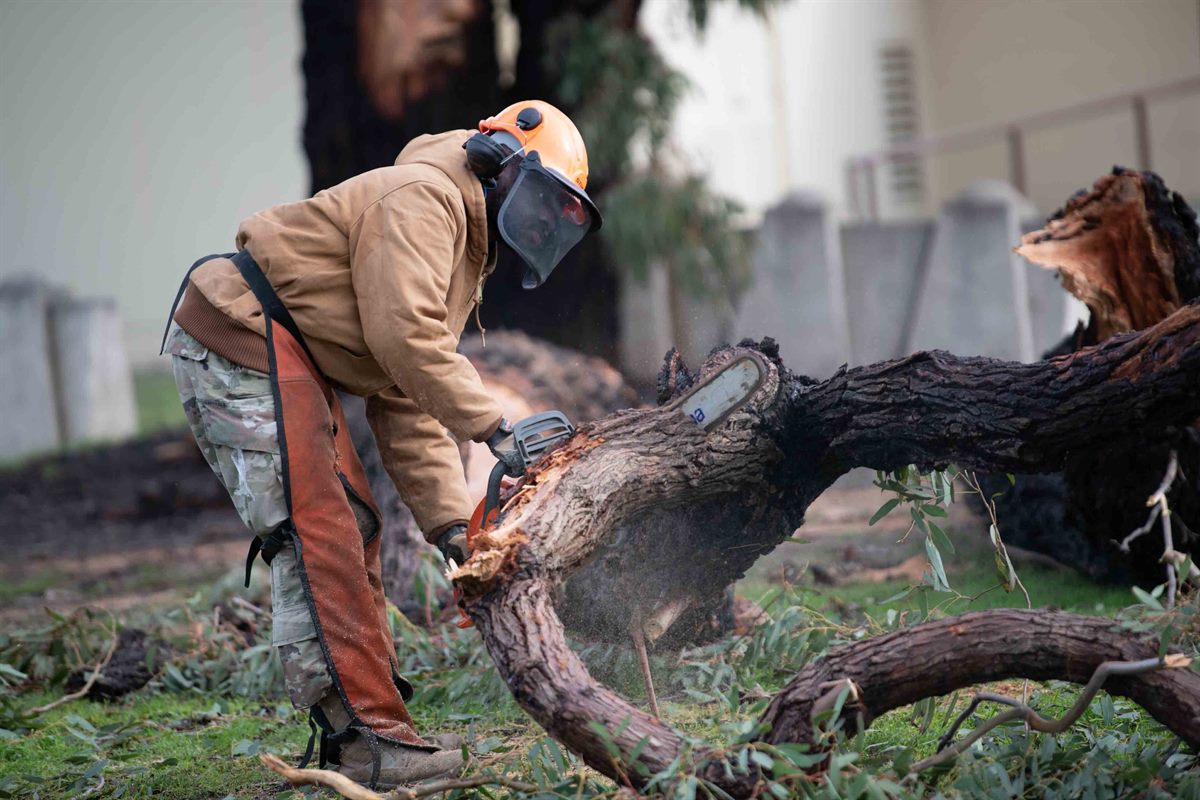
Rope and Pulley Rigging is the foundation. An arborist climbs into the tree and secures a rope above the branch to be removed. A ground crew operates the rope with mechanical pulleys or a powered winch. The branch is then lowered slowly to the ground, controlled the entire way down. This prevents it from swinging into your roof or gutters.
For trees over Garner homes, rope rigging alone handles 60-70% of the work, especially on oak, maple, and pine trees (the most common in our area). A typical large oak over a house needs 2-3 climbers and 4-5 ground crew, working methodically for 6-8 hours. Cost: $1,500-$2,200.
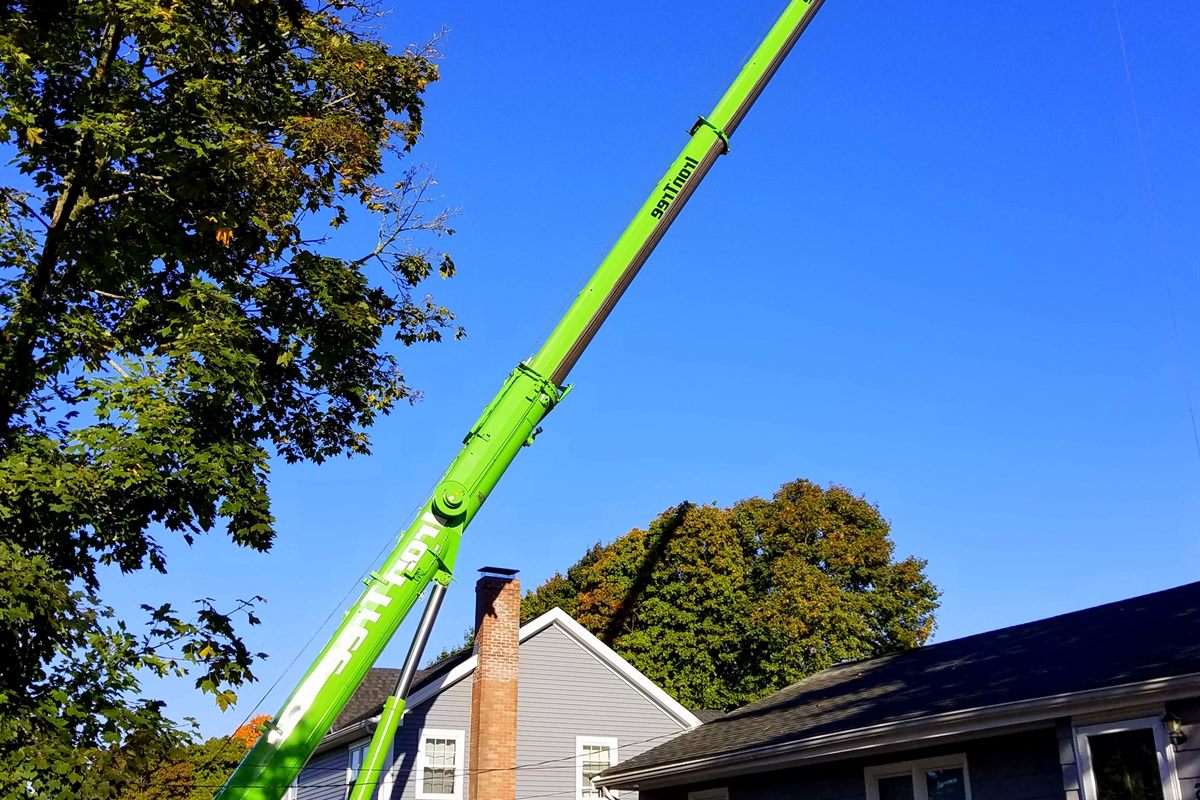
Crane-Assisted Removal steps in when the tree is too massive, too close to the house, or too difficult to climb safely. A crane is positioned in your driveway or yard. The arborist attaches rigging straps to the large limbs or the main trunk. The crane then lifts the sections away from your home and lowers them to the ground.
Crane rental alone costs $500-$1,200 per day, but it cuts the labor time significantly. If your tree over house is over 60 feet tall or severely compromised (disease, rot), crane removal often costs $2,500-$3,500 but reduces risk to near zero.
On-Site Realities: What Actually Protects Your Property
The pricing sheets from national companies don’t always explain what sits between your roof and disaster. Here’s what a Garner crew actually does:
Tarping and Protection Setup
Before the first cut, your house gets covered. Heavy canvas tarps go over the portion of roof most likely to catch debris. Plywood sheets cover AC units, hot tubs, or cars parked nearby. This adds $200-$400 to the job but it’s not optional; it’s liability insurance for both you and the crew. If a 60-pound branch still somehow clears the tarp, the property damage stops at the tarp, not at your shingles.
Spotters and Coordination
A trained spotter stands with a walkie-talkie communication line to the climber. Their job is to watch cable angles, rope tension, and any sign that a section is shifting or twisting wrong. If something feels wrong, they call it out and the branch stops mid-air. Spotters catch problems that would otherwise turn into $5,000 roof repairs. You’ll see 1-2 spotters on every Garner tree over house job because proximity to your home demands it.
Homeowner Coordination
You don’t just disappear for the day. A crew lead will walk your property before work starts, point out exactly what will happen, and identify any equipment in the way (grills, chairs, garden beds). They’ll ask about underground utilities: electrical lines, gas lines, water lines. Hitting a gas line under your yard during this job turns a $2,000 removal into a $50,000 disaster. This coordination adds $100-$200 to the quote but it’s a required conversation, not optional.
The Cost Breakdown: Where Your $1,500-$3,500 Actually Goes
A typical Garner tree over house removal ($2,000-$2,400 range) breaks down like this:
- Crew labor (2-3 climbers, 4-5 ground crew, 6-8 hours): $1,100-$1,500
- Equipment (ropes, carabiners, harnesses, pulleys, rigging straps, chainsaws): $200-$300
- Property protection (tarps, spotters, coordination): $200-$300
- Debris hauling and cleanup: $200-$400
- Insurance and permits (if required): $100-$200
If a crane is needed, add another $800-$1,500. If the tree is severely diseased or rotting, add $200-$400 for hazard mitigation (it’s physically harder to climb and rigging fails more often).
The job that hits $3,500 typically involves all three: crane, hazardous condition, and a tree touching your roof on multiple sides with no clear removal corridor.
Insurance, Liability, and Who Pays for Damage
Here’s a conversation you need to have before work starts: if something goes wrong and your roof does take a hit, who covers it?
A properly insured tree company carries general liability coverage, and the certificate will name the limits so you can see them rather than take a figure on trust. If their rope breaks, their rigging fails, or a piece escapes the tarp, their insurance covers your roof repair.
This is why going with an un-insured or cash-only crew is a $10,000 mistake masquerading as a $800 saving.
Your homeowner’s insurance also matters. Review your policy before scheduling. Some policies exclude damage from trees you contracted to have removed (they only cover damage from natural causes, like storms). Others specifically cover contractor-caused damage. Knowing this ahead of time prevents a $4,000 roof repair from becoming a $4,000 out-of-pocket loss.
Post-removal damage repair is almost always the contractor’s responsibility if they caused it during the job. Minor shingle damage, gutter dings, or a small branch through a screen are on them. Major structural damage (like a section of roof support compromised) should never happen with proper rigging, but if it does, it’s covered by their liability insurance.
Where We Do This Work
Trees over houses are the common thread across the older parts of the belt, because the houses went in under trees that were already mature. The willow oaks over the in-town streets of Knightdale, the mature canopy on the older Clayton blocks, and the pines that lost their windbreak toward Wendell all produce the same job.
Frequently Asked Questions
Can I just cut the tree down myself?
No. Removing a tree hanging over your house without rigging expertise is how people end up in emergency rooms or with $8,000 insurance claims. A chain saw on a ladder + a falling branch + your roof = almost certain injury or catastrophe. The $2,000 professional removal is cheaper and safer than a trip to the ER or a roof replacement.
How long does the job actually take?
A typical Garner tree over house removal takes 1 day if it’s rope rigging only (6-8 hours of work). If a crane is needed, add 2-4 hours for positioning and safety setup. The entire crew is usually off your property by evening.
Will the stump still be there?
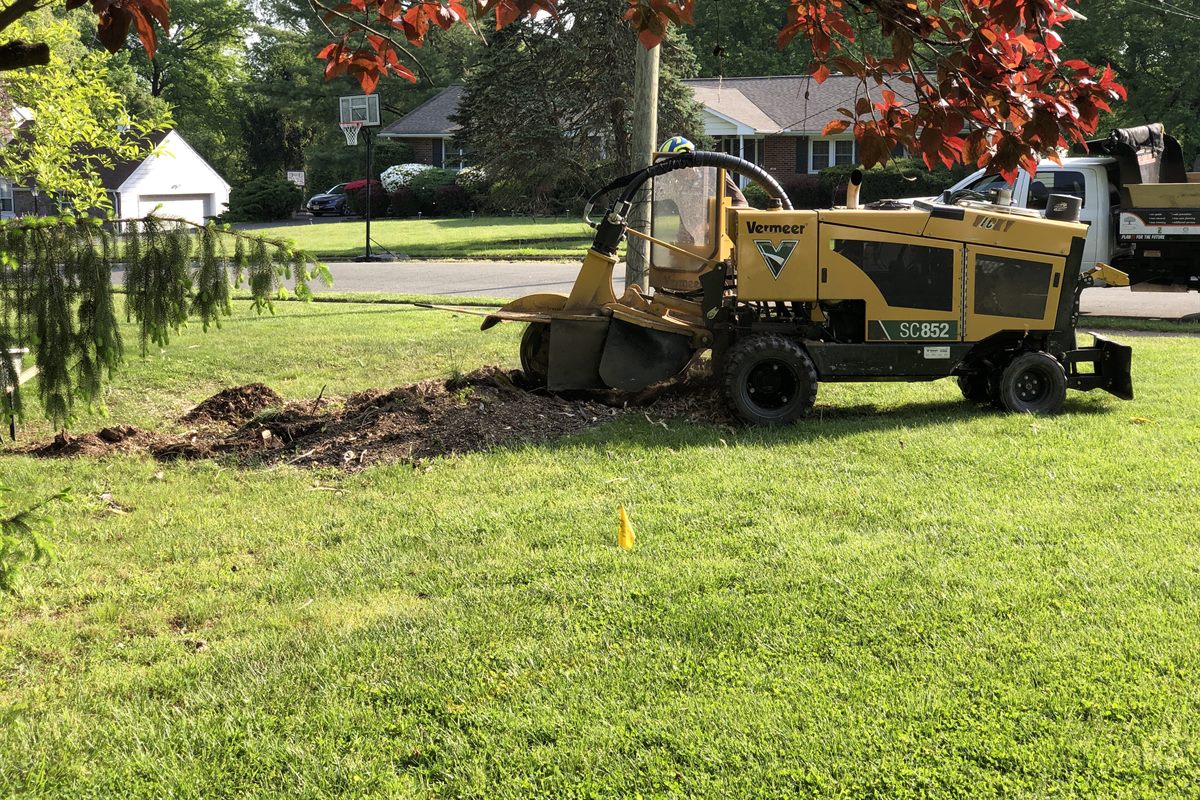
Yes. Tree removal and stump removal are separate jobs. Stump grinding (the standard option) adds $150-$400 depending on stump size. If you skip stump removal, the arborist will level the cut flush to the ground so you can mow over it, but the roots stay.
What if part of the tree is dead?
Dead wood is brittle. It’s harder to control on the way down because it can crack unpredictably mid-cut. Dead sections increase the rigging complexity and add $200-$500 to the job. It’s why a hazard assessment before the quote is non-negotiable.
Do you need a permit in Garner?
Rarely, for residential trees. On private single-family property in Garner you generally do not need a permit; the exceptions are street rights-of-way, trees tied to development plans, and HOA covenant restrictions. Your crew will know the local requirements, but always ask before signing.
Can I get the wood as firewood?
Yes, if you want to pay for it. Most Garner crews chip and haul everything by default (it’s included in their pricing). If you want logs left for firewood, you cover the disposal of what’s left over. A large oak can produce 2-4 cords of firewood, but it needs to season 12 months before burning. Plan accordingly or let the crew handle cleanup.
What if the tree falls during the job?
With proper rigging, it won’t. But if weather turns mid-job or unexpected factors appear, the crew can secure the tree and finish the next day. This adds a day to the timeline but keeps everyone safe. Most Garner crews won’t remove a tree over a house in high winds or thunderstorm warnings, so weather delays are possible.
Will my homeowner’s insurance go up after I remove it?
No. Removing a hazard tree typically doesn’t affect your premium and may even lower it (one fewer risk on your property). Some insurers offer discounts for hazard mitigation.
The Local Garner Context: Why Trees Over Houses Are Common Here
Garner’s mix of oak, pine, and maple trees, combined with older residential neighborhoods with large mature trees planted decades ago, creates the perfect setup for trees growing over homes. Our summer storms bring heavy wind and ice, putting pressure on branches overhead. If you live within three miles of downtown Garner or in the surrounding neighborhoods, odds are good you have at least one tree that’s too close for comfort.
The cost-guide formula we outlined holds for Garner specifically. If you’re comparing quotes from out-of-area companies, they may overprice because they don’t have local crews and equipment. A crew based in Garner or nearby Raleigh can service your job faster and cheaper than someone flying in from Charlotte or Greensboro.
Ready to Remove That Tree Over Your House?
A tree hanging over your Garner home is a conversation you’re having with yourself every time wind picks up. The longer you wait, the higher the risk of damage and the more you’re paying for the peace of mind of knowing it’s gone.
Get a detailed quote from a licensed, insured local arborist. Most offer free written quotes and honest assessments of whether you actually need crane work or if rope rigging is sufficient. The cost range we’ve outlined ($1,500-$3,500) gives you a realistic baseline.
Contact Garner Tree Removal today for a free written quote. We’ll assess the risk, explain your rigging options, and give you a transparent, itemized estimate before any work begins (typical Garner prices are in our tree removal cost guide). No surprises, no hidden fees, just safe, professional removal of that tree that’s been keeping you up at night.
Your roof (and your peace of mind) are worth the investment.