Pine Turning Brown: Beetles, Drought or Normal?
Garner Tree Removal • November 15, 2026 • 7 min read
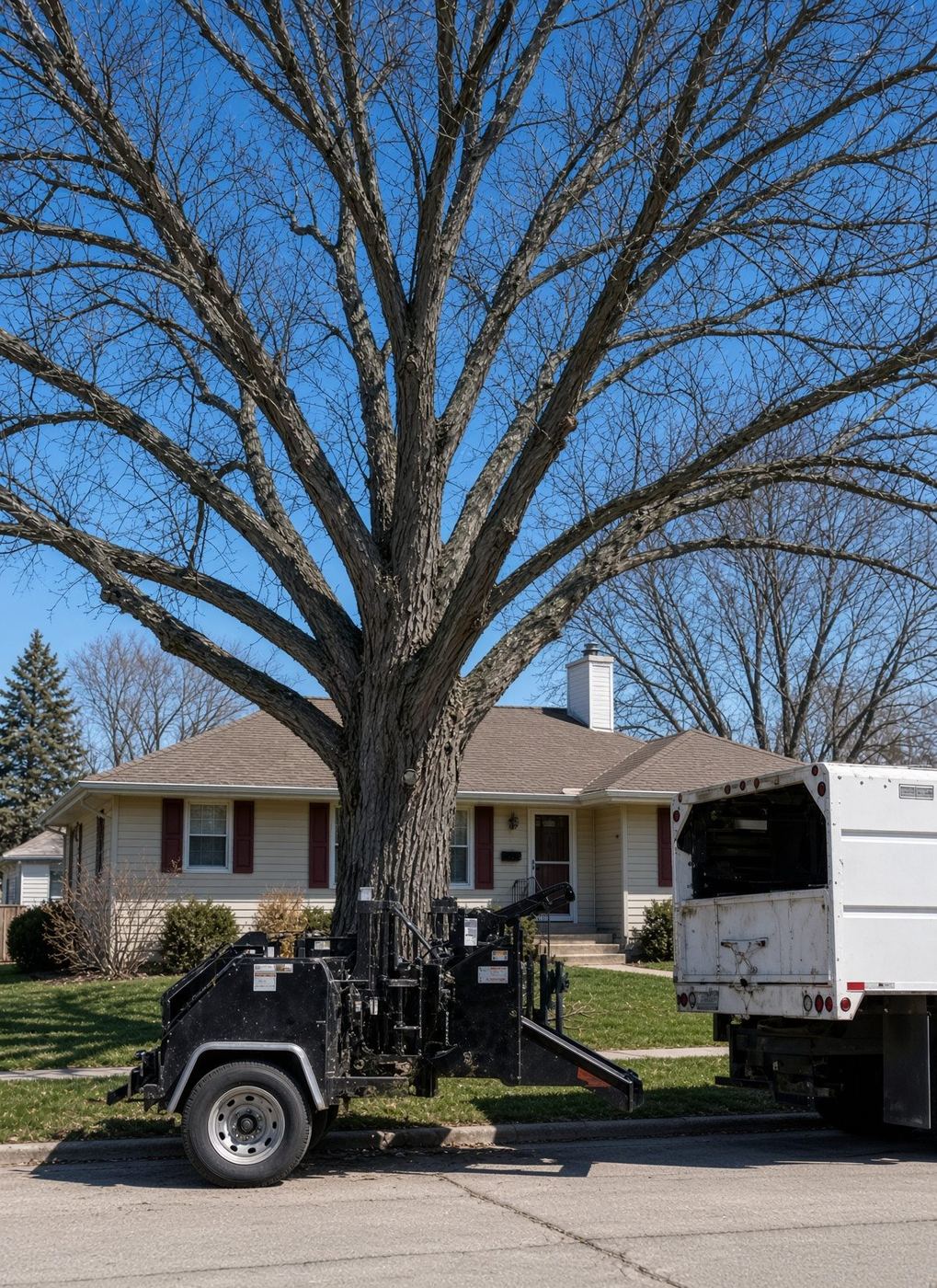
If the older needles near the trunk are turning brown and dropping in the fall, your pine is fine. If the browning starts at the tips, or the whole crown is fading from green to orange to red, or you can see pitch tubes or fine sawdust on the trunk, you are looking at beetles or drought stress, and that tree needs attention soon.
This guide is written for the loblolly pines around Garner and east Wake. Start with where the browning is, then follow the branch that matches what you see.
Is My Pine Turning Brown Normal or Dying?
Look at where the brown is, and when it started. This table sorts the common cases:
| What you see | Most likely | What to do |
|---|---|---|
| Brown needles near the trunk end of branches, tips still green, September to November | Normal fall needle drop | Nothing. Rake or leave the needles. |
| Browning and early needle drop in summer, across the tree | Drought stress | Water deeply, see below |
| Crown fading from green to yellow to orange to red, over a short time | Bark beetles | Plan removal |
| Pitch tubes, fine brown sawdust, or small holes in the trunk | Bark beetles | Plan removal |
| A scorched or split trunk after a storm, then browning | Lightning, then possibly beetles | Have it checked; plan removal if browning spreads |
When the signs are mixed, the safer reading is the beetle one, because a beetle-killed pine is the one that gets worse.
Unsure which row fits your tree? Request a free quote and we’ll contact you to discuss the tree, the access, and the work you need.
Step 1: Is It Normal Needle Drop?
Pines shed their oldest needles every fall. The NIEHS notes it is normal for North Carolina pines to shed needles in the fall, and that needles typically last two to five years before dropping. The brown needles are the inner, older ones. If the young needles at the branch tips are still green, the tree is usually in good shape.
You will see it from September to November, and a heavy carpet of needles on the ground is the proof. This is a good time to rake them, not to call anyone.
Step 2: Could It Be Drought?
A drought-stressed pine browns and drops needles in summer, not just in fall. NC State Extension lists yellowing or browning leaves and early leaf drop, often in June or July, as drought stress symptoms. Check our drought-stressed trees guide for the watering steps.
For a pine, the useful fix is simple: water slowly and deeply under the whole crown. The NC Forest Service recommends at least one inch of water a week, applied beneath the crown within the drip line, when rain is short. Keep the mower and trimmer away from the trunk and roots.
Drought also sets pines up for beetles. NC State Extension says the Ips beetles “primarily attack pines stressed by another agent (e.g., drought, disease).” A dry year makes this check more important.
Step 3: Are There Signs of Pine Beetles?
Look at the trunk before you look at the needles. Three beetles matter in North Carolina, and they leave different marks:
| Southern pine beetle | Ips engraver | Black turpentine beetle | |
|---|---|---|---|
| Under the bark | S-shaped galleries | I-, Y-, X- or H-shaped galleries | Wide galleries filled with red sawdust |
| Pitch tubes | In bark crevices, small | On bark plates, sometimes high in the crown | Large, on the lower 15 feet |
| Crown | Whole tree fades | A top, a branch or the whole tree | Whole tree |
| Pattern | Spreads to nearby trees | Scattered trees | Scattered trees |
Source for the table: NC State Extension. The mark you can see from the ground is the pitch tube, often with brown sawdust at the base. Clemson describes the southern pine beetle’s as a small “popcorn-looking” lump of pitch, usually on the middle to upper trunk.
Pro tip: pitch tubes tell you beetles are present, not which beetle. The pattern tells you more. Scattered single pines point to Ips or black turpentine beetle. Pines dying in a spreading patch, one next to another, point to the southern pine beetle, the one to take most seriously.
Needle color moves fast. Clemson notes the crown can go from yellow to orange to red quickly, so many owners notice it too late.
What Should You Do for Each One?
Normal needle drop needs nothing. Drought needs water. Beetles need a decision.
- Normal drop: do nothing.
- Drought, tree still partly green: water deeply now, mulch the root zone, and watch it into spring.
- Beetle signs: an infested pine does not recover. Clemson notes that insecticides “will only be effective on healthy trees,” and trunks with pitch tubes or exit holes “are already infested and will not benefit from treatment.”
- Not sure which: ask your NC Forest Service county ranger or your county NC Cooperative Extension office, who can diagnose the cause.
Why a Beetle-Killed Pine Should Come Down Soon
A dead pine is a risk twice over. First, it is brittle. NC State’s drought page describes a dead pine as bright brown needles with peeling bark, and a dead pine drops limbs and eventually goes over. Second, the beetles move on. The southern pine beetle spreads to nearby trees, and Clemson advises clearing slash and downed wood near healthy pines because Ips can use it.
NC State Extension lists cut-and-remove for southern pine beetle and removal of heavily infested trees for Ips and black turpentine beetle. The practical rule is the same: a pine with confirmed beetle signs should come down while the neighboring pines are still green, and before it can fall on anything.
Prioritize a dead pine that is:
- Within falling distance of a house, garage or driveway
- Leaning, or in a row of pines
- Near a power line (call Duke Energy’s 24-hour line first, then we remove the tree once it is safe)
If it already leans, see tree leaning toward the house.
What Does Pine Removal Cost?
| Pine size | Typical removal |
|---|---|
| Medium (30 to 60 ft) | $500 to $1,500 |
| Large (60 to 80 ft) | $1,500 to $3,000 |
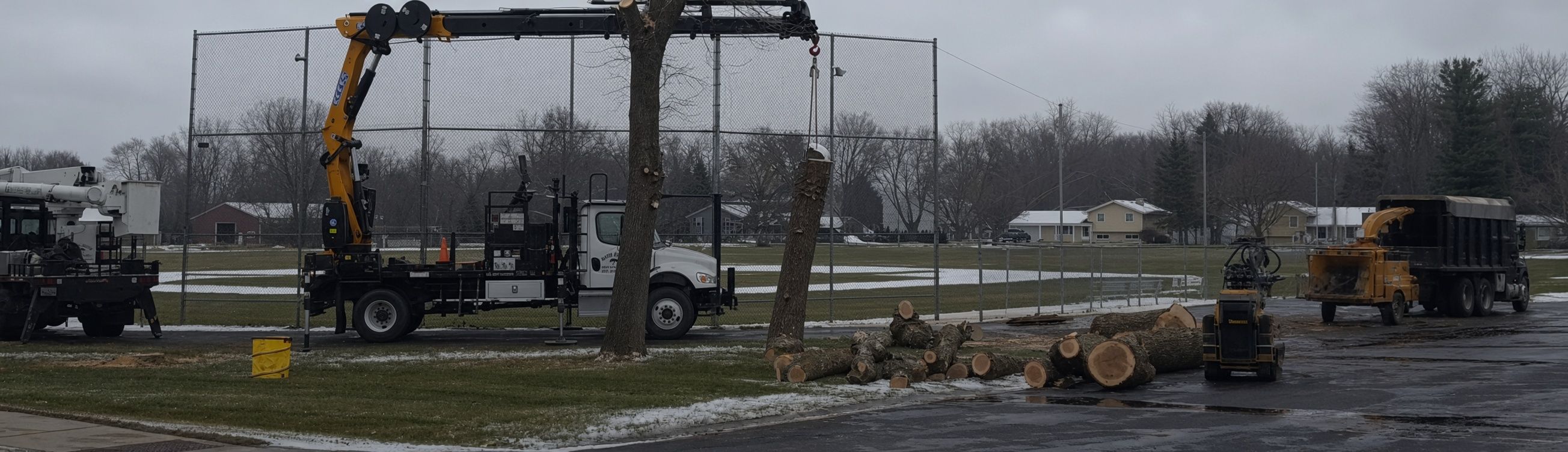
| Over a structure, or needing a crane | $2,500 to $6,000+ |
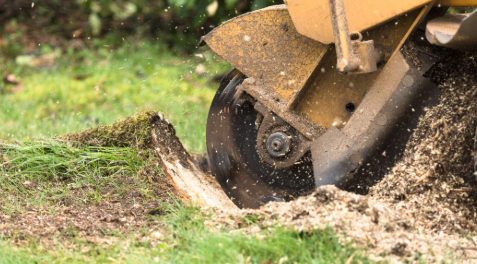
| Stump grinding | $100 to $400 per stump |
Loblollies often reach the large bands. See our large tree removal service and the Garner cost guide. These are planning ranges, not quotes.
Frequently Asked Questions
Is a pine with brown needles dead?
Not necessarily. Browning of the older inner needles in fall is normal. A pine is dead when the whole crown is brown and the scratch test under the bark is brown too, as described in how to tell if a tree is dead.
Can a beetle-infested pine be saved?
Once the trunk shows pitch tubes or exit holes, no. Treatments protect healthy neighboring trees, not infested ones.
Should I worry about the other pines?
If the browning pine had beetle signs, yes, watch the pines near it. Keep them watered, and remove the infested tree promptly.
Who do I call to confirm it is beetles?
Your NC Forest Service county ranger or county Extension office can diagnose it.
Do you remove pines in Clayton and Wendell?
Yes. We remove pines in Clayton, Wendell, Knightdale and Smithfield, as well as Garner.
Pine Turning Brown in Garner or East Wake?
If your pine is showing beetle signs, or it is already dead, the next step is a price. We remove pines, including ones near a house, and grind the stump if you want it gone.
Request a free quote or call (919) 322-8083, and we’ll contact you to discuss the tree, the access, and the work you need.
Sources: NIEHS: Needleless to Say, It Does Look Strange · NC State Extension: Pine Bark Beetles · NC State Extension: Managing Trees Under Drought Conditions · Clemson HGIC: Common Pine Bark Beetles in Urban Settings · NC Forest Service: Current Forest Health Concerns