Signs a Tree Needs to Be Removed
Garner Tree Removal • September 20, 2026 • 9 min read
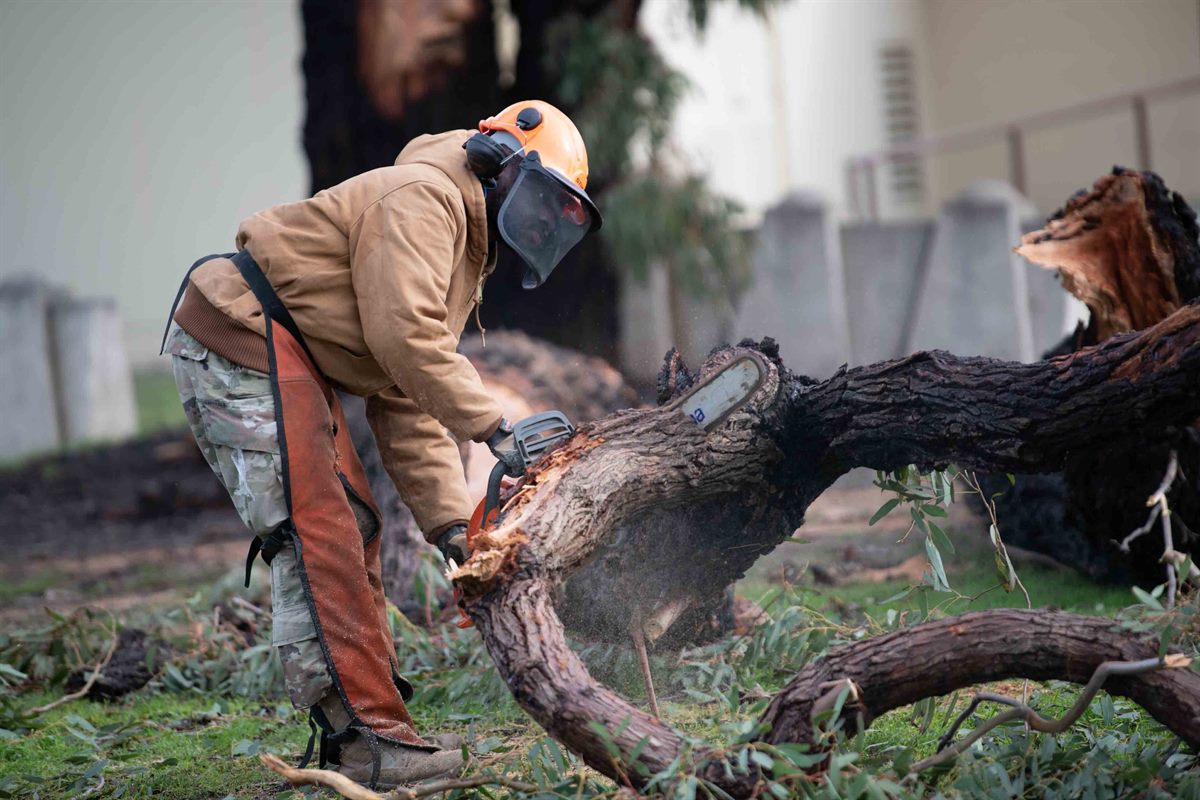
You have been looking at the same tree for a month. Nobody has told you it is dead, the leaves came in, and from the patio it still reads as a tree. Something about it has changed anyway, and you keep checking it from the kitchen window.
That instinct is worth trusting, and it is a different question from the one most guides answer. Whether a tree is dead is a diagnosis. Whether a tree needs to be removed is a decision, and plenty of trees that lose that decision are perfectly alive: a healthy loblolly at 90 feet standing six feet off the corner of a ranch house needs removing for reasons that have nothing to do with its health.
Around Garner and out through Knightdale, Clayton and Wendell, most of the trees people ask about sit somewhere in the middle. This guide covers the signs that settle the decision, the signs that scare homeowners and should not, and what the work costs once the decision is made. Every figure here is a planning range for this market, not a quote.
What Are the Signs a Tree Needs to Be Removed?
A tree needs to be removed when its structure has failed or is failing, when what it would land on matters, or when its position makes it a problem pruning cannot fix. Condition, target, position. Most removal decisions trip two of those three at once, and a tree that trips only one is usually one you can live with another season.
| What you are seeing | What it usually means | Usual call |
|---|---|---|
| A dead top, or one whole side bare in May | The decline is structural, not seasonal | Remove |
| A vertical seam you can see into on the main stem | The trunk is already separating | Remove, urgently if anything sits under it |
| Soil heaved or cracked opposite the lean | The root plate is rotating | Remove, urgently |
| Shelf fungus on the trunk or buttress roots | A decay fungus is established in the wood holding the tree up | Get it measured, then usually remove |
| Half the canopy still deadwood two seasons after a cleanup prune | The tree is not recovering | Remove |
| Two stems in a tight V with bark trapped in the seam, above the roof | An included-bark union, the classic ice and wind split | Remove or cable, an arborist’s call |
| A large tree hard against the foundation, drive or septic field | Position rather than health | Plan it while it is still the cheap version |
Already know which way you are leaning? Request a free written quote and we walk the property, then price the work in writing before anything starts.
Healthy Trees That Still Need to Come Down
Four situations put a sound, living tree on the list.
It grew into the wrong place. Loblolly pines run 80 to 100 feet along property lines across this part of Wake County, and the neighbourhoods that filled in during the 1990s put houses close to trees that were already there. Nobody plants a tree expecting it to reach the roof. Enough of them do.
Construction is coming. A widened driveway, an addition, a pool or a utility trench cuts the root plate. University of Maryland Extension’s working rule is that a tree losing roughly half its root system probably should be removed, so a trench six feet from the trunk can turn a sound tree into a hazard you paid to create. Decide before the concrete goes down.
The species arithmetic ran out. NC State Extension puts water oak at 30 to 50 years, calls it weaker-wooded than most oaks, and notes it can start breaking apart at maturity from rot. Willow oak, by contrast, runs about 80 to 90 years in urban conditions. A 40-year-old water oak over a bedroom and a 40-year-old willow oak over the same bedroom are not the same decision.
The shelter went away. Trees that grew up inside a stand hold each other out of the wind. When the lot next door is cleared, the tree left standing carries load it never grew wood for. Wake County’s canopy study put Garner’s loss at 806 acres between 2010 and 2020, and what that canopy loss means shows up one back yard at a time.
Pro tip: do the walk-round in January. A bare deciduous canopy shows you everything the leaves hide: the dead top, the seam in the trunk, the tight union where two stems meet, the limb already cracked at the collar. Take binoculars, stand at the far end of the yard rather than under the tree, and write down what you find. You end up in February with a short list and a budget instead of a panic in July.
Which Signs Are Not Reasons to Remove a Tree?
Most of what alarms homeowners about a mature tree is ordinary. Taking down a sound tree costs money and shade and cannot be undone, so it pays to know what does not count.
- Surface roots in the lawn. Big trees keep most of their absorbing roots in the top layer of soil where the oxygen is. Roots through thin turf is a mowing problem.
- Lichen on the bark. Lichen grows on the bark, not in it. It is not feeding on the tree.
- Dead branches low and inside the canopy. Mature hardwoods shed the branches the canopy shaded out. A dead top is a different matter, and the dead or dormant checks separate the two.
- Leaf drop in a dry August. Early colour in a drought year is a tree budgeting water.
- A small cavity or an old woodpecker hole. A hollow trunk is not automatically a failing one, and whether a hollow tree has to come down has its own answer.
- One limb torn out in a storm. That is a cleanup prune, not a removal, unless the tear ran into the trunk.
Prune, Wait or Remove
Three outcomes, and it is worth being clear about who picks between them. We are a removal and pruning outfit, not an arborist practice. We do not perform tree risk assessments, write risk reports or issue professional opinions for insurance. A formal determination on whether a tree is likely to fail is a certified arborist’s work: find one through the International Society of Arboriculture’s directory, or ask the Wake County Cooperative Extension office who works locally. What a hazard evaluation involves is worth reading first.
Pruning buys real time. Reducing the sail area on a heavy one-sided canopy, taking the deadwood out and clearing the roof line all lower the odds of the next storm finding a weak point. It does nothing for stem decay or a compromised root plate, which is the line the pruning against removal comparison draws.
Waiting is a legitimate third answer on one condition: monitoring only works on defects that change slowly. A hollow at the base changes over years. A lifting root plate does not, and the leaning tree guide covers why.
What Removal Costs Once You Have Decided
| Work | Typical 2026 range |
|---|---|
| Small tree removal, under 30 ft | $300 to $800 |
| Medium tree removal, 30 to 60 ft | $500 to $1,500 |
| Large tree removal, 60 to 80 ft | $1,500 to $3,000 |
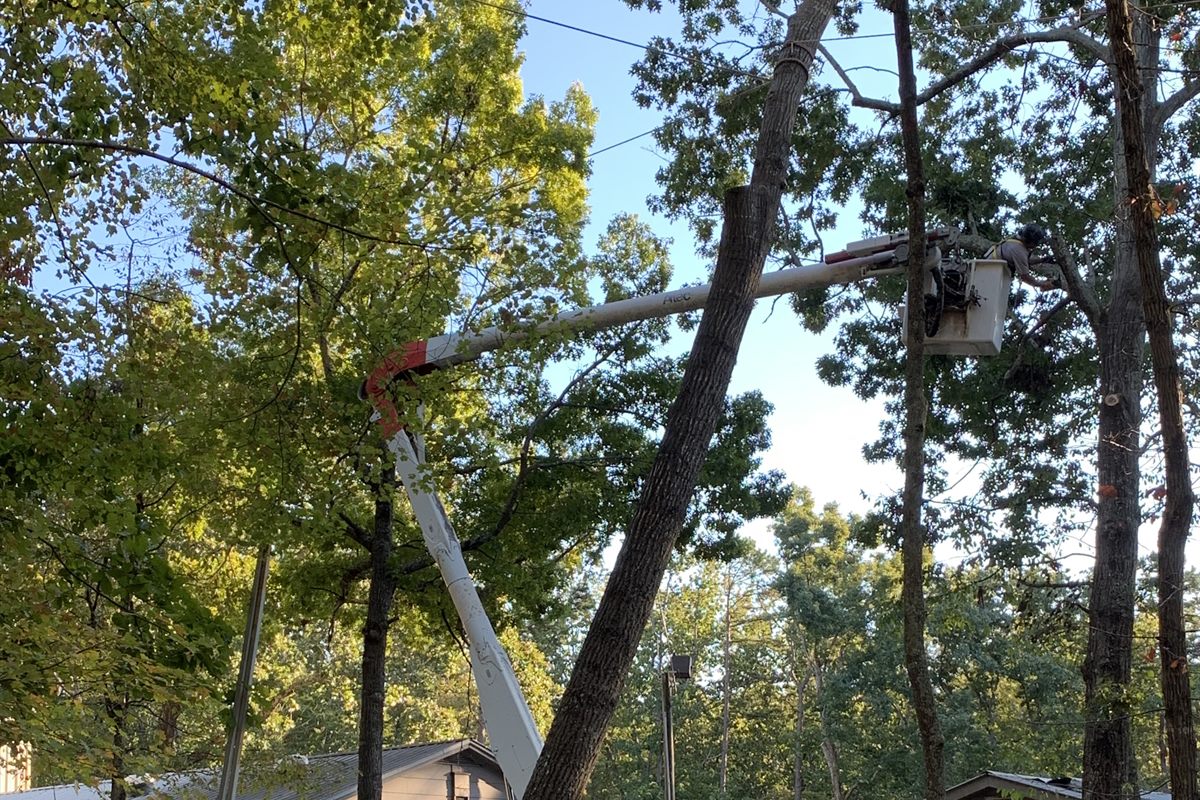
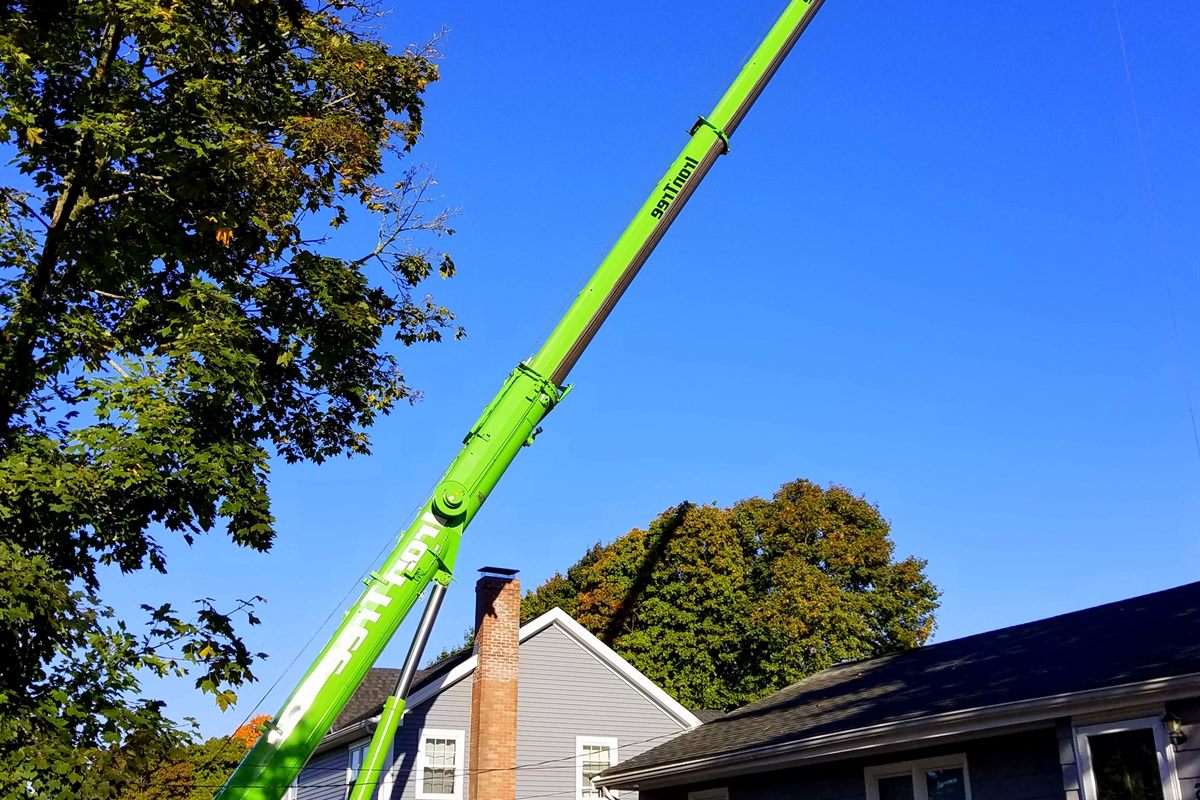
| Technical, over-structure or crane-assisted | $2,500 to $6,000+ |
| Trimming and pruning instead of removal | $300 to $1,500 |
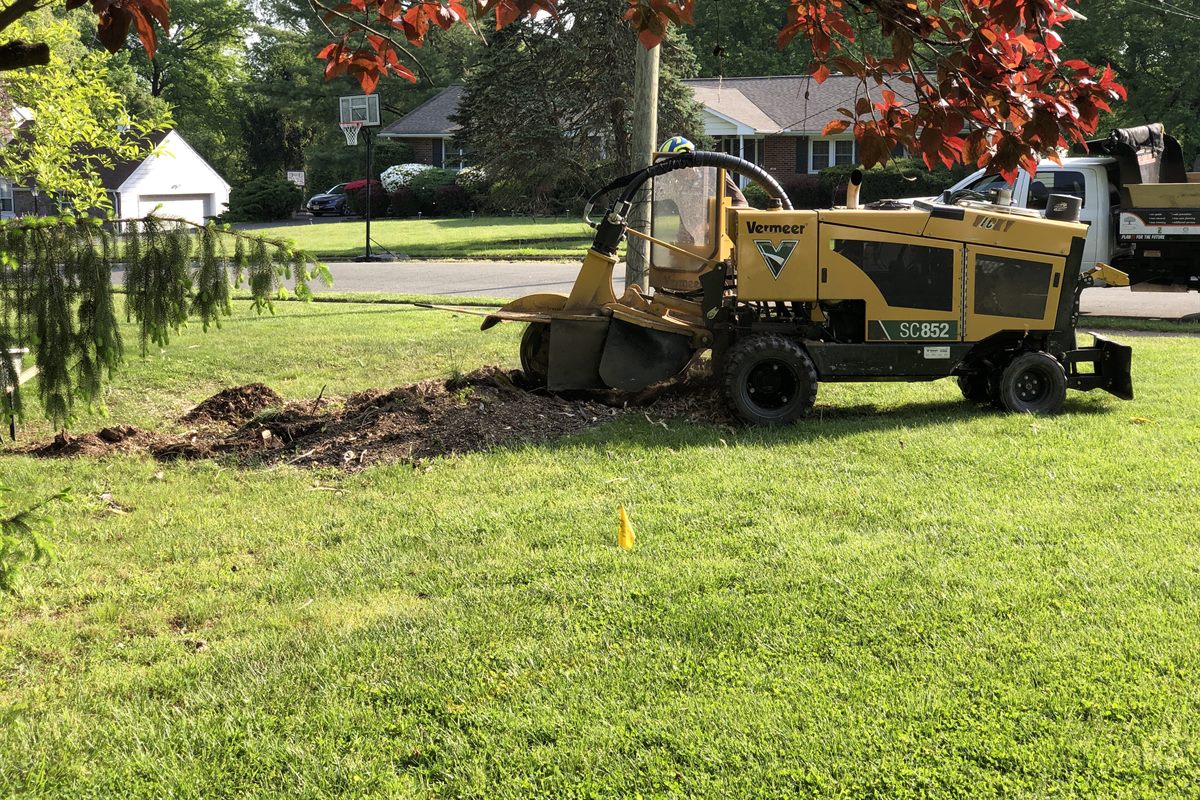
| Stump grinding | $100 to $400 per stump |
Two things move a tree out of its size band. The first is access: a back yard reached through a five-foot gate is a different job from a front yard the chipper can park beside. The second is method. A tree with room to fall comes down in one piece; a tree over a roof or a fence is dismantled in sections on ropes, which is rigging work. Full breakdowns sit on the Garner cost page and in the statewide cost guide.
Frequently Asked Questions
Can a tree be saved instead of removed?
Sometimes, depending which part of the tree is in trouble. Canopy problems, deadwood and wind load respond to pruning; decay in the main stem or the root plate does not, because there is no way to put structural wood back.
Does one dead branch mean the whole tree has to go?
No. A mature willow oak in Garner or Knightdale drops shaded-out interior branches every year, and that is normal growth. Where the dead wood sits is what matters: scattered and low is routine, clustered in the upper canopy or a dead leader is not.
Who actually decides whether a tree needs to be removed?
You do, on the best information you can get. A certified arborist supplies the structural opinion, your judgement supplies what the target is worth, and we supply the price. Find an arborist through the ISA directory or the Wake County Cooperative Extension office, then bring the report back for a quote.
Do I need permission to remove a tree in Garner?
Requirements vary by parcel, scope and jurisdiction, and the town or county office makes the determination. NC State Extension’s guide for municipalities lists single-family detached dwellings on individually owned lots among the standard exemptions from tree protection rules, so single-family lots are commonly exempt, though commonly is not universally. Ring the town planning office with your address first.
Will homeowners insurance pay to remove a tree before it falls?
Generally no. Policies respond to damage that has happened rather than risk that has not, which is covered in what insurance does and does not pay for. The liability side is different: North Carolina applies the ordinary negligence standard to falling trees and it turns on actual or constructive notice, so a neighbour’s written complaint changes your position. This is general information, not legal or insurance advice.
Do you remove trees in Clayton and Wendell?
Yes. Planned removals are routine work across Clayton, Wendell, Knightdale and Zebulon, as well as Garner itself.
Tree Removal Quotes in Garner and East Wake
If the signs above point one way, the next step is a number rather than another opinion from the driveway. Planned removals, clearance pruning and stump grinding are ordinary scheduled work for us across Garner, Knightdale, Clayton and Wendell, and a tree dealt with in February is cheaper than the same tree dealt with in storm week.
Request a free written quote or call (919) 322-8083 during business hours. We walk the property, then give you an up-front written price covering the removal, the cleanup and the stump. If the tree looks worth keeping, we will say that too.
Sources: NC Extension Gardener Plant Toolbox: Quercus nigra · University of Maryland Extension: How Do You Decide When to Remove a Tree? · NC State Extension: Protecting and Retaining Trees · NC Pro Bono Resource Center: Disaster Assistance Manual, Falling Trees