Does Insurance Cover Tree Removal in NC?
Garner Tree Removal • September 15, 2026 • 9 min read
There is a dead pine in the back corner and a quote on the counter, and the obvious thought is: surely insurance covers this. Around Garner that question comes up most often in June, right after the first summer storms remind everyone what a loblolly can do to a roof.
The answer splits cleanly along one line, and once you see it the rest follows. This guide covers where that line sits, what a claim usually pays for and what it does not, what documentation your adjuster will want, and what the work costs when the answer is no.
This is general information, not legal or insurance advice. Your policy language and your insurer decide your specific case, and the only authoritative answer is the one your carrier gives you in writing.
Does Homeowners Insurance Cover Tree Removal?
Usually only when a covered peril has brought the tree down onto something insured. A standing tree, even a dead one, is almost always the homeowner’s cost. That is the whole rule, and nearly every surprise comes from expecting a policy to cover risk rather than damage.
Insurance is built to pay for damage that has happened, not to pay for maintenance that prevents it. A dead tree threatening your roof is, in the language of most policies, a maintenance issue. The same tree lying across the roof is a claim.
| Situation | Usually covered? |
|---|---|
| Storm drops a tree onto your house, garage or fence | Yes, removal off the structure plus repairs, minus your deductible |
| Tree falls and hits nothing | No. Cleanup is generally out of pocket |
| Dead or dying tree still standing | No. This is maintenance |
| Tree you want gone for light, leaves or roots | No |
| Neighbour’s healthy tree lands on your property | Your own policy, if it hit something insured |
| Neighbour’s known-hazardous tree lands on your property | Possibly theirs, if notice can be shown |
| Tree falls into the road | Usually the town or NCDOT clears the roadway |
| Tree takes down the service line to your house | The utility restores its equipment; the tree and debris are yours |
Whichever column you land in, the removal itself is ordinary work. Request a free written quote and you have a real number to put in front of an adjuster, which carries more weight than a figure quoted over the phone.
The Line That Decides It: Damage, Not Risk
Two trees, identical species, identical decay, same back corner of the same yard. One is standing and one is on the garage. The first is a maintenance expense and the second is a claim, and nothing about the tree changed.
That asymmetry is genuinely frustrating and it has a logical shape: insurers price policies on the assumption that owners maintain their property. If policies paid to remove hazards, they would be paying for maintenance on every property in the state, and premiums would reflect it.
The practical consequence is the one worth acting on. A hazard you know about is cheaper to deal with before it becomes damage, because a planned removal is quoted competitively at planned-work rates, while the same tree taken off a roof is storm-week work at a premium, plus a deductible, plus whatever the roof needs. The tree removal cost guide has the planned numbers.
Pro tip: when a tree does come down on something, read what your policy says about “debris removal” specifically, and ask the adjuster where the sub-limit sits. Many policies cap tree-debris removal at a figure well below the cost of getting a mature oak off a structure, and that gap is the most common unpleasant surprise in the whole process. Ask before the crew is booked, not after.
What a Claim Usually Pays For
When a covered peril has caused damage, a claim typically covers:
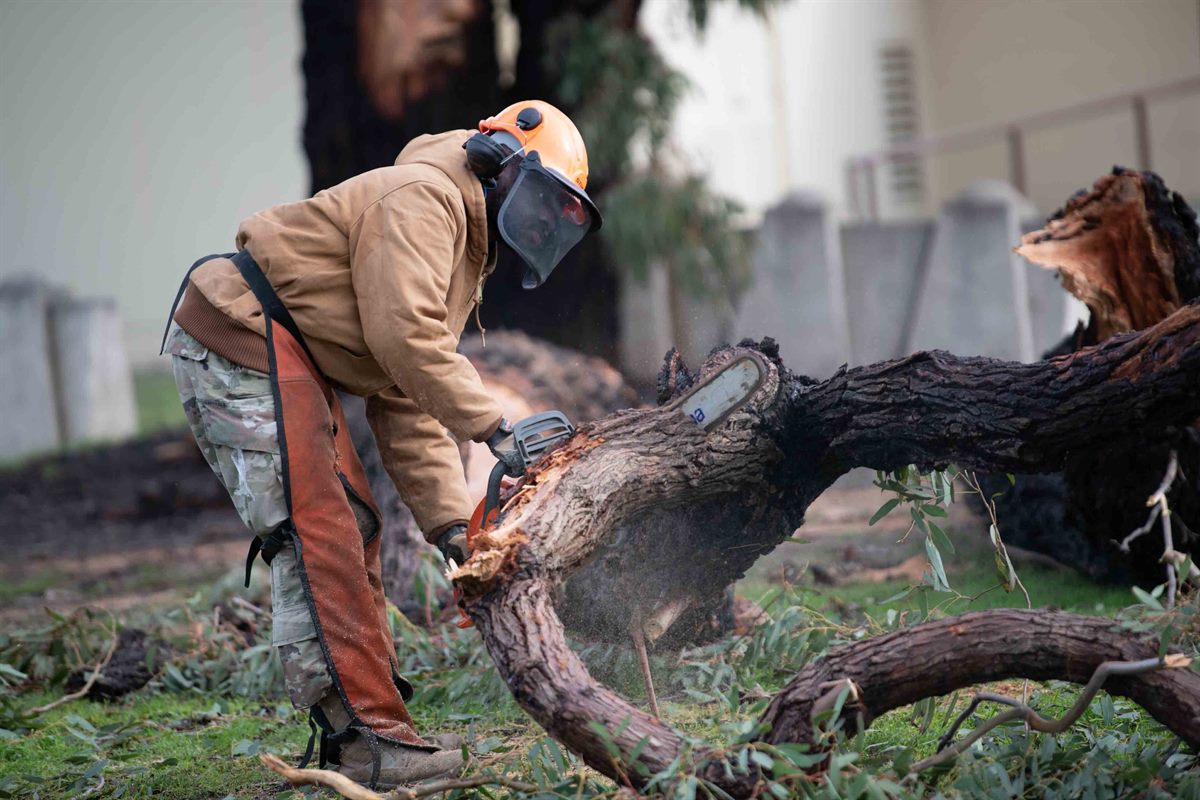
- Getting the tree off the insured structure, which is the expensive part because it is rigging work rather than felling
- Repairing the structure it damaged
- Sometimes debris removal from the property, often subject to a sub-limit
- Reasonable temporary measures to prevent further damage, such as tarping
What it typically does not cover:
- The portion of the tree that fell in the yard and hit nothing
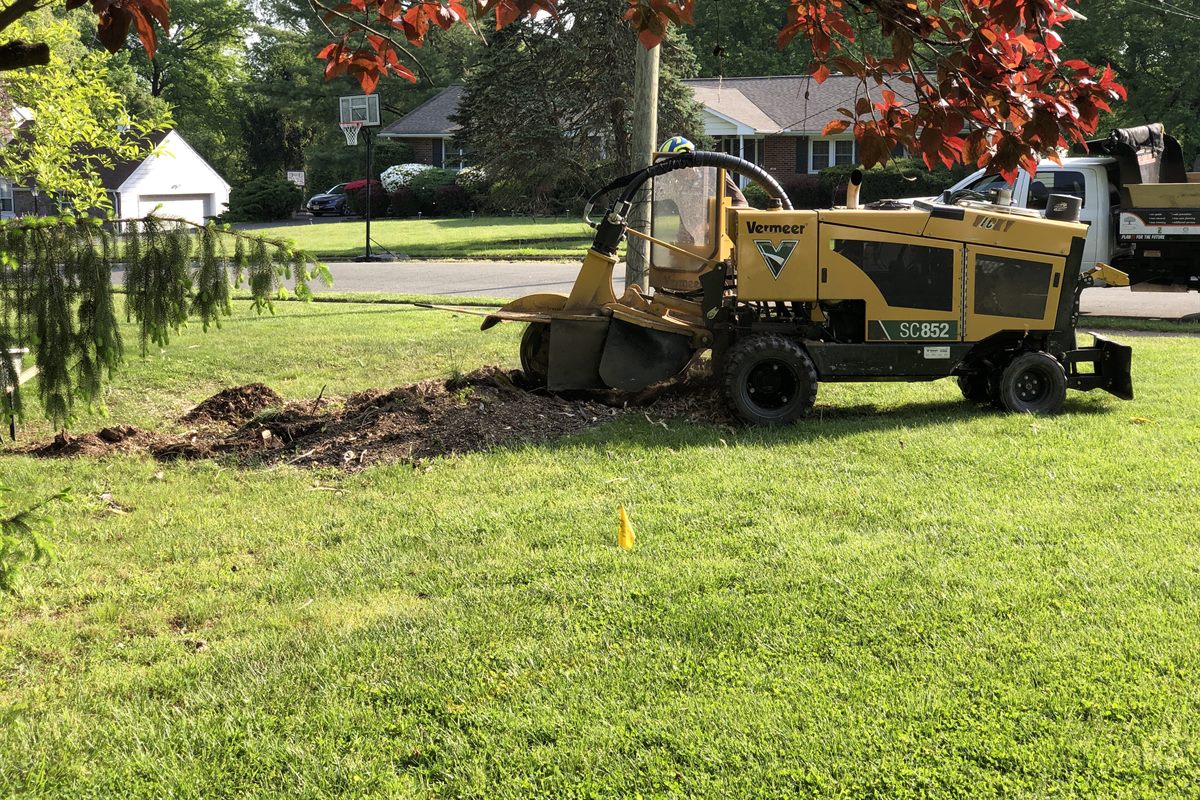
- Stump grinding, which is nearly always separate
- Replanting
- Fence damage in some policies, or at a lower limit than the dwelling
- Anything the insurer decides was caused by pre-existing decay rather than the storm
That last one is where notice cuts both ways. If a neighbour warned you in writing about a tree and it later failed, your own insurer may take an interest in that correspondence too.
What to Document, and When
The documentation happens before any cutting starts, and it is the part homeowners most often skip in the rush to clear a driveway.
- People first. Everyone out of rooms under the damaged section. Breakers off if water is anywhere near wiring.
- Anything on a line is a utility call, not a tree-company call. Duke Energy runs a 24-hour emergency line for downed lines, arcing and fire risk. We do not run an after-hours crew, and no tree service should put a saw near an energized line.
- Photograph everything before a single cut. The tree, the point of impact, the interior ceiling damage, the whole scene from several angles. Once the tree is gone your photos are the only record of how it landed, and adjusters work from documentation.
- Call your insurer before you commit to a crew. Ask specifically about the debris removal sub-limit and whether they need to inspect before work starts.
- Tarp what can be reached safely, and keep the receipt. Reasonable measures to prevent further damage are usually covered.
- Keep every invoice, including anything you paid out of pocket in the first 24 hours.
The Dead Tree Question, Answered Directly
No, your policy will almost certainly not pay to remove the dead pine. And there is a second reason to deal with it anyway, beyond the roof.
North Carolina applies the ordinary common law negligence standard to falling trees rather than strict liability, and liability turns on actual or constructive notice of a dangerous condition. A healthy tree that falls in a storm is an act of nature. A tree that was dead, diseased or otherwise dangerous, where the owner knew or could be shown to have known, is a different situation: the owner may be liable for failing to remove or secure it.
So if a neighbour has put a concern about your tree in writing, the calculation has changed. You are no longer only deciding whether to spend money on your own roof risk; you are on notice. Our guide to who is responsible for a fallen tree in NC covers that in detail, and the four checks that tell you whether a tree is actually dead take ten minutes with a pocket knife.
What It Costs When the Answer Is No
| Work | Typical 2026 range |
|---|---|
| Small tree removal, under 30 ft | $300 to $800 |
| Medium tree removal, 30 to 60 ft | $500 to $1,500 |
| Large tree removal, 60 to 80 ft | $1,500 to $3,000 |
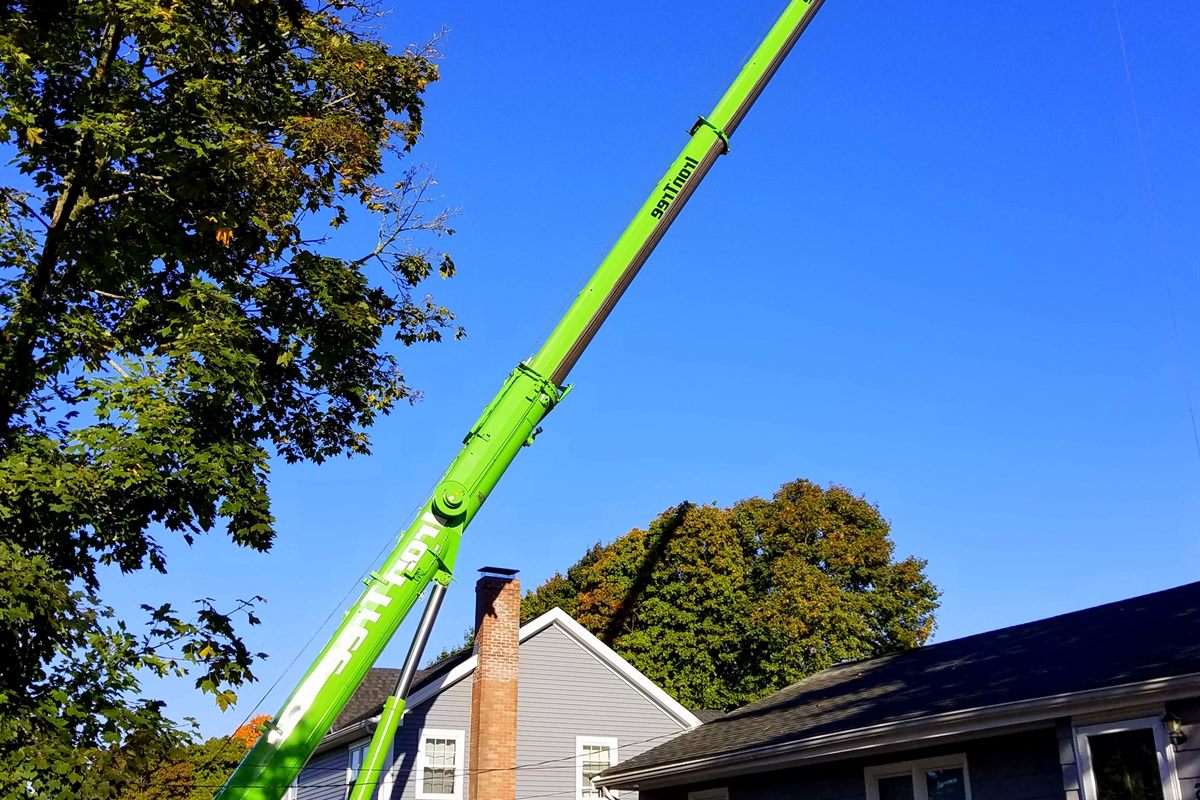
| Technical, over-structure or crane-assisted | $2,500 to $6,000+ |
| Fallen tree already on the ground | $300 to $1,200 |
| Stump grinding | $100 to $400 per stump |
Planning ranges for this market, not quotes. Dead trees often price above their size band, because dead wood cannot be safely climbed and the job moves to rigging or a crane. Full breakdowns are on the Garner cost page.
Frequently Asked Questions
Will my premium go up if I file a tree claim?
Ask your carrier, because it varies by insurer and by claim history. What is worth knowing is that removing a hazard usually does not raise a premium and in some cases is viewed favourably, since it reduces the insurer’s exposure. That is general information rather than advice about your policy.
Does insurance cover a tree that fell on my car?
That is typically an auto claim under comprehensive coverage rather than a homeowners claim, even though the tree was on your property. Two policies, two deductibles, and the answer depends on what comprehensive coverage you carry.
My neighbour’s tree fell on my house. Do I claim, or do they?
Start with your own policy. In most storm cases responsibility follows where the tree lands rather than whose yard it grew in, and your insurer may pursue the neighbour’s carrier afterwards if negligence can be shown. That process is called subrogation and it happens between insurers, not between neighbours. Our guide to who is responsible for a fallen tree walks through the notice question that decides it.
Does insurance pay for stump grinding?
Rarely. Stump grinding is almost always treated as separate from getting the tree off the structure, so budget $100 to $400 per stump and get it on the same work order to avoid paying a second mobilisation.
The tree fell in my yard and hit nothing. Anything I can do?
Check the debris removal provision in your policy rather than assuming no. Some policies contribute to debris removal after a covered storm even where nothing insured was struck, usually at a low sub-limit. Worth one phone call before you pay the whole thing.
Do you handle the insurance side for me?
No, and be careful with anyone who offers to. We are a removal and cleanup outfit: we do not file claims, adjust them, or negotiate with carriers, and a tree company asking you to sign over an insurance claim is a pattern to walk away from. What we provide is a written quote you can hand to your adjuster.
Storm Cleanup and Hazard Removals in Garner
Whether the insurer pays or you do, the work is the same and the price should be in writing before it starts. We quote tree removal, rigging work over structures and stump grinding across Garner, Knightdale, Clayton and Wendell.
We are not the call for a tree on your roof tonight; that is a 24-hour service, or Duke Energy if a line is involved. Request a free written quote or call (919) 322-8083 during business hours for the planned work, and compare it against whatever the storm-week crews quoted you.
Sources: NC Pro Bono Resource Center: Disaster Assistance Manual, Falling Trees, Flying Limbs and Loud Neighbors · Law Firm Carolinas: Liability for Fallen or Threatening to Fall Trees · Duke Energy: Rights of Way FAQ