Why Flood-Damaged Trees Fail Months Later
Garner Tree Removal • September 11, 2026 • 7 min read

The dangerous part of flooding, for trees, is not the flood. It is the eighteen months afterwards.
A tree that stood through high water and looked fine when the water receded can fail without warning the following summer, often on a calm day. That pattern catches Knightdale property owners regularly, because so much of the town sits near the Neuse and its tributaries, and because the Neuse basin has taken repeated major flooding: Fran, Floyd, Matthew, and the storms since.
Here is what actually happens underground, what to watch for, and when a tree has moved from “keep an eye on it” to “get it assessed.”
What Saturation Does to Roots
Tree roots need oxygen. They respire, in the same way leaves do, and they draw that oxygen from air spaces in the soil.
When soil is saturated, those air spaces fill with water. Within a few days of standing water, fine feeder roots, the ones that actually take up water and nutrients, begin to die from oxygen starvation. The tree loses a meaningful share of its absorbing capacity without losing a single leaf.
Then the second problem arrives. Waterlogged soil is ideal habitat for a group of pathogens that thrive in exactly those conditions. NC State Extension identifies Phytophthora, Pythium, Fusarium and Rhizoctonia as root and crown diseases encouraged by wet soils. These are opportunists: they colonise roots that are already stressed and extend the damage well beyond what the flooding alone would have caused.
The tree above ground may look entirely normal for a full growing season.
The Delayed Failure Pattern
The sequence usually runs:
- Flood. The tree stays upright and looks unharmed.
- Weeks 1 to 6. Fine roots die from oxygen deprivation. No visible symptoms.
- Months 2 to 12. Root pathogens colonise the damaged system. Possibly some thinning in the canopy, early autumn colour, or smaller leaves, all easy to attribute to a dry spell.
- Months 6 to 24. The structural root plate is compromised. The tree is now holding a full canopy on a root system that cannot anchor it.
- Failure. Frequently in a summer thunderstorm, sometimes with no wind event at all, and often by tipping with the root plate rather than snapping.
That last detail is the tell. A healthy tree that fails in wind usually snaps somewhere up the trunk. A root-compromised tree lifts out, roots and all, leaving a soil plate standing on edge. If you see that after a modest storm, the roots were the problem long before the wind was.
What to Watch For
In the two years after any significant flooding on your property:
- Thinning canopy or leaves noticeably smaller than previous years
- Early autumn colour, a classic stress signal
- Dieback starting at the branch tips and working inward
- Mushrooms or conks at the base or on surface roots, which indicate active decay
- Soil cracking or heaving on one side of the trunk, which means the root plate is already moving
- A lean that was not there before, or one that has increased
- Bark peeling at the base, or a dark, wet-looking stain running down from the root collar
Any of the last three warrants an assessment rather than observation. Soil movement at the base in particular is a late-stage sign, not an early one.
The Species Picture Near the Neuse
Not all trees respond the same way, and the mix around Knightdale matters.
Loblolly pine, which dominates former farmland across eastern Wake County, is poorly suited to saturation. It has a relatively shallow, plate-like root system on clay and limited tolerance for waterlogged conditions. Pines that survived a flood are among the highest-risk trees on a property, and beetle activity frequently follows in weakened pines, killing them outright within weeks.
Willow oak and water oak, common in older Knightdale neighbourhoods, tolerate periodic wet feet better, which is partly how they got their names. Tolerance is not immunity, though, and both species are prone to internal decay that a flood accelerates.
Sweetgum and river birch are genuinely flood-adapted and usually the least concerning.
The riparian corridor along the Neuse and creeks like Poplar Creek carries the densest vegetation in the county, and those species grew there because they cope. The trees at risk are usually the ones in yards and on former farmland, not the ones in the bottomland.
What Not to Do
Three common mistakes make things worse:
Do not drive or park on saturated soil. Compaction crushes the remaining air spaces and worsens exactly the problem the flooding caused. NC State Extension flags this specifically. Keep equipment and vehicles off wet ground around trees you want to keep.
Do not fertilise a flood-stressed tree. The instinct is to feed it. A tree with a damaged root system cannot use the nutrients, and pushing top growth onto a compromised root plate makes the imbalance worse, not better.
Do not pile soil or mulch against the trunk to “stabilise” a leaning tree. That traps moisture against the root collar, which is where the decay organisms are already working.
When to Get It Assessed
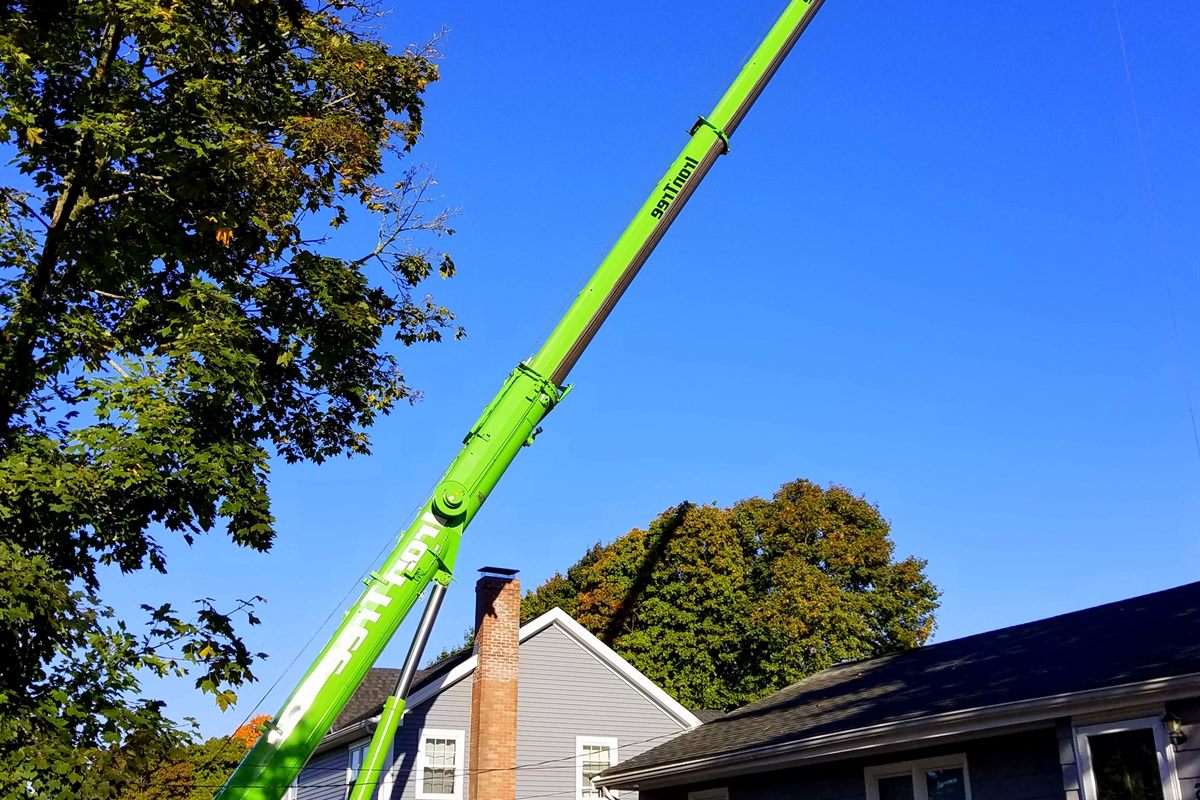
Sooner is cheaper, and that is not a sales line. A living tree can be climbed. A dead one usually cannot, which means a lift or a crane, and that is the difference between a routine removal and a $2,500 one.
Get an assessment if:
- The tree is within falling distance of a house, driveway, or power drop, and it went through standing water
- You see soil movement, heaving, or a new lean
- More than about a quarter of the canopy is thinning or dying back
- Mushrooms or conks have appeared at the base
- It is a pine that was flooded, particularly if any browning has started at the top
Our tree risk assessment guide covers how a tree is evaluated properly, and our diseased tree guide covers what is treatable and what is not.
What the Work Looks Like
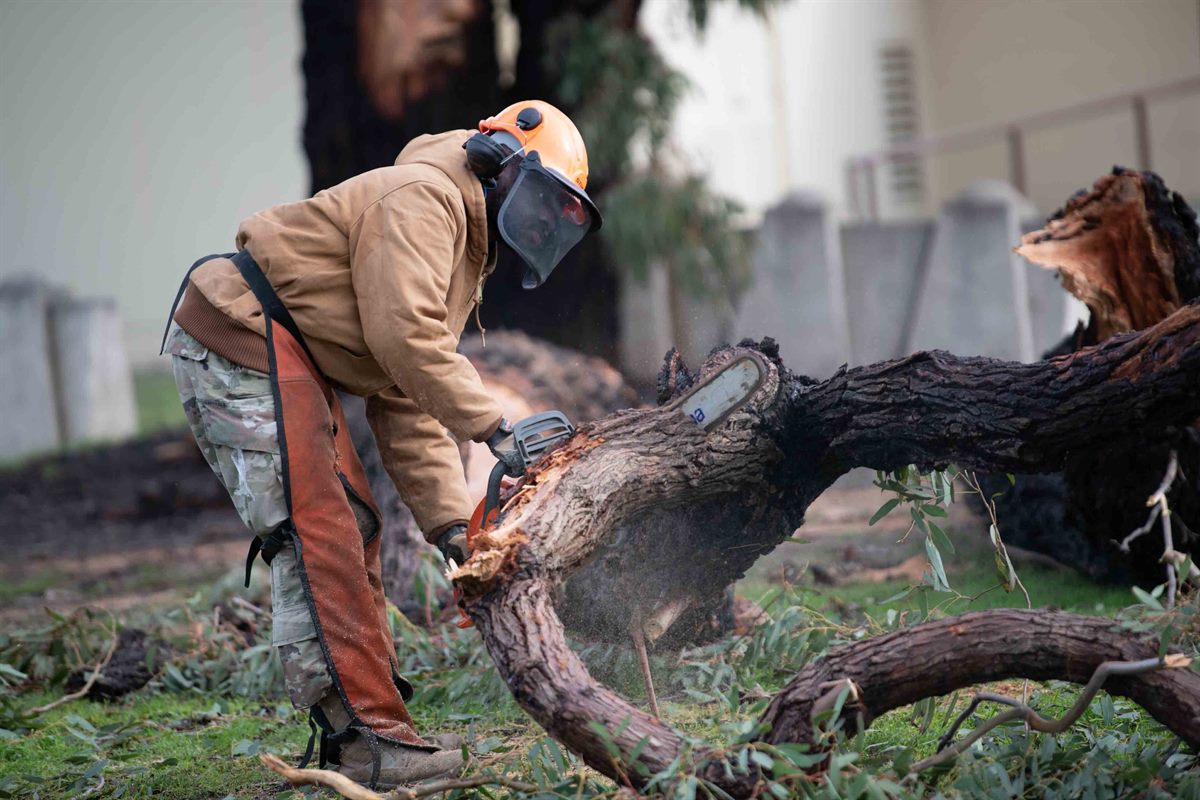
A flood-weakened tree is usually a removal rather than something to prune around, because the problem is at the roots where pruning cannot reach. On the larger pines and oaks along the floodplain that means rigging or crane work rather than felling, since saturated ground is exactly where you do not want to drop a full-length trunk.
Frequently Asked Questions
How long after a flood can a tree fail?
Commonly six to twenty-four months. The root damage happens immediately, the decay develops over months, and the failure comes when the canopy load finally exceeds what the compromised root plate can hold.
My tree looked fine after the flood. Is it safe?
Not necessarily. Above-ground appearance lags root condition by a full growing season or more. A tree that looked fine in the autumn after a flood can be in trouble the following summer.
What are the signs of root rot?
Thinning canopy, early autumn colour, tip dieback, mushrooms or conks at the base, soil cracking or heaving, a new lean, and dark staining at the root collar. The soil signs are the most urgent.
Can a flood-damaged tree recover?
Many do, particularly flood-tolerant species with brief inundation. Recovery depends on how long the soil stayed saturated, the species, the tree’s condition beforehand, and whether pathogens took hold. Keeping traffic off the root zone and not over-fertilising both help.
Are pines more at risk than hardwoods?
Generally yes. Loblolly pine has a shallow plate-like root system on clay and limited waterlogging tolerance, and weakened pines attract beetle activity that can kill them within weeks. Flooded pines near structures deserve early attention.
Does insurance cover removing a flood-damaged tree?
Usually only once a covered peril has brought it down onto an insured structure. Preventive removal of a standing hazardous tree is almost always the owner’s cost, which is another reason to address it while it is still a routine job.
Should I fertilise a stressed tree?
No. A damaged root system cannot use the nutrients, and pushing top growth onto a compromised root plate worsens the imbalance. Reduce stress instead: no compaction, no soil piled at the trunk, appropriate watering in drought.
Get a Flood-Stressed Tree Looked At
We cover the Knightdale and east Wake area, including the Neuse corridor, and the cheaper outcome for you is a tree dealt with while it can still be climbed rather than one that needs a crane two summers later.
See tree removal in Knightdale, emergency and storm damage, or Knightdale pricing. If the tree sits near a creek or the river, check Knightdale permits and Neuse buffer rules before any work.
Call (919) 322-8083 or request a free quote.
Source: NC State Extension: Handling Flooding and Storm Damage in the Landscape