Knightdale Tree Permits and Buffer Rules
Garner Tree Removal • September 11, 2026 • 7 min read
Most of the time, taking a tree down in your own Knightdale yard needs no permit at all. Knightdale is considerably less restrictive than Raleigh, which has protected-tree provisions inside the city limits.
But there are three specific situations where the answer changes, and one of them catches Knightdale property owners far more often than the others, because a large share of the town sits near the Neuse. This guide covers all three in plain English. It is a summary, not legal advice, and the town and county are the authority on your specific parcel.
The Short Version
| Situation | Permit or restriction? |
|---|---|
| One tree in your own yard, away from water | Usually none |
| Clearing more than one acre | Wake County land disturbance permit |
| Anything within a Neuse riparian buffer | State buffer rules apply |
| Trees in a recorded HOA or subdivision common area | HOA approval, often required |
| Street trees or trees in the right-of-way | Town approval |
| Trees required by an approved site plan | Town UDO applies |
1. The One-Acre Threshold
Wake County requires a land disturbance permit for clearing over one acre. This is the rule people know about, and for a single backyard tree it is irrelevant.
Where it matters is lot clearing: buying a wooded parcel and opening it up, clearing for a shop or pasture, or taking out a stand rather than a tree. Cumulative disturbance is what counts, not one day’s work, so clearing in stages to stay under the threshold is not the workaround it appears to be.
2. The Neuse Buffer, Which Is the Knightdale One
This is the rule that actually affects Knightdale, because the Neuse runs along the town’s southern edge and the corridor plus its tributaries reach into a lot of properties.
North Carolina protects riparian buffers throughout the Neuse River basin. The buffer is measured from the top of bank and is divided into zones, with the inner zone the most strictly protected. Within a protected buffer, removing vegetation is restricted regardless of whether the land is yours, and that includes many small creeks and drainageways, not just the river itself.
Three practical points:
- It is not obvious from looking. A drainage ditch at the back of a subdivision lot can be a regulated feature. If there is any watercourse on or adjoining your property, ask before cutting.
- Dead and hazardous trees are treated differently from healthy ones, and there are provisions for removing genuine hazards. That is a conversation with the town or the state, not a judgement call you make on the day.
- Buffer violations carry real penalties and can require restoration planting, which costs considerably more than the removal would have.
Knightdale’s own flood damage prevention program adds a floodplain dimension: the town regulates alteration of natural floodplains, stream channels and protective barriers. If your property is in a mapped flood zone, that is a second reason to ask first.
3. HOA Covenants and the Town UDO
Knightdale has grown quickly and much of that growth is in subdivisions with recorded covenants. An HOA can restrict tree removal even where the town does not, particularly for trees in common areas, buffer plantings between developments, or trees shown on an approved landscape plan.
Separately, the Town of Knightdale administers a Unified Development Ordinance covering development standards. For an established single-family lot this rarely bites, but trees that were required as a condition of site plan approval are a different matter and are not freely removable.
Building and trade permits in Knightdale are submitted through the Wake County Permit Portal, and the town’s Development Services department is the right first call for a specific question.
How to Actually Check, in Ten Minutes
- Is there a creek, ditch, pond or the river on or next to the property? If yes, assume buffer rules may apply and ask before cutting.
- Are you clearing more than an acre in total? If yes, land disturbance permit.
- Do you have an HOA? Check the covenants, and get approval in writing.
- Is the tree in the right-of-way near the street? That is likely the town’s, not yours.
- Is it a genuine hazard? There are provisions for hazardous trees, but document the condition first with photographs, and ideally an arborist assessment.
If all five are no, you are almost certainly free to proceed.
When It Is a Hazard Rather Than a Choice
The rules bend for genuine danger, but the burden is on you to establish it, and after the fact is a poor time to try.
If a tree is a real hazard, photograph it from several angles before any work, keep the assessment in writing, and where a buffer or protected status is involved, contact the town before removal rather than after. Our tree risk assessment guide covers how a tree is actually evaluated, and it is worth reading before you decide a tree is dangerous, because “it looks big and close to the house” is not a hazard assessment.
For genuine emergencies where a tree is already down on a structure, the picture is different again, and our guide to who is responsible for fallen tree removal in NC covers who pays.
Once the Paperwork Is Settled
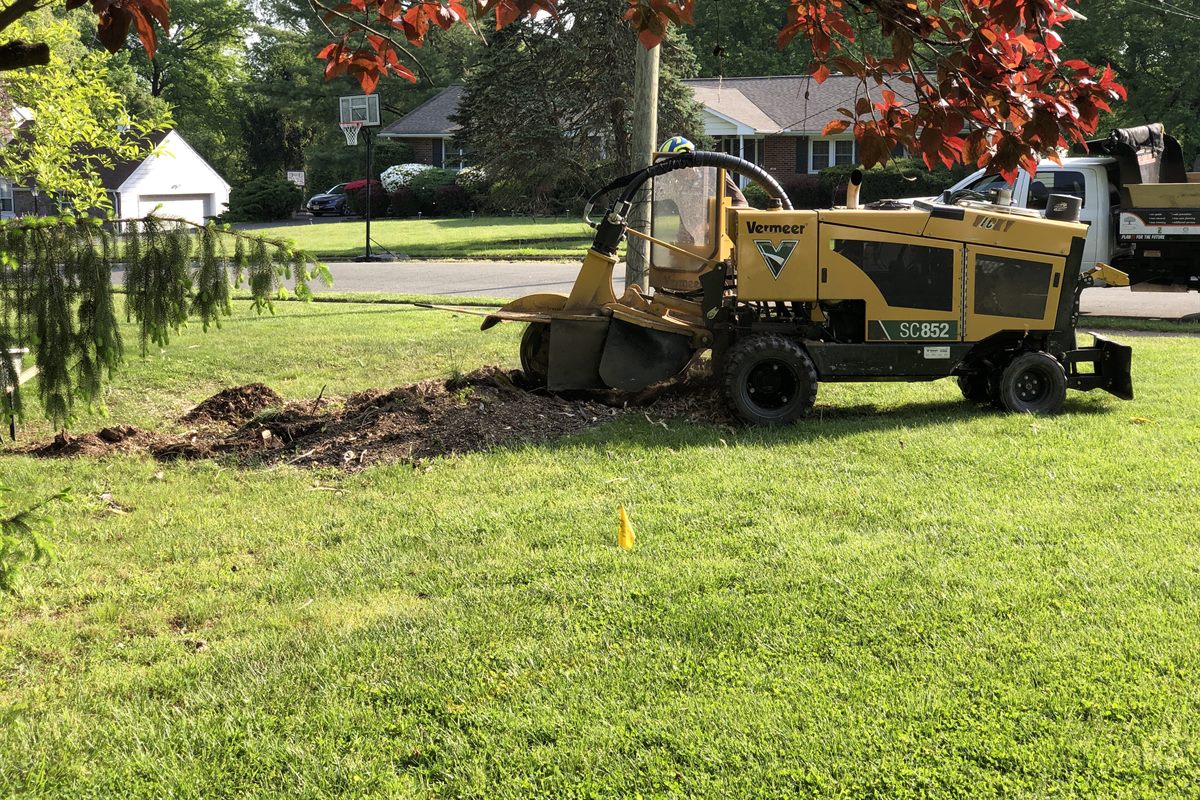
The permitting question is separate from the work itself. A buffer tree cleared for removal is ordinary tree removal, and the stump grinding afterwards matters more here than elsewhere: a ground stump in a riparian area leaves the root system in place holding soil, which is generally what you want near water.
Frequently Asked Questions
Do I need a permit to remove a tree in Knightdale, NC?
Usually not for a single tree in your own yard away from water. You do need one for clearing more than an acre, and state Neuse buffer rules restrict removal near watercourses regardless of ownership. HOA covenants may apply separately.
What are the Neuse buffer rules?
North Carolina protects riparian buffers throughout the Neuse basin, measured from the top of bank and divided into zones, with restrictions on vegetation removal within them. They apply to many small tributaries and drainageways, not just the river, which is why they catch people out in Knightdale.
Does the buffer rule apply to a drainage ditch behind my house?
It can. Whether a feature is regulated is not obvious by eye. If there is any watercourse on or adjoining your property, confirm before cutting rather than after.
Can I remove a dead tree in a buffer?
There are provisions for dead and hazardous trees, but confirm with the town or state before the work and document the condition. Removing a living tree you believed was dying, without that conversation, is where people get into trouble.
Who do I ask in Knightdale?
Town of Knightdale Development Services for town matters and the UDO. Wake County for land disturbance permits, submitted through the Wake County Permit Portal. Your HOA for covenant questions.
What happens if I remove a tree I should not have?
Buffer violations can carry penalties and require restoration planting, which typically costs far more than the removal did. It is genuinely worth the phone call first.
Does Raleigh have different rules?
Yes, and stricter ones inside the city limits. If your property is in Raleigh rather than Knightdale, see our Raleigh tree removal permit guide.
Tree Removal in Knightdale
We cover Knightdale, and we will flag it when a permit or a buffer question looks like it applies before quoting, rather than discovering it on the day. The town and the Division of Water Resources make the actual determination.
See tree removal in Knightdale, our tree removal service, or Knightdale pricing. For what the job actually costs and why pines and oaks differ here, see what tree removal actually costs in Knightdale. If your trees are near the river and have been through high water, flood-damaged trees in the Neuse floodplain covers what saturation does to root systems.
Call (919) 322-8083 or request a free quote.
Sources: Town of Knightdale: Flood Damage Prevention · Town of Knightdale: Permits and Inspections