Willow Oak Problems: What to Watch For
Garner Tree Removal • September 20, 2026 • 8 min read
Willow oaks are the trees that make older streets in Garner and Raleigh look the way they do: tall, narrow-leaved, arching over the asphalt from both sides. They are also the tree most homeowners around here inherit rather than choose, which means the first real thought anyone gives them is the year something goes wrong. Yellow leaves in May, a limb across the drive in July, a ring of mushrooms at the base in October.
The good news is that most willow oak problems are not terminal. This is a tough species with good general resistance, and the complaints people bring us usually fall into two piles: cosmetic annoyances that need nothing, and structural or root issues that genuinely decide the tree’s future. This guide sorts them into those piles, explains why a yard willow oak ages faster than a forest one, and gives the planning ranges for the work. Ranges, not quotes.
What Are the Most Common Willow Oak Problems?
Wind damage is the one that costs money; iron chlorosis, leaf spots and acorn litter are the ones that get reported and rarely matter. NC State lists the willow oak as susceptible to wind damage, and everything else on its problem list is common to oaks generally.
| Willow oak problem | What you see | Worth fixing? |
|---|---|---|
| Wind damage | Limbs torn out of the crown after a storm | Partly, by pruning to reduce the sail |
| Iron chlorosis | Pale leaves with darker green veins, worst up top | Sometimes, if soil pH is behind it |
| Shoestring root rot | Thinning crown, honey-coloured mushrooms at the base | No |
| Anthracnose and leaf spots | Blotchy leaves in a wet spring, early leaf drop | Usually nothing to do |
| Acorn and leaf litter | Small acorns and fine leaves every autumn | No, and it is not a health problem |
| Buried or girdling roots | Trunk base with no visible flare, slow decline | Rarely, once the tree is mature |
The species carries a long pest list on paper (scale, leaf miner, galls, lace bugs, borers, caterpillars, weevils) and a long disease list too. In practice NC State rates the willow oak as having good resistance to most of it, so a mature tree dropping a few blotchy leaves in a wet April is not a project.
Not sure which pile your tree is in? Request a free written quote and we walk the property, then price whatever the tree actually needs in writing.
Why Yard Willow Oaks Age Faster Than Forest Ones
A willow oak in the woods runs well over a century. The same species in a front yard gets about 80 to 90 years, and the gap is the whole explanation for most of the decline people see.
Three things eat that difference. Root space is the biggest: a street tree between a sidewalk and a driveway has a fraction of the soil volume its canopy is sized for, and a fibrous root system spreading into compacted subsoil cannot make up the shortfall. Grade changes are the second, because a few inches of fill or a new patio over the root zone smothers roots that were living in the top foot of soil. Water is the third, and it swings both ways here: baked soil in August, then standing water after a week of storms.
None of that kills a willow oak quickly. It shortens the tree by decades and shows up as a crown that thins from the top down over ten or fifteen years. If your tree came with a 1970s or 1980s house off Aversboro Road or around Vandora Springs, it is likely in the last third of its life and that is normal rather than alarming.
The contrast with the other oak in most Garner yards is sharp. Water oaks are finished at 30 to 50 years, which is why they fail young and messily; the water oak lifespan guide covers that side. A willow oak of the same size is usually the tree worth spending pruning money on.
Which Willow Oak Problems Are Worth Fixing?
Anything structural, and almost nothing cosmetic. Willow oaks reach 40 to 75 feet tall and occasionally 100, on a 25 to 50 foot spread, so a mature one carries a great deal of weight a long way out from the trunk. That geometry is what makes wind the real problem.
The structural items worth money are deadwood in the upper canopy, a limb with a crack or a torn attachment after a storm, two competing stems with bark pinched between them, and any limb now growing over a roof it did not reach ten years ago. Tree trimming and pruning handles all four, and on a healthy willow oak it is money that buys decades rather than a season.
The items not worth money are the ones that look dramatic and pass on their own. Anthracnose in a wet spring browns the leaves and drops some early; by July the tree has releafed. Iron chlorosis is worth a soil test before anything else, because NC State ties it to high pH soil and there is no point treating a tree for a problem the soil does not have. Acorns and those fine leaves are permanent, since the species starts bearing at 15 to 20 years old and never stops.
Pro tip: after a wet April half the willow oaks on a Garner street look sick at once, with blotched, curling leaves and a thin canopy. When a whole street shows the same symptom in the same week, it is weather, not your tree. The one worth a second look is the tree that looks different from its neighbours.
The Limbs That Come Down First
Willow oak failures follow a pattern. The long lateral limbs go before the trunk does, and they go at the attachment rather than snapping mid-span. What you find on the ground is a limb with a torn collar and a strip of bark peeled down the trunk behind it, which is a wound that will be a decay site in five years.
That pattern is why crown work pays here. Reducing the end weight on the longest laterals lowers the leverage on exactly the attachments that fail, and taking deadwood out removes the pieces that come down first in any wind. It is also why a willow oak that has already lost two big laterals on the same side deserves a closer look, since the wounds are stacking on one flank.
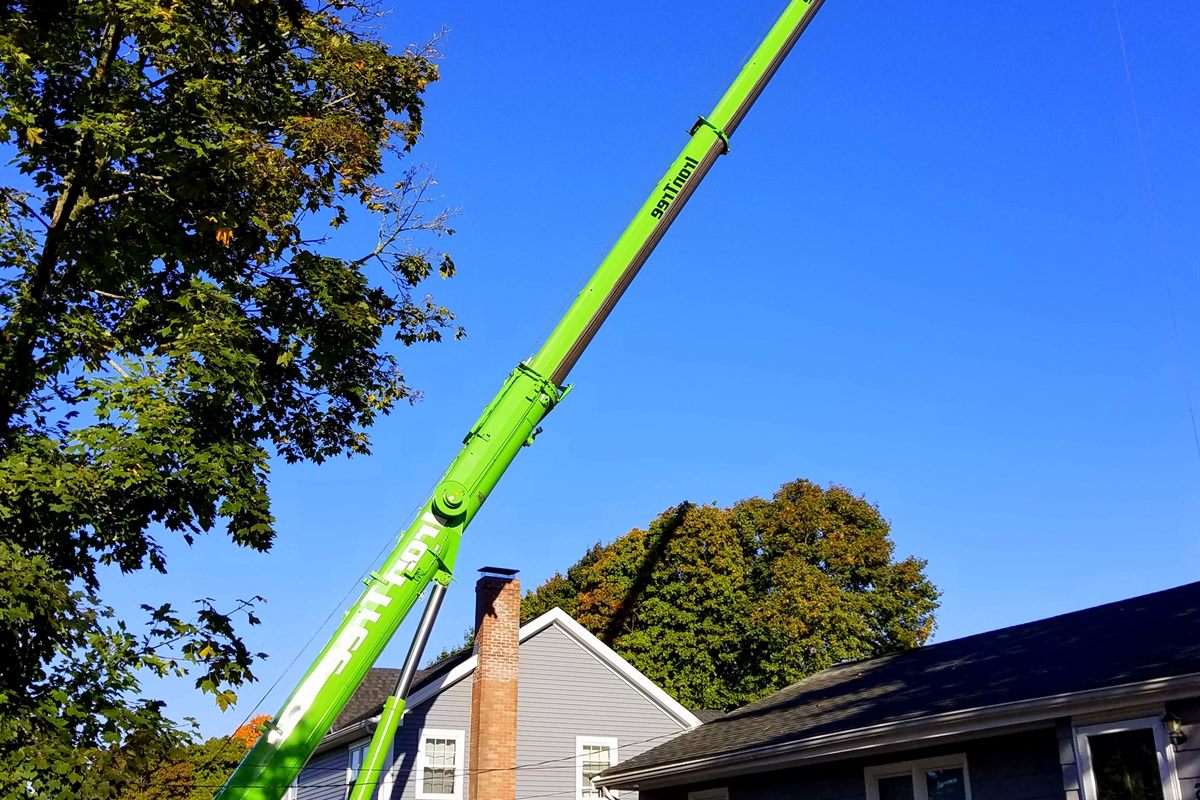
When a willow oak does have to come down, it is nearly always a large job: $1,500 to $3,000 for a 60 to 80 foot large tree removal, more if it has to come off over a house by crane. Crown pruning on a mature tree generally runs $300 to $1,500 depending on the height and the access. Full breakdowns sit in the Garner tree removal cost guide and the tree trimming cost guide. We also do not diagnose trees: if you want a formal opinion on whether a specific willow oak is hazardous, that belongs to a certified arborist, found through the ISA “Find an Arborist” directory or the Wake County office of NC Cooperative Extension.
Frequently Asked Questions
How long do willow oaks live?
Well over 100 years in forest conditions, and about 80 to 90 in a yard or street setting where soil is poor and root space is limited. That is two to three times the lifespan of a water oak on the same street, and it is the main reason willow oaks are usually the keeper of the two.
Are willow oak roots a problem for foundations and driveways?
They are a nuisance more often than a hazard. Willow oaks have a fibrous root system that spreads wide and shallow, so they lift walkways and surface in lawns; genuine structural damage to a house is rare. If a root has already cracked a drive, pruning that root is an arborist’s call rather than a landscaping decision, because cutting the wrong one destabilises the tree.
Why are my willow oak leaves turning yellow in summer?
Most often iron chlorosis, which NC State ties to high pH soil and which shows as pale leaves with green veins still visible. A soil test through the Wake County office of NC Cooperative Extension is the cheap first step. Yellowing that comes with thinning at the very top of the crown is a different and more serious pattern, and that one is worth a closer look.
Should I remove a willow oak that leans?
Not on the lean alone. A lean the tree grew into over decades, with normal branch spacing and soil undisturbed at the base, is usually just how it grew. A lean that appeared recently, with cracked soil or a raised root plate on the opposite side, is a different matter and our guide on a tree leaning toward the house walks through the difference.
Is a willow oak worth keeping over a water oak?
Usually yes, if you are choosing which to spend on. The willow oak has decades left, better wood and a better shape; the water oak beside it may be near the end of a 30 to 50 year run. That is a rule of thumb, not a verdict on either tree.
Do you work on willow oaks in Knightdale and Raleigh?
Yes. Willow oak pruning and removal are routine across Knightdale, Raleigh, Wendell and Zebulon, as well as Garner itself, and street-side trees get a plan for traffic and drop zones before the quote goes out.
Willow Oak Work in Garner, Knightdale or Raleigh?
If a willow oak has dropped a big lateral, is reaching over the roof, or has gone thin at the top, the next step is a number rather than another opinion. We prune the ones worth keeping, take down the ones that are finished, and handle the large and technical removals where the tree sits over a house or a street.
Send us the details or call (919) 322-8083 during business hours, and you get a free written quote with the scope and the up-front written price spelled out across Garner, Knightdale, Wendell and Raleigh.
Sources: NC Extension Gardener Plant Toolbox: Quercus phellos · NC Extension Gardener Plant Toolbox: Quercus nigra