Buying a House With Large Trees in NC
Garner Tree Removal • November 15, 2026 • 6 min read
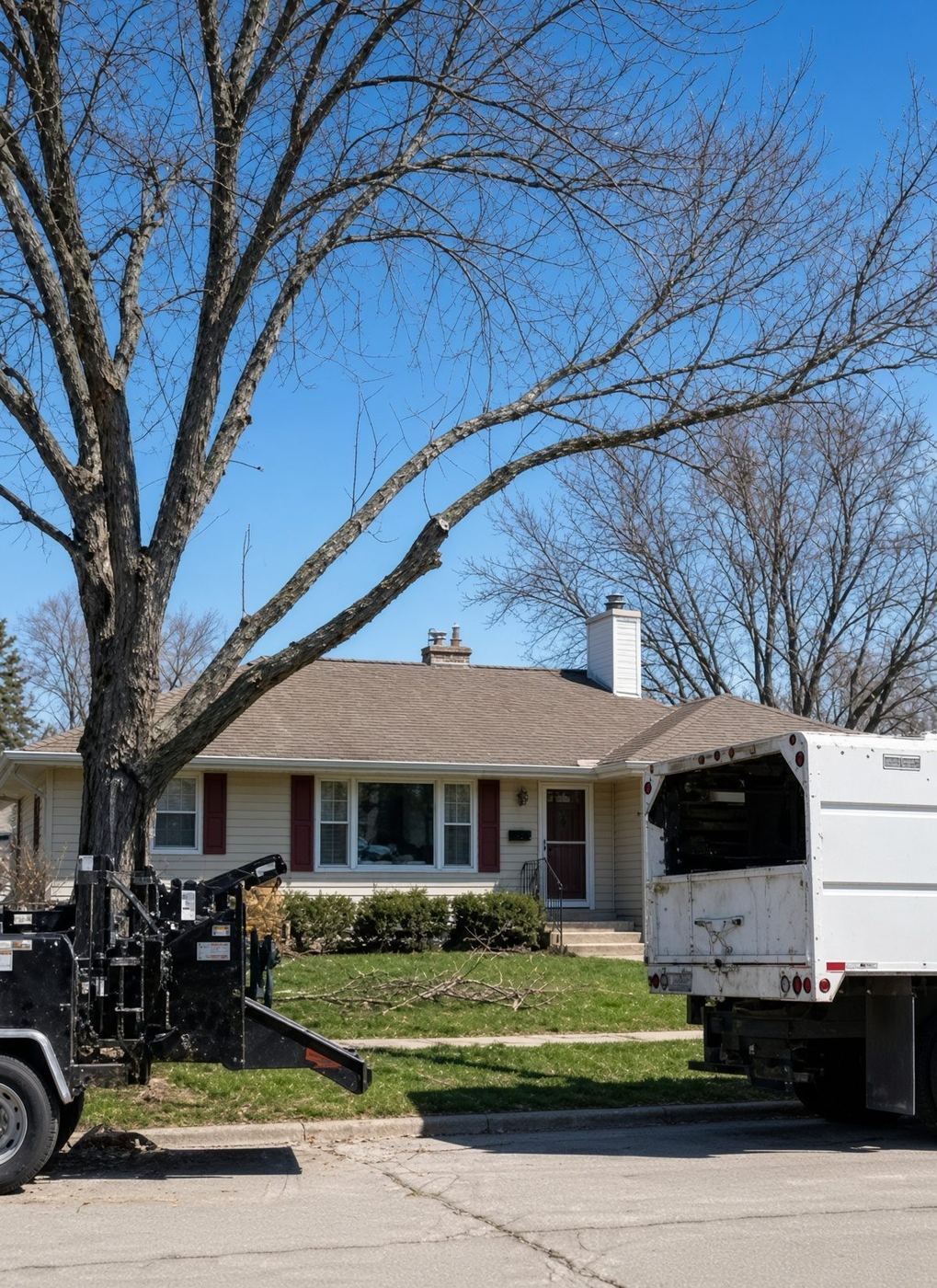
Before you close on a house with big trees, check five things: dead wood, branches on the roof, lean or lifted soil, roots near the foundation and sewer line, and (on a new build) what the builder did to the ground around each tree. The last one is the one buyers miss, and it is the one that costs the most later.
Large trees are a real reason to love a Triangle lot. They can also be an expensive surprise, because a tree that looks fine on a showing day can be dying or already failing. Here is how to check, who to ask, and what to do with what you find.
What should I check on the trees before closing?
Do this walk on your own at a second visit, in daylight, ideally after rain:
- Dead or hanging limbs. Bare, brittle branches in a leafy tree, or a crown that is thin on one side.
- Branches touching the roof or siding. They scrape the roof and fill the gutters.
- Lean and soil. A trunk that tilts, or soil that looks pushed up or cracked on one side. See signs a tree needs to be removed.
- Base of the trunk. Fungus or mushrooms, bark missing, cavities. Mushrooms at the base can point to rot.
- Roots near the house. Big roots close to the foundation, cracked walkways, or old trees by the sewer line. Tree roots and foundations covers what is normal.
- Trees on the property line. Look at the neighbor’s trees too. See who owns a tree on the property line.
If a large tree is dead, leaning, or hanging over the roof, you want a price on it before you are committed. Request a free quote and we’ll contact you to discuss the tree, the access, and the work you need.
What does a home inspector look at on the trees?
Ask your inspector what the report covers, because it varies. A general home inspection is about the house: roof, gutters, grading, drainage. Judging a tree’s health is a different specialty, and a general report may mention that a limb touches the roof without saying whether the tree is sound.
For a formal opinion on a tree you are worried about, a certified arborist can write an assessment. A tree hazard evaluation explains what that report contains.
Buying a new build: why trees die years after the builder leaves
On a new build, the mature oaks or pines the builder kept are the trees most at risk. Construction hurts roots in four ways: cutting them, changing the grade, compacting the soil, and burying the base of the trunk.
NC State Extension says that cutting or filling around roots will weaken and eventually kill valuable trees, and that trenching should not happen within 3 times the trunk diameter. It recommends protecting at least 1.25 feet of radius for each inch of trunk diameter: a 12-inch tree wants at least 15 feet. Another NC State Extension article says construction damage eventually leads to decline in a tree’s health, which can take years to show, long after the builder has gone.
Check each retained tree for:
- Soil piled against the trunk or around the root flare.
- A driveway, patio or utility trench inside the area under the canopy.
- Bare, packed ground where equipment ran.
- A thin canopy, early leaf color change, or dieback on a tree that is only a few years into the home.
Pro tip: the same NC State article says that after grading around a tree, “This may be your only chance to negotiate some compensation.” Also read your builder contract, because some homes carry a tree warranty for the first two years.
When to get a tree quote before closing, and how to use it
Get a price while you still have room to negotiate, which means during your inspection window, not after you hold the keys. We give a written price before we start, and you can bring it into the conversation.
| What you find | What to do | Typical range |
|---|---|---|
| Dead tree away from the house | Ask for removal or a credit | $500 to $1,500 for a medium tree |
| Large tree hanging over the roof | Get a written price; ask for a credit or removal | $1,500 to $3,000 for a large tree |
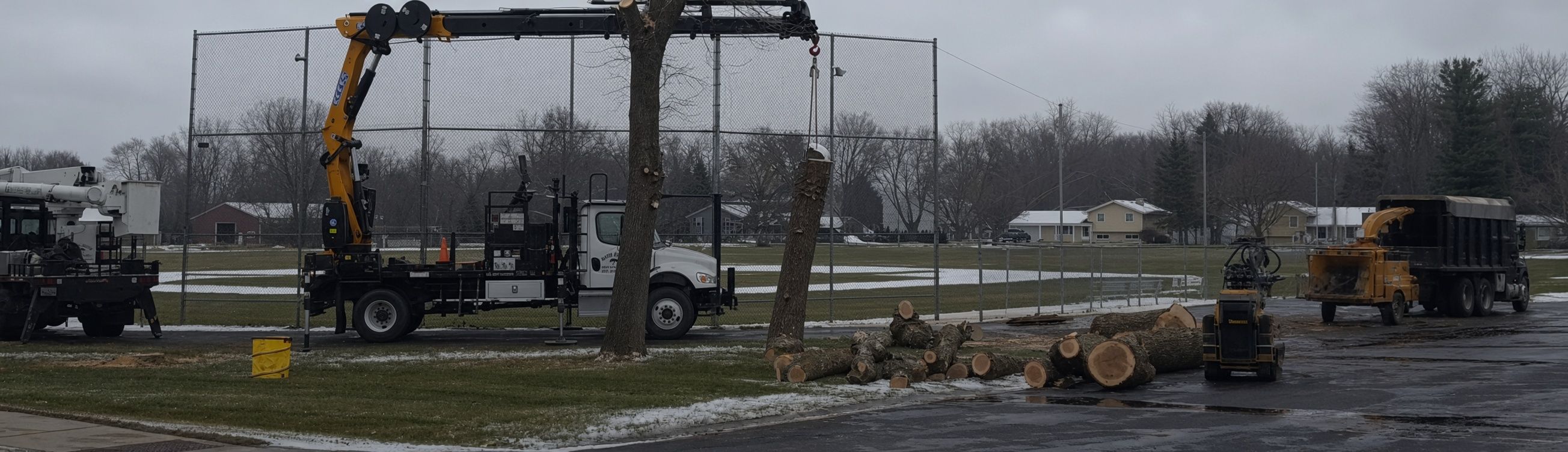
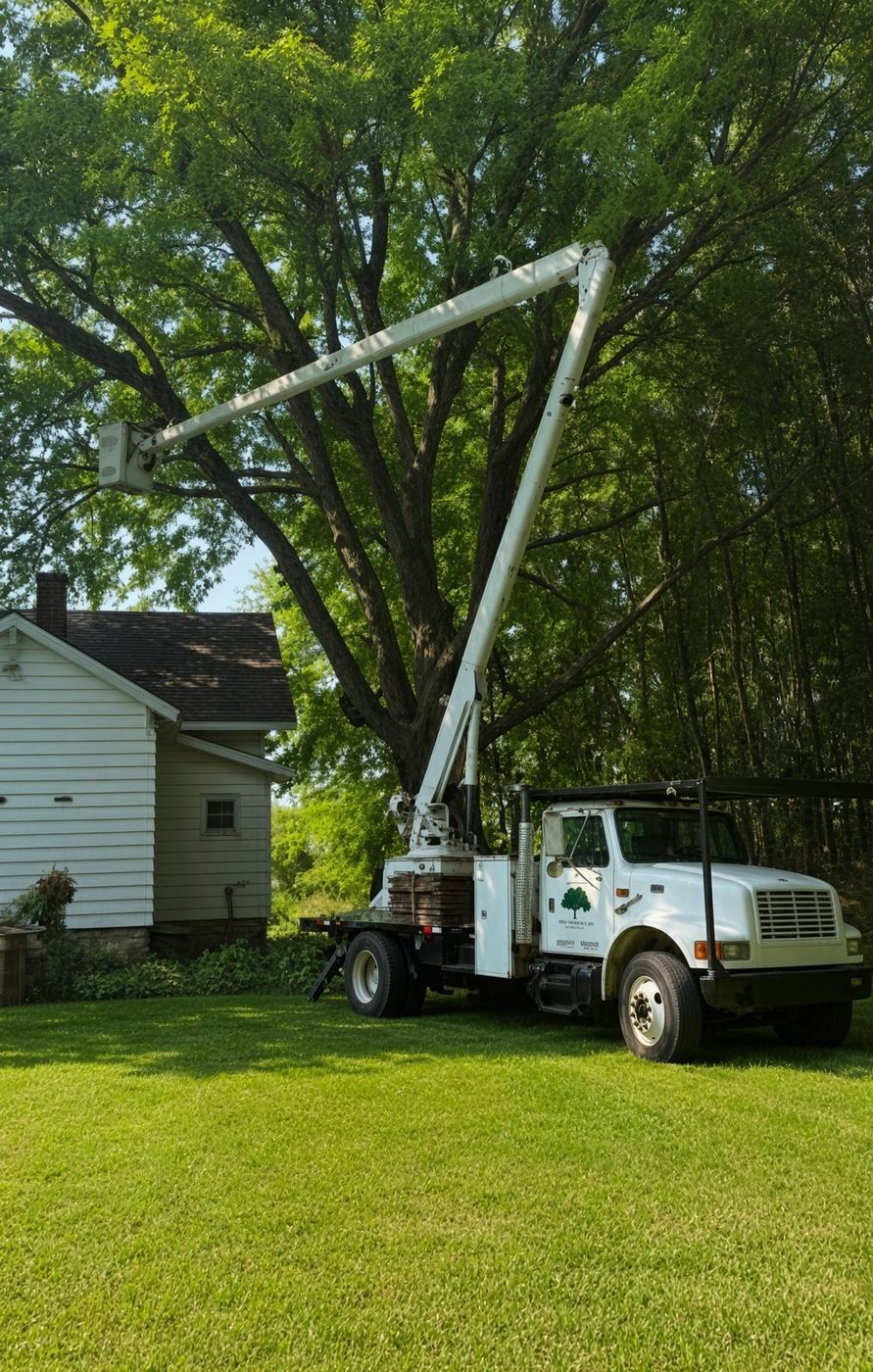
| Tree needing rigging or a crane over the structure | Price it before you decide | $2,500 to $6,000+ |
| Stump left from a removal | Ask whether grinding is included | $100 to $400 per stump |
These are planning ranges, not quotes. See the Garner cost guide for the full table. Want a number for the house you are looking at? Request a free quote and we’ll contact you to discuss the tree, the access, and the work you need.
Negotiating. The usual routes are a price reduction, a seller credit, or the seller removing the tree before closing. A written quote makes the ask concrete. On the seller’s side, tree removal before selling explains why sellers often take out a hazard tree before listing. Ask your agent which route fits your contract.
Insurance. Check with your agent before you close. Whether tree removal is covered depends on your policy, and homeowners insurance and tree removal explains the usual limits.
HOA and town rules. If the lot is in an HOA, you may need approval to remove a tree later. See HOA tree removal rules. Your town sets its own rules on top of that. This is general information, not legal advice.
Frequently Asked Questions
Should I get a tree inspection before buying a house?
If the lot has large trees, yes, especially if any look dead, lean, or hang over the roof. A certified arborist can write a formal assessment, and a price from a tree company tells you what the work costs.
Does a home inspection cover trees?
It depends on the inspector and the report. A general inspection looks at the house, and tree health is usually a separate question. Ask what is included before you rely on it.
Why do trees die after a house is built around them?
Construction cuts roots, changes grade, compacts soil and buries the trunk base. The tree can decline slowly and die later.
Can I ask the seller to remove a dead tree?
You can ask for removal, a price reduction or a credit, and a written quote helps. It is a negotiation, and your agent can tell you what fits your contract.
What does it cost to remove a big tree I find after closing?
A large tree usually runs $1,500 to $3,000, and one over a structure needing rigging or a crane runs $2,500 to $6,000+. Our large tree removal and tree removal pages cover the work in Clayton, Knightdale and Wendell.
Buying a house with big trees in Garner?
We remove and price large trees in Garner, Clayton, Knightdale and Wendell, with the rigging or crane work when the tree is over a roof. Request a free quote or call (919) 322-8083, and we’ll contact you to discuss the tree, the access, and the work you need. You get a written price before we start.