My Neighbor's Dead Tree Is a Hazard in NC
Garner Tree Removal • September 20, 2026 • 10 min read
There is a dead loblolly on the far side of the fence, leaning toward your daughter’s bedroom, shedding bark for two summers now. You have mentioned it. They have nodded. Nothing has happened, and every time the wind picks up you are doing arithmetic about which way it goes.
This is the one tree question worth handling before the storm rather than after, and almost nobody does. Around Garner and Knightdale the same conversation plays out every June, then again once the tree is on the roof and far too late to be useful.
This is general information, not legal or insurance advice; ask an attorney about your own situation and your insurer about anything touching a claim.
Below: why one dated letter changes the legal picture, what that letter has to contain, what to photograph, whether an arborist report is worth paying for, and what happens next. Prices are planning ranges, not quotes.
My Neighbor’s Dead Tree Is a Hazard. What Can I Do?
You cannot touch the tree, but you can change who pays if it falls, and it takes one dated letter. That is the whole answer, and it costs a stamp.
North Carolina applies the ordinary common law negligence standard to falling trees rather than strict liability, and liability turns on whether the owner had actual or constructive notice of the dangerous condition. With no actual or constructive knowledge of the defect, the owner is not responsible. Where a neighbor has complained that a tree could fall, the owner is likely under an obligation to inspect within a reasonable period to determine the risk. Our guide to who is responsible for a fallen tree in NC is the full explanation of that standard.
Read that twice and the strategy is obvious. Notice is not something that happens to you; it is something you create, in writing, today.
| Step | What it costs you | What it establishes |
|---|---|---|
| A conversation over the fence | Nothing | Nothing you can prove later |
| A dated text or email describing the tree | Nothing | Actual notice, with a timestamp |
| A dated letter, copy kept, sent by certified mail | A few dollars | Actual notice, with delivery evidence |
| A certified arborist’s written report | The arborist’s fee | That the hazard was real and professionally assessed |
| Repeating the notice as the tree declines | Nothing | That the condition persisted and was ignored |
If you are the owner on the receiving end of one of those, the arithmetic has already changed for you. Request a free written quote and compare the cost of dealing with it now against owning the damage later.
What a Notice Letter Has to Contain
A useful letter is short, factual and specific. A long angry one is worse than nothing, because it invites an argument about tone instead of about the tree. Six elements, all small:
- The date. At the top, unambiguous. This is the single most important character in the document.
- The tree, identified precisely. Not “your big tree”. Write “the pine at the back corner of your lot, about twenty feet from the shared fence”. If there are three pines, say which.
- What you observe, not what you conclude. “The top third has no needles and there is a fungus shelf about two feet up” is evidence. “It is dangerous and you are liable” is an opinion, and it is the part that makes people defensive.
- What it threatens. The room, the driveway, the fence, the car that parks there. Be specific about what sits underneath.
- What you are asking for. Usually: that they have it looked at by a certified arborist and tell you what the arborist says. Asking for an inspection is more reasonable than demanding a removal, and it is what the law contemplates.
- A date by which you would like a reply, and your contact details. Two or three weeks is reasonable.
Keep a copy, and send it in a way that timestamps itself. Email is usually enough, a text works, and certified mail is the belt-and-suspenders version when the tree is large and what sits under it is expensive.
What to Photograph, and From Where
Photographs do two jobs: they make the letter concrete, and they prove the condition existed on the day you say it did.
- Shoot from your own property only. Standing in their yard to get a better angle undermines the whole exercise, and it is trespass.
- One wide frame and several close ones. The wide frame shows the tree in relation to your house. The close frames show the defects: the bare crown, the peeling bark, the cavity, the split union between two stems.
- The root collar especially. Mushrooms, brackets or conks where the trunk meets the soil are decay indicators, and the ones a homeowner most often walks past for years.
- A fixed reference for a lean. Shoot the lean against a fence post or a gutter line. In six months the same frame shows whether it has moved.
- Repeat seasonally. A bare crown in January proves nothing. The identical bare crown in July, next to a green neighbor tree, proves a great deal. Two photographs a season apart are worth more than twenty on one day.
Pro tip: take the July photograph. In the Triangle, the difference between a dormant tree and a dead one only shows in leaf season, and most people who worry about a neighbor’s tree do it in winter when the evidence is weakest. A dated July frame of a bare water oak beside a fully leafed one is the most persuasive document in the whole process, and it takes thirty seconds.
Our guide to telling whether a tree is dead or dying covers the four checks that separate decline from dormancy, and what to watch on a tree leaning toward the house covers the lean question specifically.
Should You Pay for an Arborist Report?
Where the tree is big enough to reach something that matters, usually yes. It converts your opinion into a professional finding, and it removes the owner’s easiest response, which is that you are not a tree expert.
Be clear about who does what. A certified arborist performs the risk assessment and issues the written opinion. We are a removal and cleanup outfit: we rig, we cut, we grind, and we price it in writing. We do not perform tree risk assessments or issue professional opinions about whether a tree will fail, and a tree company offering you one at no charge is selling a removal rather than an assessment.
An arborist report carries an inspection date, a description of the defects, and a professional judgment about the level of risk. Attached to your letter it tells the owner the problem is real, tells their insurance agent the same thing, and dates the knowledge precisely. Fees vary, so get one quoted up front. You can pay for a report on a tree you do not own, from your own side of the line, and send the result to the owner.
What Happens After You Send It
Most of the time the tree comes down, not because of the law but because of money.
An owner put on notice in writing has lost the act-of-nature defense, and their insurance agent will tell them so in one sentence. From there the arithmetic is simple: a planned removal at ordinary rates, or a documented hazard, a deductible, a roof and a liability question. The first is much cheaper.
| Work | Typical 2026 range |
|---|---|
| Small tree removal, under 30 ft | $300 to $800 |
| Medium tree removal, 30 to 60 ft | $500 to $1,500 |
| Large tree removal, 60 to 80 ft | $1,500 to $3,000 |
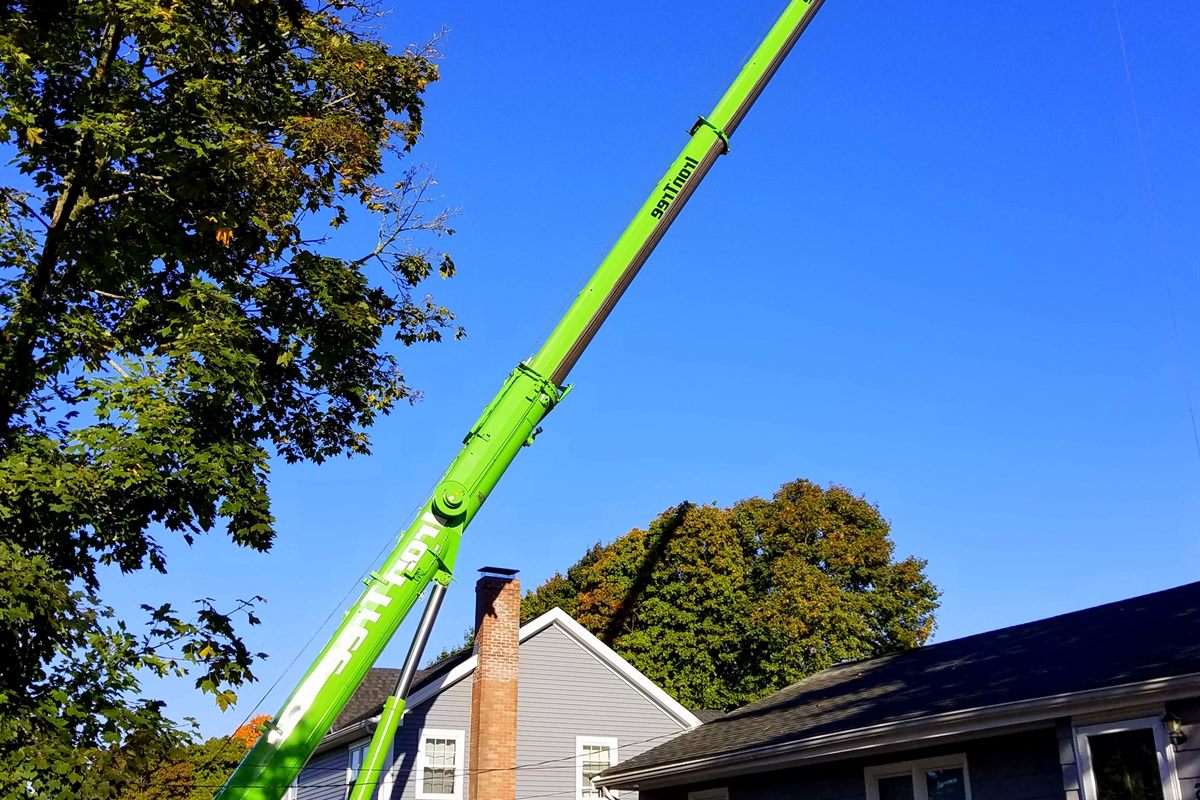
| Technical, over-structure or crane-assisted | $2,500 to $6,000+ |
| Stump grinding | $100 to $400 per stump |
Planning ranges for this market, not quotes. Dead trees often price above their size band, because dead wood cannot be safely climbed and the job moves to rigging or a crane, which is a reason to act early rather than wait. Full breakdowns are on the Garner cost page and in the tree removal cost guide.
If nothing happens, repeat the notice. A letter from three years ago is weaker than one from last month, and a pattern of ignored warnings beats any single document. If the tree is imminent and the owner will not act, speak to an attorney, and ask the town or county office whether local code addresses hazardous trees; requirements vary by parcel, scope and jurisdiction, and the office makes that call rather than a contractor.
If you are the owner who received the letter
Take it seriously and get the tree looked at. That is not an admission of anything, and an arborist who says the tree is sound ends the matter in your favor with a document of your own. If it is not sound, a planned tree removal is priced at planned-work rates rather than storm-week rates.
What you may not do is let the paperwork sit. The obligation the case law describes is to inspect within a reasonable period, and a letter filed in a drawer is the fact that gets read back to you later.
Frequently Asked Questions
Can I cut down my neighbor’s dead tree myself?
No. However dangerous it looks, a tree whose trunk stands on their land is theirs, and cutting it down exposes you to liability for its value. You may cut back branches and roots that cross onto your property, at your own expense, as covered in our guide to cutting a neighbor’s overhanging branches.
Will a letter really make my neighbor liable?
It changes the question from whether they knew to what they did about it. North Carolina requires actual or constructive notice of the dangerous condition before an owner is responsible, and a dated letter is how notice gets created. Whether liability follows in your case is for an attorney and the facts.
What if the dead tree is on the property line?
Then it is probably jointly owned, and both of you are on notice at the same moment. Who owns a tree on the property line explains what each side can and cannot do about it.
How much does it cost to take down a dead tree before it falls?
A medium tree of 30 to 60 feet typically runs $500 to $1,500 and a large one of 60 to 80 feet runs $1,500 to $3,000, with dead trees pricing toward the upper half because they must be rigged rather than climbed. We quote that in writing across Garner, Clayton and Willow Spring.
Do you inspect the tree and tell me whether it is dangerous?
No. Risk assessment is a certified arborist’s work. What we do is quote the removal, the rigging and the trimming in writing once somebody qualified has made that call.
The dead tree is near a power line. Who deals with that?
Split it by where the line runs. The service line from the pole to your meter is the property owner’s responsibility to keep clear; lines running pole to pole are Duke Energy’s. Duke will de-energize your service line at no cost on request, and only qualified line-clearance personnel should cut near energized conductors.
Hazard Tree Removals in Garner and East Wake
Once somebody qualified has said the tree needs to go, the removal is ordinary work and it should be priced in writing before anybody starts. We quote hazard removals, rigging over structures and stump grinding across Garner, Knightdale, Clayton and Willow Spring, at an up-front written price rather than a figure over the phone.
Request a free written quote or call (919) 322-8083 during business hours. Take the July photograph first, and you are already ahead of the storm.
Sources: NC Pro Bono Resource Center: Disaster Assistance Manual, Falling Trees, Flying Limbs and Loud Neighbors · Law Firm Carolinas: Liability for Fallen or Threatening to Fall Trees · Duke Energy: Distribution Line Vegetation Management