Neighbor's Tree Fell on My Property in NC
Garner Tree Removal • September 20, 2026 • 10 min read
It grew in their yard. It is lying in yours. There is a shed under one end of it, the back third of the lawn is gone, and the neighbor has been notably quiet since the storm passed. Every instinct says the bill belongs to them.
North Carolina often disagrees, and knowing why in the first hour saves a week of the wrong conversations. In Garner and the east Raleigh belt this is the most common storm-season dispute there is, usually involving a loblolly pine or a mature water oak that was closer to the line than anybody had thought about.
This is general information, not legal or insurance advice; your insurer decides your claim and an attorney handles a genuinely contested dispute.
Below: the three questions that actually decide it, how to read the evidence the fallen tree left behind, what to say to the neighbor and what not to, what happens if they refuse, and who owns the wood at the end of it. Prices are planning ranges, not quotes.
Neighbor’s Tree Fell on My Property. Who Pays?
Three questions decide it, and only the first is about the neighbor: was the tree defective and could they be shown to have known, did it hit something insured, and is the total bigger than your deductible. Work them in that order and the answer falls out.
| Question | If yes | If no |
|---|---|---|
| Was the tree dead, diseased or visibly dangerous before it fell, with the owner on notice? | Their liability is in play, and your insurer may pursue their carrier | The default applies: it is treated as an act of nature |
| Did it hit a structure your policy covers? | A claim is on the table, minus your deductible | Most policies pay little or nothing for a tree that hit only ground |
| Is the total cost meaningfully above your deductible? | Filing is probably worth it | Paying cash usually beats a claim on the record |
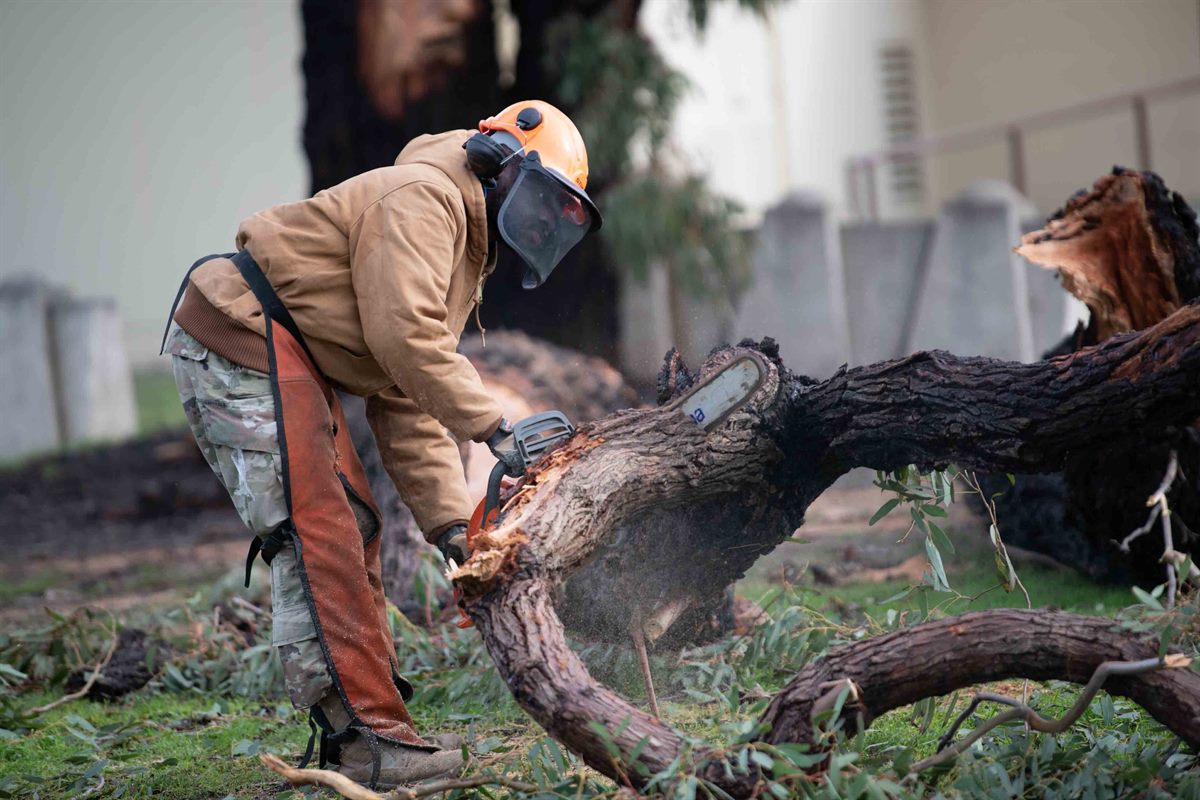
The tree itself has to come off the property either way, and that part is ordinary work. Request a free written quote and you have a number in writing to take into all three conversations.
Question One: Could They Be Shown to Have Known?
North Carolina applies the ordinary common law negligence standard to falling trees rather than strict liability. A healthy tree that comes down in a storm is an act of nature. Where the tree was decayed, diseased, dead or otherwise dangerous beforehand, the owner may be liable for failing to remove or secure it, and the hinge is whether they had actual or constructive notice of the defect. Our guide to who is responsible for a fallen tree in NC is the full explanation of that standard.
Here is the part that guide does not cover, and that almost nobody thinks about in the first twenty-four hours: the evidence for that question is lying in your yard right now, and it is about to be hauled away.
A tree that failed tells you why it failed, and the record is at the break. Before a saw touches it, photograph:
- The failure point itself. A trunk that snapped through sound, pale, splintery wood failed on load. A trunk that came apart around a hollow center, a dark stained column, or a rotten pocket failed on decay, and decay does not happen in one night.
- The stump face and the root collar. Conk fungus, bracket fungus or mushrooms at the base are decay indicators, and they were visible from the neighbor’s kitchen window long before the storm.
- The root plate, if the tree tipped rather than snapped. A plate that lifted a full disc of soil is a different failure than a plate that came up short, sheared and black.
- Whatever is still standing. If the tree had a dead top, a co-dominant stem with a split union, or bare limbs above green ones, the remaining trunk still shows it.
- The neighbor’s side of the line, from your property, wide enough to show where the tree stood in relation to their house.
None of that makes the case on its own. What it does is preserve the question. Once the wood is chipped and the stump is ground, “it was probably rotten” is not evidence. Our guide to telling whether a tree is dead or dying covers what the same indicators look like on a standing tree.
Pro tip: ask the crew to leave the butt section and the stump untouched until your insurer has seen photographs, and say so when you book. It costs nothing, it does not slow the cleanup of the rest, and it is the only part of the job that cannot be recreated later. Stump grinding can happen any week; the stump face can only be photographed once.
What to Say to the Neighbor, and What Not To
The conversation in the driveway sets the tone for everything that follows, and most people damage their own position in the first two minutes.
| Worth saying | Worth avoiding |
|---|---|
| ”I am getting a quote for the cleanup, I will send it to you" | "You owe me for this" |
| "Was this the pine you had somebody look at last year?" | "Everybody knew that thing was dead" |
| "My insurer will want to know the history, do you have anything on it?” | Threatening a lawsuit in the first conversation |
| ”Would you be willing to split the cleanup?” | Agreeing to a verbal split with no message afterward |
| Nothing at all, if you are angry | Telling them your insurer will be coming after them |
Two reasons for the restraint. First, an owner who feels accused stops talking, and the single most useful thing they could give you is an honest account of what they knew about the tree. Second, if the claim does move, the conversation between the two insurance companies is called subrogation, and it is theirs to have. You are not required to negotiate on your carrier’s behalf, and you should not.
If they do agree to split the cleanup, send a short message that evening confirming what you both said. Neighborly agreements about money get shorter in the retelling, and a friendly text with a number in it prevents that.
If They Refuse: What Actually Happens Next
Usually your own policy does the work, and the fight moves to the insurers.
Tell your adjuster, at the first conversation, that you believe the tree was defective and that the owner had notice. Give them the photographs and any written record. If your carrier pays out and then recovers from the neighbor’s carrier, you may get your deductible back as part of it. That process happens between two companies with claims departments, not between two households over a fence, which is a relief in almost every case.
If nothing was insured, or the damage sits under your deductible, the options narrow to three: absorb it, keep negotiating, or use the small claims process through the Wake County or Johnston County Clerk of Court. Small claims has jurisdictional limits and filing requirements that change, so confirm the current ones with the Clerk’s office or an attorney rather than with an article. Weigh the time it takes against what is actually in dispute; the cleanup on a grounded tree is often less than a day of anybody’s time.
What does not help: withholding access, or pushing the wood back over the fence. The second one is genuinely a bad idea, and it is covered below.
Who Owns the Wood, and Who Pays to Move It?
The debris on your side is generally yours to deal with, whoever grew it. That is the unglamorous consequence of the act-of-nature default, and it catches people out after the insurance question is settled.
You may not simply return the wood over the fence. Moving somebody else’s fallen tree onto their property is its own problem, and it converts a sympathetic position into an argument you will lose. If the neighbor wants the wood, that is an agreement worth having; if not, it leaves with the crew.
| Work | Typical 2026 range |
|---|---|
| Fallen tree already on the ground | $300 to $1,200 |
| Medium tree removal, 30 to 60 ft | $500 to $1,500 |
| Large tree removal, 60 to 80 ft | $1,500 to $3,000 |
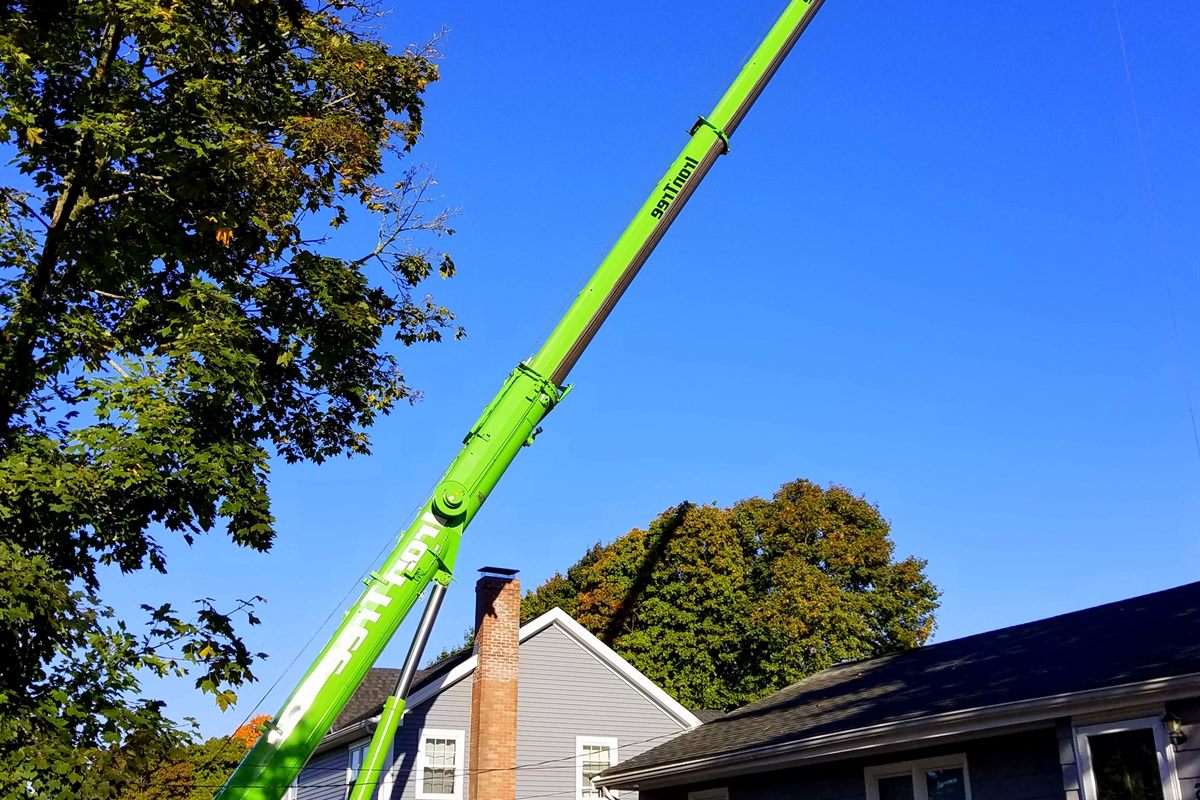
| Technical, over-structure or crane-assisted | $2,500 to $6,000+ |
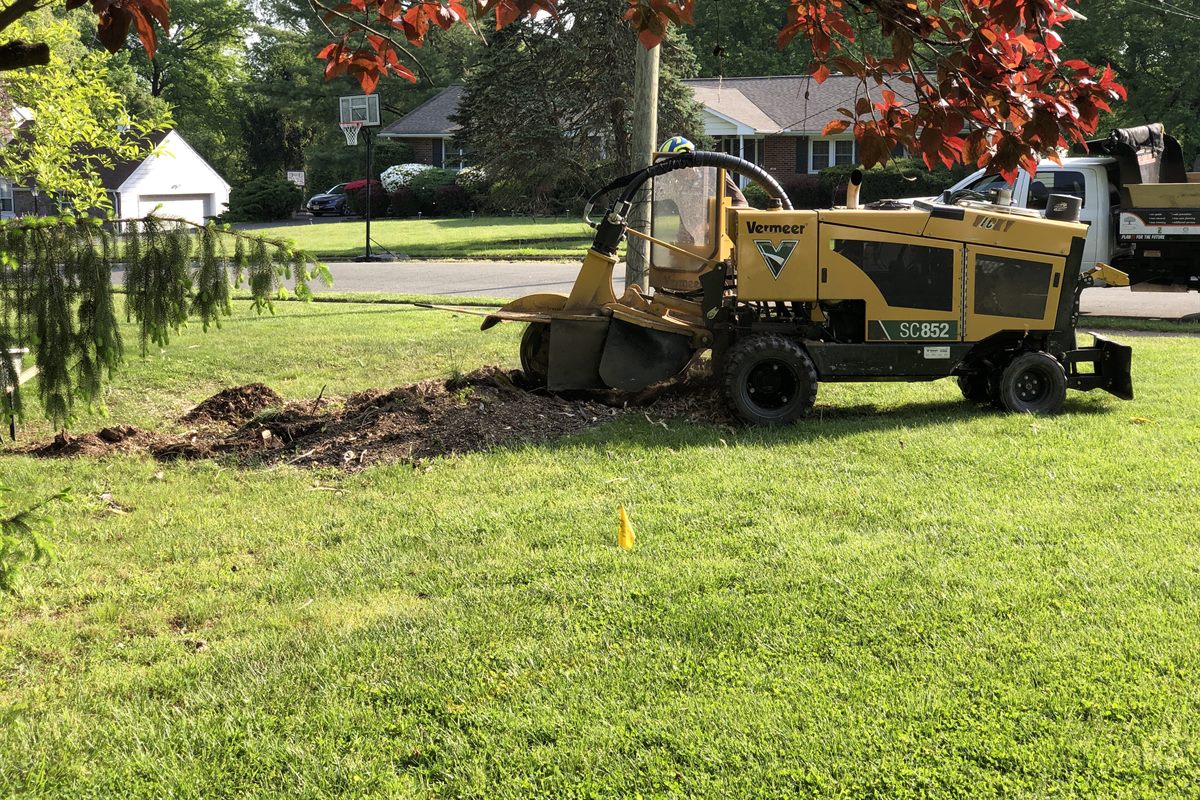
| Stump grinding | $100 to $400 per stump |
Planning ranges for this market, not quotes. A tree already on the ground is usually the cheapest tree work there is, because the dangerous part already happened. What moves it up the band is tension in the wood, access for a truck and chipper, and whether sections have to be lifted off something rather than cut where they lie. The Garner cost page and the fallen tree removal cost guide have the detail.
If the trunk is worth keeping, say so at the quote stage. Rounds cut to length, or logs split and stacked, is a different work order than chip and haul, and it is priced differently.
Frequently Asked Questions
Can I make my neighbor pay for tree removal after their tree fell in my yard?
Usually not, if the tree was healthy. North Carolina treats a healthy tree felled by a storm as an act of nature, so the cleanup falls to the property it landed on. If it was dead or defective and the owner had notice, their liability is in play, and your own insurer is the right route to pursue it.
What if the tree was obviously dead?
Then you are in the negligence exception, and the evidence is the stump, the failure point and any written warning that exists. Photograph all of it before the wood is hauled, and tell your adjuster the history at the first conversation rather than after the claim is settled.
The tree hit nothing but my lawn. Will insurance pay anything?
Often very little. Most policies contribute to debris removal only when a covered peril brought the tree onto something insured, and some carry a small sub-limit even then. It is worth one phone call, and our guide to what homeowners insurance covers on tree removal explains where the line sits.
How much does it cost to clear a neighbor’s tree out of my yard?
A tree already on the ground typically runs $300 to $1,200 to cut up and haul in the Garner, Clayton and Fuquay-Varina area, with stump grinding separate at $100 to $400 per stump. Size and truck access move it inside the band.
It landed on my car, not my house. Does that change anything?
Yes, substantially. A tree on a vehicle is an auto claim under comprehensive coverage rather than a homeowners claim, even though the tree was on your property. Our guide to a tree falling on your car in NC covers the two-policy problem that creates.
Do you handle the claim or talk to the adjuster for me?
No, and be wary of anyone who offers to. We do not file claims, adjust them or negotiate with carriers, and a tree company asking you to sign over an insurance claim is a pattern to walk away from. What we provide is a written quote and clear documentation you can hand to an adjuster.
Fallen Tree Cleanup in Garner, Clayton and Raleigh
Whoever ends up paying, the tree has to come off the property, and that part should be priced in writing before anybody starts. We quote fallen tree removal, rigging where a tree is resting on a structure and stump grinding across Garner, Clayton, Fuquay-Varina and Raleigh, at planned-work rates.
Request a free written quote or call (919) 322-8083 during business hours. Photograph the stump face before we arrive, and you will keep every option open.
Sources: NC Pro Bono Resource Center: Disaster Assistance Manual, Falling Trees, Flying Limbs and Loud Neighbors · Law Firm Carolinas: Liability for Fallen or Threatening to Fall Trees