Hurricane Tree Checklist for NC
Garner Tree Removal • November 15, 2026 • 7 min read
Do the tree walk-around in late spring, before hurricane season starts in June. Once a storm is in the forecast, it is too late for anything bigger than clearing the yard and taking photos. A big canopy overhaul days before the wind arrives is a poor time to start.
Around Garner the damage usually comes from hurricane remnants and summer thunderstorms: a day of rain that soaks the red clay, then gusts that push a tall pine or an old water oak over. Trees in central North Carolina can come down even in storms that are not severe, so this list is worth a pass every year.
What Should I Check on My Trees Before Hurricane Season?
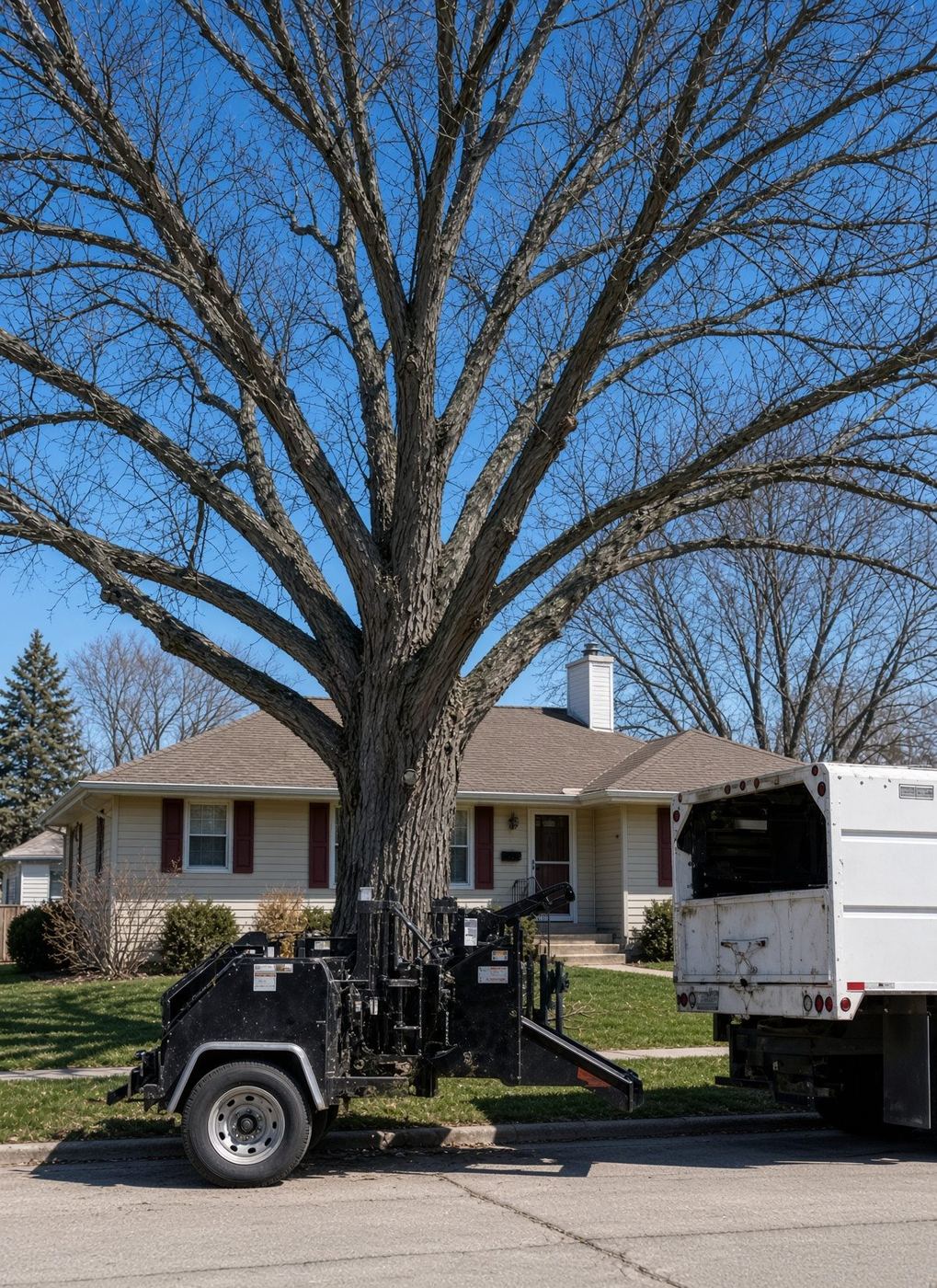
Stand back far enough to see the whole tree, then work through this list for every tree that could reach the house, the driveway, a fence or a power line.
- Lean. Is the tree leaning more than it used to? A new lean, or soil heaved up on the side away from the lean, is the one sign that should not wait. Our guide to a tree leaning toward the house shows what to look for.
- Cracks and splits. Look at the trunk and where big limbs join it. A crack, or a V- or U-shaped trunk with two stems of similar size, has more weak points.
- Dead top or dead limbs. Bare branches above green ones, or a brittle brown crown, mean the wood is weak. See how to tell if a tree is dead.
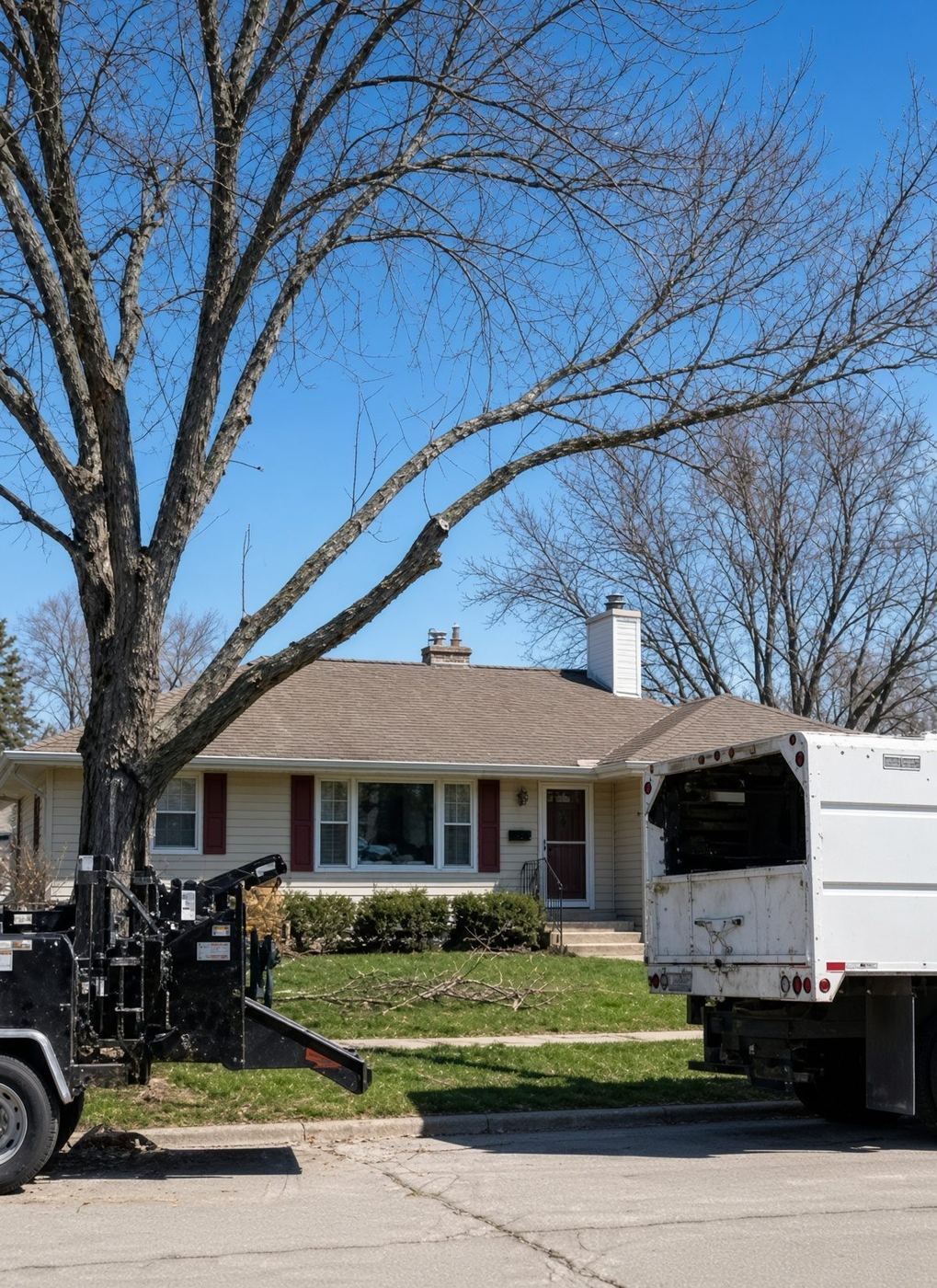
- Limbs hanging over the roof. Any limb that would land on the house if it broke is a trim candidate.
- Roots and soil. Exposed roots, raised soil, or cracked ground near the trunk can mean a shallow or loosened root system.
- Fungus or mushrooms at the base, or a hollow or soft spot in the trunk. See mushrooms at the base of a tree and trunk rot signs.
- Trees newly exposed. If a neighbor cleared a lot or a development took out the trees beside you, the ones left standing now take wind they never used to.
- Anything near a power line. Do not trim near lines yourself. Our Duke Energy tree trimming guide explains who handles what.
A sound tree usually does not need to go. LSU AgCenter’s hurricane guidance says it plainly: if the tree is sound, there is no real reason to remove it. The aim is to find the few that are not.
Pro tip: Take one photo of each large tree near the house now, in leaf, from the same spot. A dated “before” photo makes any later lean easy to see, and it is useful evidence if you ever file a claim.
What Should I Trim or Remove Ahead of Time?
Match what you see to the job. Walk the yard in late spring.
| What you see | Usual job | Typical price |
|---|---|---|
| Dead limbs, or a limb over the roof | Trimming | $300 to $1,500 |
| Dead, leaning or hollow tree near the house | Removal | $500 to $2,000 typical |
| Tall tree over a structure or tight access | Large or technical removal | $1,500 to $6,000+ |
Those are planning ranges, not quotes; the Garner tree removal cost guide shows what moves a price. If a tree is not urgent, the work can wait for late fall or winter, when demand is lower.
Tall loblolly pines deserve a second look. LSU AgCenter rates loblolly as medium-low for wind resistance, and tall pines near a house deserve the closest look. If one is healthy and has room to fall without hitting anything, you can leave it. If it is close to the house and showing any item above, ask for a quote.
Not sure what you are looking at? A certified arborist, or your county NC Cooperative Extension office, can diagnose a tree and write a formal assessment. See do I need an arborist or a tree service.
Request a free quote and we’ll contact you to discuss the tree, the access, and the work you need.
What Should I Do When a Storm Is Forecast?
Pruning stops here. The list is now about the yard and the house.
- Park cars away from large trees, and out from under limbs over the driveway.
- Move outdoor furniture and anything loose that wind can throw.
- Look up at the trees over the house once more, and photograph them for the record.
- Choose a bedroom or a sleeping spot that is not under a big limb or tree.
- Save Duke Energy’s 24-hour outage line in your phone (or the town electric department’s, in Clayton, Selma, Smithfield or Benson).
- Charge phones and a battery pack.
If a tree is already half down or badly split, stay clear of it and call once the weather has passed.
What Do I Do After the Storm Passes?
Work through these in order.
- Stay inside until the wind stops. Limbs that survived the first gusts can fall in the second.
- Treat every downed line as live. The CDC says to avoid contact with power lines until they are verified as de-energized. Stay well back and call Duke Energy’s 24-hour line (or your town’s electric department), or 911 if anyone is hurt or there is fire. Once it is safe, we remove the tree and clean up.
- Photograph everything before anything is moved. The tree, the break point, the damage, the root plate. Wide shots and close ones.
- Call your insurer before you book a crew. Ask about the debris removal limit. Our guides cover a tree on a car and who pays for a fallen tree.
- Leave hung limbs and tension to a crew. See cutting a fallen tree yourself for where DIY stops.
- Get the price in writing. Be wary of anyone who knocks on your door and asks for cash up front. Our emergency tree removal cost guide covers what a fair job includes, and a tree already on the ground usually runs $300 to $1,200.
- Do not rush the standing trees. NC Cooperative Extension suggests assessing before cutting, and notes that some damage to evergreens does not show until spring. A leaning tree is less stable than it was, so have it inspected.
Winter ice is a different problem; see ice storm tree damage in NC.
Frequently Asked Questions
When is the best time to prepare trees for hurricane season?
Late spring, before June, with trimming and removals booked through the calm months. Late fall and winter are usually the cheapest window.
Should I cut down a tree before a hurricane?
Only if it is dead, hollow, leaning or split and could reach something that matters. A sound tree usually stays.
Can I trim trees myself before a storm?
Small, low branches from the ground, yes. Anything over the roof, high up or near a line should go to a crew; see our tree trimming cost guide.
Does my town help with fallen trees?
A tree on a public street or right-of-way is for the town or NCDOT to deal with, depending on who maintains the road. In Knightdale, Clayton and the rest of east Wake and Johnston County, a tree on your own lot is yours to clear.
What does a storm removal cost?
A tree on the ground runs $300 to $1,200. A tree over the house is a technical job at $2,500 to $6,000+, priced by method, not by weather.
Get Your Trees Checked Before the Season
If the walk-around turns up a tree you are unsure about, request a free quote and we’ll contact you to discuss the tree, the access, and the work you need. We work across Garner, Knightdale, Clayton, Wendell and the east Wake County area. Prefer to talk? Call (919) 322-8083.
Sources: NC Forest Service: NC Trees and Storms · NC Cooperative Extension: Storm Damaged Trees · NC State Extension: Storm Damage to Trees · ABC11: How to spot trees likely to fall · LSU AgCenter: Tree removal decisions before a hurricane · CDC: Chain Saw Safety